If you've ever dreamt of changing scenery and working from a distant beach or mountain reserve, you're getting an official, realistic long-term pathway.
Across Asia, countries are opening their doors to remote workers with digital nomad visas, designed for longer stays that often come with added benefits, including residency rights, tax clarity, and the ability to bring family along.
Although these programs vary widely among these countries, the common thing is that governments are recognizing the value of long-term visitors who bring their work and spending power with them.
Here’s a look at some of the most popular Asian countries offering digital nomad visas, what they require, and how long you can stay.
 Oluwaseun Bamisile
/1. Thailand

Thailand has long been a favorite among digital nomads, and with its Long-Term Resident (LTR) visa and Smart Visa options, remote workers can now stay well beyond the usual 30–60 day tourist stamp.
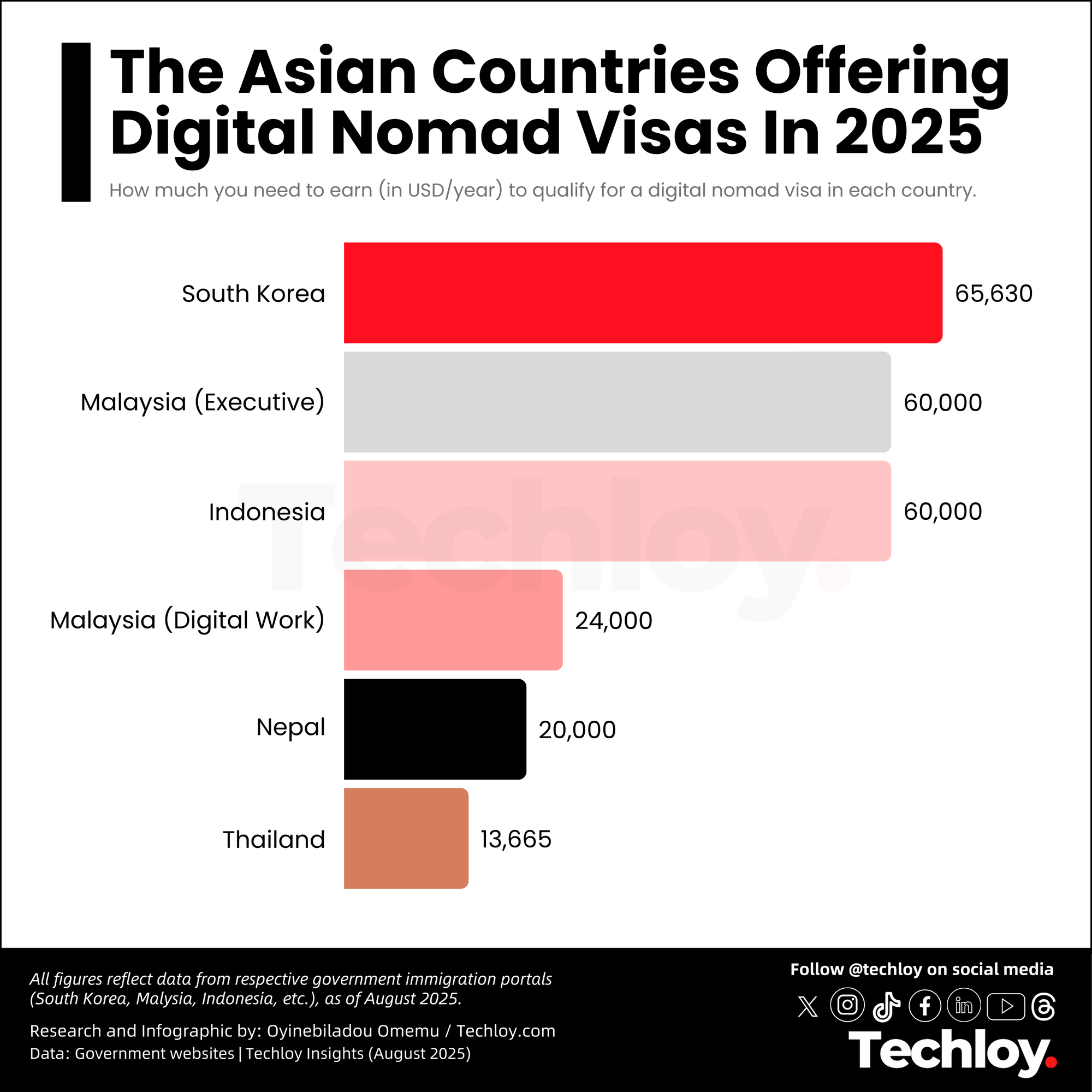
You can now enjoy a five-year multiple-entry option, but you’re still considered a tourist. Each stay lasts 180 days, with the chance to extend one of them for another 180 days. You won’t be living continuously in Thailand for five years, but you’ll have flexible long-term access. The financial requirement is around $13,665 in the bank, and the entire process is handled online.
/2. Indonesia (Bali)

Indonesia's long-awaited visa now allows remote workers earning at least $60,000 per year to stay for up to two years. Unlike some others, this visa is an immigrant visa, so you’ll get a temporary residence card (KITAS) and be subject to local income tax.
Family members aren’t included for now, which is a downside, but the application process is fast (about one week) and fully online. If you’re not planning a long stay, Indonesia also offers a B211a visa for up to six months.
/3. Malaysia

Malaysia launched the DE Rantau Nomad Pass in 2022, designed specifically for digital nomads across IT and creative fields. The visa requires you to show either $24,000 per year in digital work or $60,000 if you’re applying as a company executive. Processing can take up to six months, but it grants a residence card that offers a level of stability rare among digital nomad visas.
/4. South Korea

In South Korea, the digital nomad visa looks more like a traditional residence permit. It’s valid for one year but renewable, and it allows nomads to bring immediate family members along.
The income requirement is very expensive, though (about $65,630 annually), and you’ll need at least a year of remote work experience. The good thing is that the visa confers on you the ability to sign long-term leases and settle in. Applying isn’t something you can do after you arrive. You’ll need to handle it at a consulate abroad, which makes it somewhat difficult.
/5. Nepal

Nepal recently proposed a digital nomad visa that’s surprisingly generous in length (up to five years). Remote workers need to earn at least $1,500 per month or show $20,000 in savings, plus carry international health insurance with coverage of at least $100,000.
After 183 days in the country, you’d also be subject to a flat 5% income tax. Unlike other countries, Nepal allows digital nomads to open local bank accounts and even register vehicles, which makes it easier to build a life there rather than just passing through.
Conclusion
The rise of digital nomad visas across Asia signals more than just a policy trend. It’s a recognition that remote work has now become the norm. Countries that once relied heavily on tourism are now welcoming a new kind of visitor. One who contributes to the local economy while staying longer and more sustainably.
For digital nomads, this means the freedom to explore Asia without the stress of visa runs or overstays. Still, each program comes with its fine print. From income thresholds to strict health insurance requirements, you have to weigh the costs and conditions before packing your bags.
 Louis Eriakha