



It’s okay to chase the dream life of better pay, better weather, or just a more flexible way of working. That’s the appeal of digital nomad and temporary work visas: they give you the freedom to pack your bags, set up a laptop in a new city, and experience life on your own terms.
But what if that temporary freedom could become something lasting that gives you better tax and financial benefits, amongst others? What if instead of hopping from country to country, you could actually put down roots in the place that feels like home?
Many people don’t realize that a digital nomad or temporary visa doesn’t have to be the end of the story. In some countries, it can be the first chapter of a longer journey that leads to permanent residency. And that matters because PR isn’t just about staying longer, it’s about stability, access to healthcare and education, and the freedom to build a real life instead of just a stopover.
In this guide, we’ll look at five strategies nomads and temporary workers can use to convert their short-term visas into permanent residency.
 Oluwaseun Bamisile
Countries Where Digital Nomad Visas Can Lead to Permanent Residency
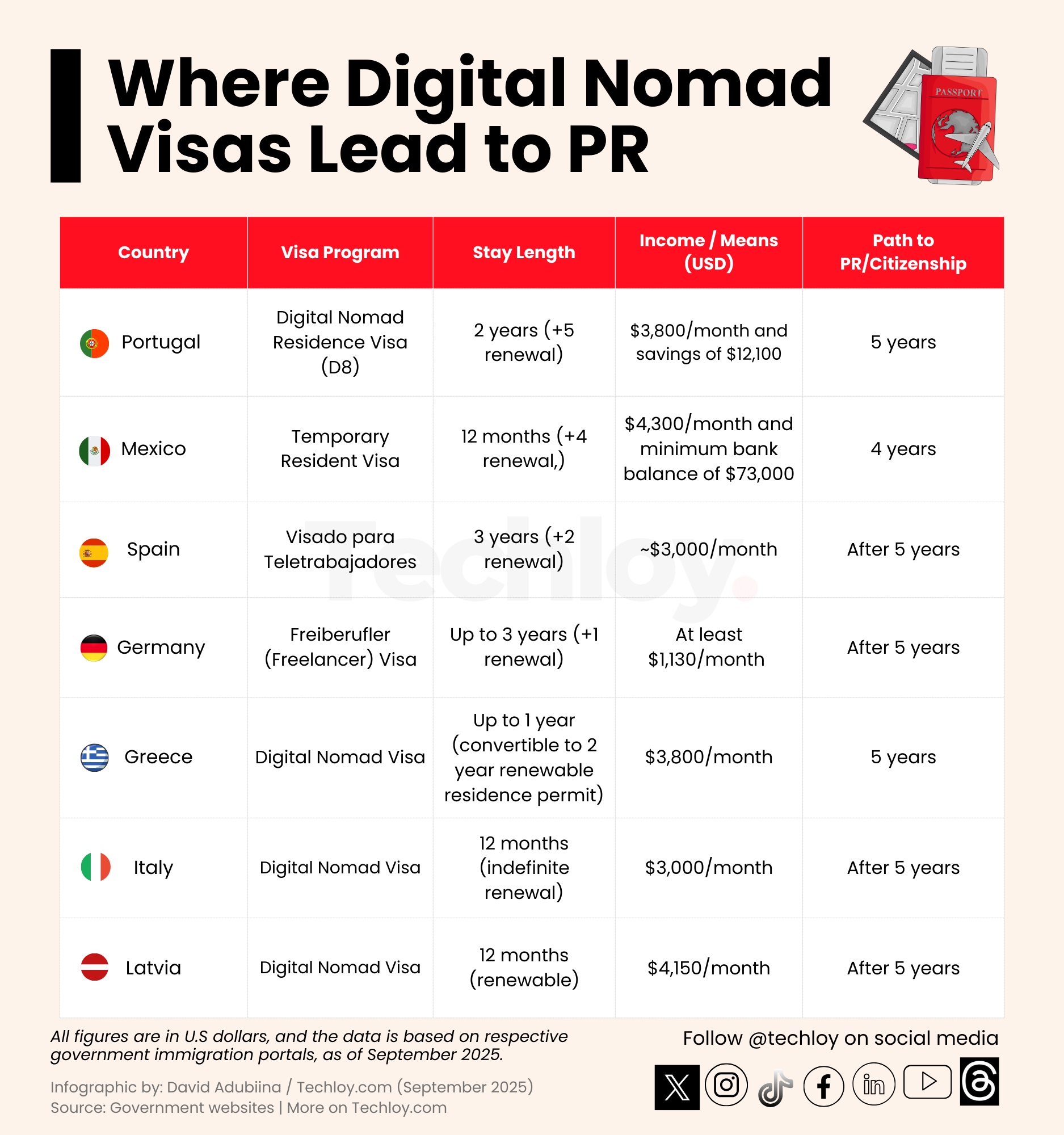
Not every digital nomad visa opens the door to permanent residency, but some countries have made it clear that temporary stays can turn into long-term settlement. Portugal’s D8 visa, for example, allows remote workers to apply for permanent residency after five years of legal residence.
In Spain, the digital nomad visa can also lead to PR after five years, provided you maintain legal residency and meet income requirements. Even countries like Germany and Australia, which traditionally issue temporary work permits, have created pathways to settlement once you show economic stability and integration.
The catch is that each country sets its own conditions, which means the real work begins after you’ve arrived. Below are five strategies that nomads and temporary workers can use to turn a short-term visa into permanent residency, no matter where they choose to stay.
Strategies to Convert a Digital Nomad or Temporary Visa into PR
1. Meet Residency Requirements

Everything starts with time. Countries like Portugal, Spain, and Greece require years of continuous legal residence before you can even apply for PR. That means your priority is simply staying in status — renewing your visa on time, keeping track of how many days you’re allowed outside the country, and treating your temporary permit as the foundation of your residency record. Without this base, none of the later steps matter.
2. Integrate into Society

Once you’ve established legal residence, the next step is proving you belong. Governments want long-term residents, not long-term visitors. Integration is how you show this. Learning the language, building social ties, and respecting local laws all count in your favor.
Some countries, like Germany, formally test for integration before granting PR, but even where it isn’t required, it strengthens your application. Time on paper means little if you remain on the margins of society.
3. Ensure Financial Stability

After time and integration, the next hurdle is financial proof. Temporary visas often have modest income requirements, but permanent residency raises the bar. You’ll need to show reliable, ongoing income and, in many cases, tax compliance within the host country.
Governments want residents who contribute to the economy and won’t become dependent on the system. By paying taxes and meeting income thresholds, you move from being tolerated as a visitor to being valued as a contributor.
4. Choose the Right Path Forward

When you’ve built time, integration, and financial stability, the next move is to align with the country’s legal pathways. Not every digital nomad visa is designed to lead to PR. Some, like Portugal’s D8 or Spain’s nomad visa, are explicitly connected to permanent residency after a set period.
Others, like short-term permits in certain countries, hit a dead end. At this stage, you may need to transition from your current visa into a different category that leads to PR. Choosing the right track ensures the years you’ve invested actually count.
5. Stay Informed and Seek Guidance

Finally, none of this matters if you miss a policy change or fail to file the right paperwork. Immigration rules evolve quickly — new visas launch, income thresholds rise, and eligibility conditions tighten. Staying updated through government sources, expat groups, or legal professionals is what keeps your journey on course. At the PR stage, even small mistakes can delay or derail your application. Guidance ensures the years you’ve spent building your case don’t go to waste.
 Kelechi Edeh
Conclusion
For digital nomads and temporary workers, the line between a short stay and permanent residency isn’t as far apart as it looks. Countries like Portugal, Spain, and Greece have opened clear pathways, while others like Germany and Canada use work permits and integration measures to filter short-term residents into long-term ones.
Essentially, what you want to keep in mind is to meet the residency rules without breaking continuity. Then, show you’re part of the society, not just passing through. Follow that path, and what starts as a temporary visa can turn into something permanent.
For anyone ready to move beyond the cycle of renewals and start building a lasting life abroad, these strategies are the difference between a stay that expires and a future that doesn’t.


