For the past year, talk of AI taking jobs has focused on desk work. Most people, when they hear “AI will take your job,” imagine generative models cranking out emails, code, or customer service scripts, displacing personal assistants, developers, and human resources. The assumption has been that automation threatens those behind desks, not those on their feet.
But that assumption is cracking. AI is not just creeping into spreadsheets and Visual Studio Code. It’s moving through factory floors. It’s scanning shelves, lifting crates, packing boxes, and routing trucks. AI is coming from hands-on jobs, and it’s doing it fast. In fact, according to an MIT and Boston University report, AI will replace as many as two million manufacturing workers by 2025
Few companies illustrate this shift better than Amazon.
 Emmanuel Oyedeji
One million robots
Amazon recently hit a milestone of one million robots deployed in its Japanese fulfilment center. “We’ve just deployed our 1 millionth robot,” said Scott Dresser, VP of Amazon Robotics. “We’re the world’s largest manufacturer and operator of mobile robotics.”
It’s a staggering number. Not just because it’s large, but because of what it represents. One million machines are embedded across Amazon’s vast fulfilment network. Meanwhile, Amazon has 1.5 million human employees worldwide. If the current pace holds, that robot-to-human ratio may flip sooner than anyone expected.
And, the company's automation ambitions are not modest. As of now, Amazon’s robots are present in over 300 facilities worldwide. And they're not just there to help, they're doing real work. From heavy lifting to sorting, from inventory movement to packaging, robots are taking over tasks once done exclusively by people. Amazon estimates that 75% of its global deliveries are now assisted in some way by robotics. That number is only going to rise.
DeepFleet: Smarter Bots, Faster Deliveries
Amazon didn’t stop with the hardware. It’s now building the brains behind the machines.
The company recently unveiled DeepFleet, a generative AI system designed to optimise its robotic workforce. Think of it as city-wide traffic control—except the city is a maze of conveyor belts, carts, and bots. DeepFleet reportedly improves robotic efficiency by 10%. That might not sound dramatic, but in Amazon’s world, 10% faster is the difference between same-day delivery and next-day. It’s the difference between keeping customers loyal and losing them to competitors.
From Shelf Shufflers to Humanoids
It all started in 2012 when Amazon acquired Kiva Systems for $775 million. At the time, it was seen as a bold but niche investment. Those early Kiva bots were essentially mobile platforms that moved shelves around warehouses.
Then things accelerated. By 2015, Kiva was rebranded as Amazon Robotics. The bots got smarter, stronger, and more capable. They began doing the kinds of tasks that wear humans out: moving heavy pallets, lifting awkward inventory, sorting endless rows of packages. They started working side-by-side with human employees, not as assistants, but as equals. Sometimes, as replacements.
Today, in massive facilities like the 3-million-square-foot center in Shreveport, Louisiana, Amazon’s robotics ecosystem is on full display. Dozens of robotic arms sort and stack products. Some bots zip carts across floors. Others package items or transport goods to be packed. Computer vision helps robotic arms grab difficult objects. Machines don’t just support workers—they drive the workflow.
Even the most physically demanding roles are changing. Amazon’s Hercules robot can lift 1,250 pounds. Proteus, its fully autonomous mobile robot, can navigate around employees without human oversight. These are intelligent, decision-making machines operating in live environments.
And if that sounds like the endgame, it’s not. Amazon is already testing humanoid robots, machines with legs, arms, and heads that are being trained on warehouse tasks. For now, they’re in R&D. But we’ve seen how Amazon moves.
Is This a Net Positive?
Amazon insists that the future of automation is human-friendly. That it's building tech to assist, not replace. Dresser points out that over 700,000 Amazon employees have received robotics-related training since 2019. The Shreveport facility, he says, requires 30% more employees because of the new technology, not fewer.
That’s the official line. And it may be partly true.
But the data points elsewhere. Despite the expansion of its physical footprint, Amazon's average number of employees per facility has dropped to a 16-year low, according to a Wall Street Journal analysis. The number of packages shipped per employee has skyrocketed, from 175 in 2015 to nearly 3,900 today. Robots don’t need breaks, healthcare, or HR. They don’t quit. They don’t form unions. And Amazon has faced a lot of strikes from its workers in the past year.
This doesn’t mean Amazon will lay off a million people overnight. But it does mean that for every ten humans it might have hired in the past, it may now only need four. That changes the job market calculus in a big way.
This Shift Is Everywhere
What’s happening at Amazon isn’t isolated. It's a preview of what's coming across industries.
Warehouse automation is surging at Walmart, Alibaba, DHL, FedEx. Robotic arms are becoming standard in manufacturing, executing tasks with precision that humans can’t match. In hospitals, surgical robots assist with procedures. In restaurants and hotels, bots clean, serve, deliver, manage luggage. The pace of adoption is accelerating.
Even transport is shifting. Waymo and Tesla are pushing driverless taxis. Autonomous trucks are being tested on highways. At airports, robots scan, sort, and load luggage. Across sectors, across continents, the machine is taking over.
This isn’t a glitch in the economy. It’s the new operating system.
 Ogbonda Chivumnovu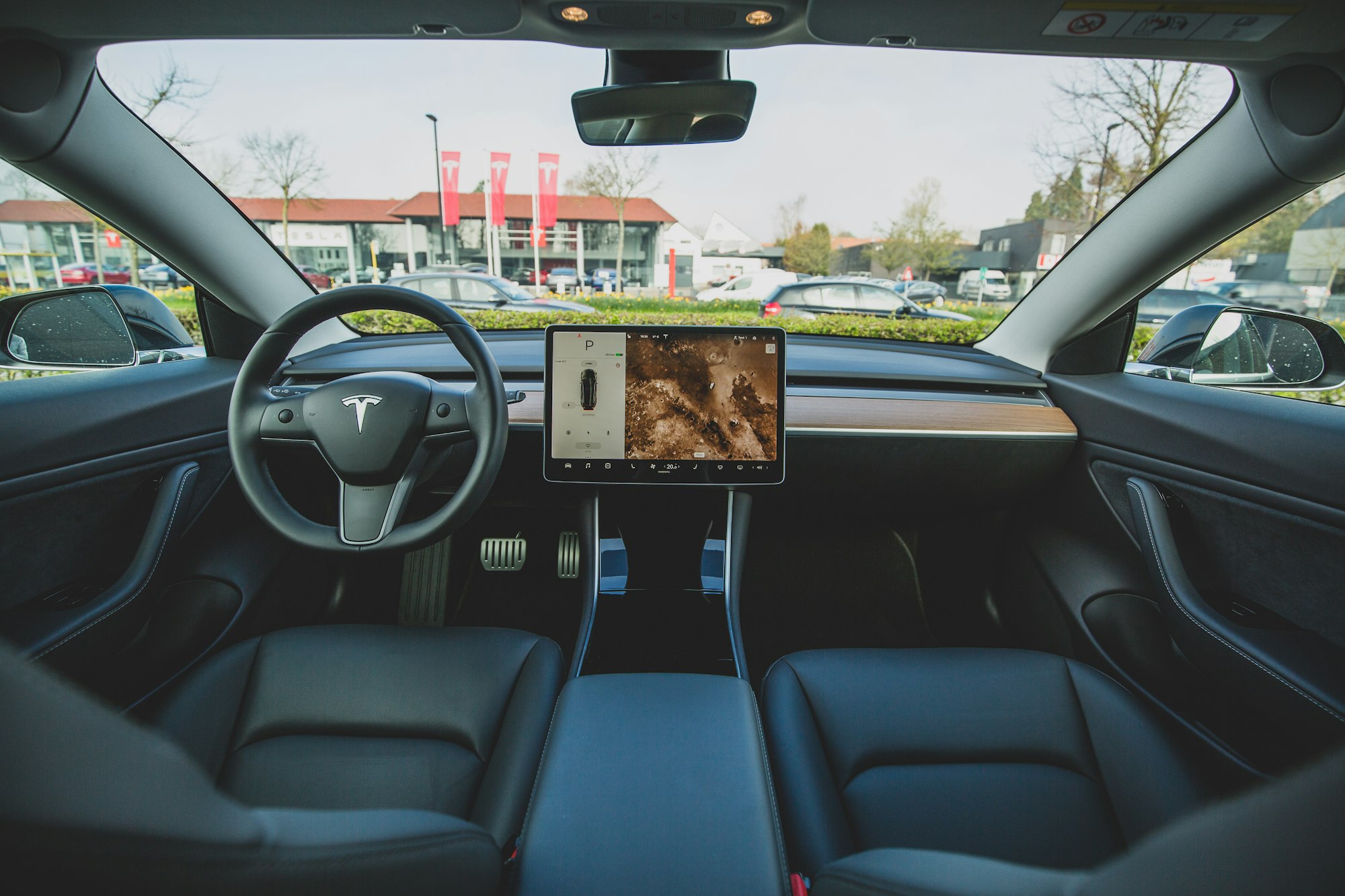
The Hard Truth
Amazon says this is all about making work safer, creating new roles, and helping people transition. And maybe that’s true for now. But it’s also a numbers game. And right now, the math doesn’t look like a net win for human labor.
What we’re seeing is the start of a reshaped workforce, one where the definition of a “job” is constantly in flux. One where value comes less from repetition and more from adaptability. The warehouse job of today won’t exist in ten years. The same might be said for driving, stocking, sorting, or a hundred other physical roles.
That doesn’t mean the future is bleak. But it does mean it will be different. Faster and smarter.
The question isn’t whether AI will take jobs. It already is. A report by investment bank Goldman Sachs says AI could replace the equivalent of 300 million full-time jobs by 2030. The real question is what we’re going to do about it, and how we will adapt.
 Emmanuel Oyedeji