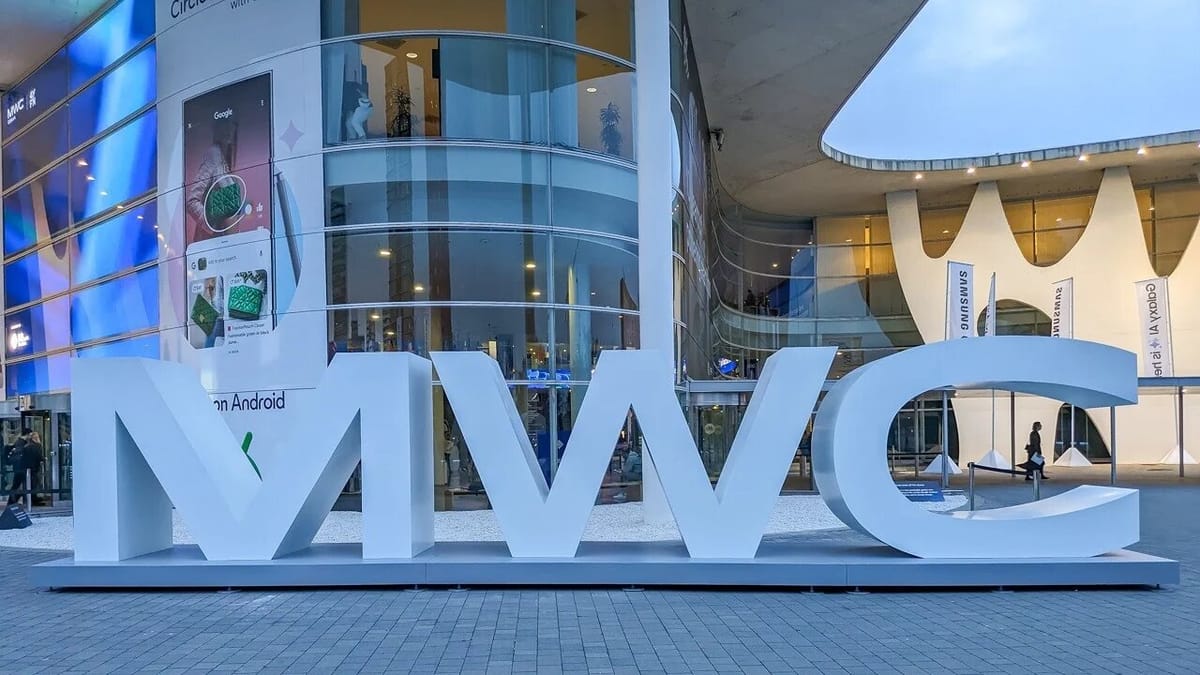
The Mobile World Congress 2026 (MWC 2026) is running from March 2 to 5 at Fira Gran Via in Barcelona with the theme "The IQ Era." For once, the branding matches the floor. Artificial intelligence ran through nearly every major announcement from day one, not as a marketing afterthought but as the actual product.
From dedicated AI wearable chips to a phone call assistant that needs no app and a smartphone with a motorised arm that nods at you, there were a lot of noteworthy AI announcements from the companies that showcased at the event.
Here are all the major AI announcements from the MWC 2026:
Samsung
1. Galaxy AI on the S26 has moved from feature to agent
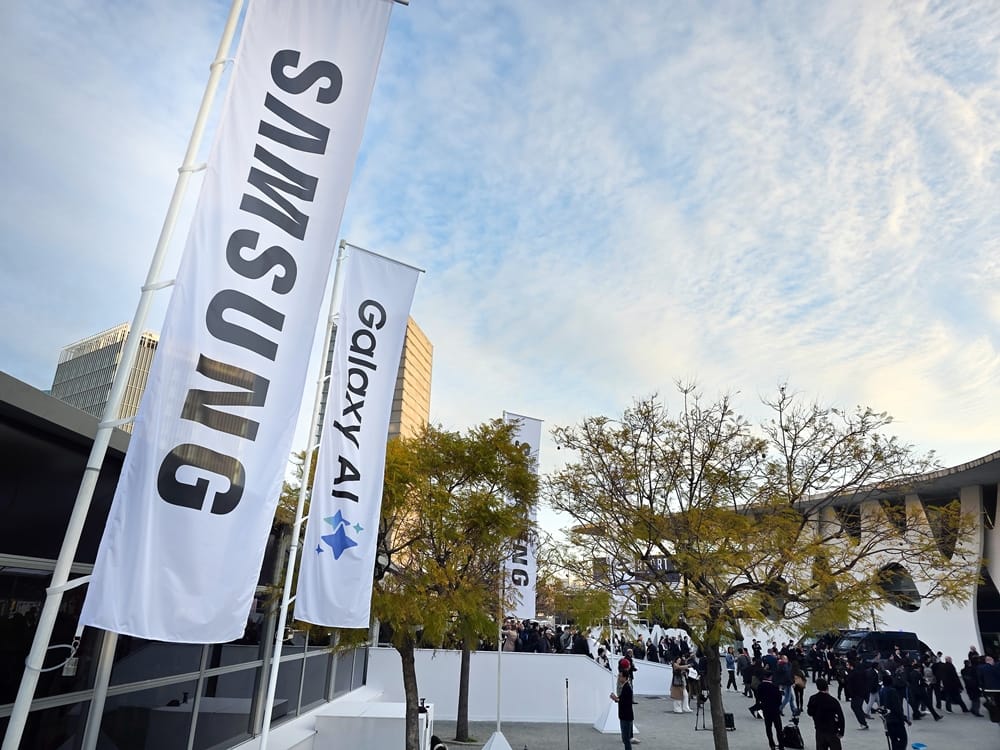
Samsung's booth at Fira Gran Via spans 1,745 square metres across nine zones, with Galaxy AI at the centre of everything. The Galaxy S26 series showcases an agentic AI experience. P
hoto Assist now lets users add or edit elements in photos through plain text prompts. The demonstrations have drawn consistent crowd reactions since day one of the show.
2. Galaxy Buds4 analyses the shape of your ears before it plays music
In the Galaxy Eco Zone, Samsung showed how Galaxy AI studies ear shape and fit to personalise audio on the Galaxy Buds4 series. The Buds4 Pro delivers 24-bit/96kHz Hi-Fi audio through a two-way speaker system.
Enhanced Adaptive Active Noise Cancelling either blocks ambient noise or shifts into Ambient mode based on what the user is doing.
3. Galaxy XR runs multimodal AI across voice, eyes, and hands at the same time
Samsung's Galaxy XR headset was live at MWC with seven demonstration scenarios showing AI working across voice commands, gaze tracking, and hand gestures simultaneously. Attendees called up YouTube videos by voice, selected results by looking at them, and confirmed actions by hand.
Samsung also showed industrial use cases including retail layout planning and 3D ship blueprint visualisation.
 Emmanuel Oyedeji
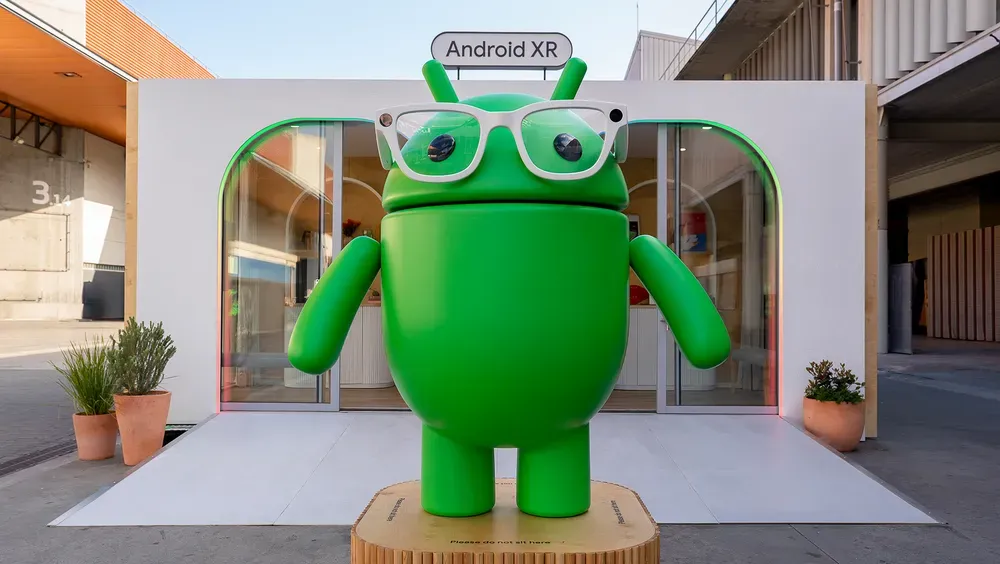
4. Android XR glasses translated a live Spanish conversation in real time at MWC
Google brought prototype Android XR smart glasses to MWC and ran live, hands-on translation demos at Android Avenue between Hall 2 and Hall 3. The translation appeared as floating subtitles in the right lens while preserving the speaker's actual voice and tone in real time.
The feature borrows Pixel 10's Voice Translate capability. Google confirmed the feature is in active development. Samsung has publicly committed to launching its first Android XR glasses in 2026.
5. AI video generation was live and drawing queues at the Google booth
Google's Android Avenue has been running live demos of Veo-powered AI video generation throughout the show. Queues have been consistent since MWC opened on March 2.
Qualcomm
6. A chip built specifically for AI wearables that barely exist yet
Qualcomm announced the Snapdragon Wear Elite at MWC, described by the company as a "wrist plus" chip. It sits above the existing W5 Plus in the lineup and targets AI pendants, pins, and display-free smart glasses rather than smartwatches. First commercial devices are expected within months.
7. An "AI-native" Wi-Fi chip arriving two years before the standard is ratified
Qualcomm's FastConnect 8800 leads its Wi-Fi 8 portfolio at MWC. The company is calling the entire portfolio "AI-native." It promises speeds above 10 Gbps with Bluetooth 7.0, UWB, and Thread on a single chip.
Commercial products are expected by late 2026, two years before the Wi-Fi 8 standard is officially ratified.
8. A 5G modem that predicts a weak signal before you feel it
The X105 5G modem-RF uses built-in sensing software to predict RF conditions in real time and adjust before a connection weakens.
It is 15% smaller and 30% more power-efficient than the X85. Qualcomm tied both gains directly to enabling AI applications on device.
Deutsche Telekom
Deutsche Telekom came to MWC 2026 under the motto "Magenta AI at Scale. Human at Heart." It was the most wide-ranging single-company AI programme at the show. Here is everything the company announced.
9. A world-first AI call assistant that works on any device, no app required
Deutsche Telekom unveiled the Magenta AI Call Assistant at MWC as a global first. Built with ElevenLabs, the assistant lives inside the call network itself, not on your phone. It works on any device including landlines. Users activate it by saying "Hey Magenta" during a live call. Without that activation, no conversation content is stored or analysed. All participants are notified when the assistant is active.
Initial features include live translation, call summaries, and real-time question answering. Future functionality includes the assistant taking action mid-call, making restaurant reservations, booking doctor appointments, filling out forms, and documenting confirmations. Deutsche Telekom confirmed the service launches in Germany this year, with support for up to 50 languages planned over the following 12 months.
Abdu Mudesir, Board Member for Product and Technology at Deutsche Telekom, said: "With our Magenta AI Call Assistant, we are the first in the world to offer these network-based AI functions. We remove barriers. No apps, no special devices, no technical complexity. AI becomes simple, intuitive and available to everyone."
10. AI Glasses: A concept for hands-free, app-free AI in daily life
Deutsche Telekom presented an AI Glasses concept at MWC built on the RayNeo X3 Pro, one of the few commercially available AI glasses with an integrated dual display. The glasses respond to a glance or a spoken command to recognise products, translate text in real time, display contextual information directly in the user's field of view, and execute tasks autonomously.
Use cases shown include step-by-step router installation help, shopping assistance, travel support, and ticketing. All interaction runs through voice as the central interface, with no app required. This is a concept study, not a confirmed product.
11. An AI agent inside your router that manages your entire home
Deutsche Telekom outlined an Intelligent Home vision at MWC where an AI agent moves directly into the home router, turning it into a proactive problem solver across connected devices. The system learns household habits, responds to individual needs, and orchestrates devices across technologies and manufacturers. All data is processed locally inside the router through edge AI and never leaves the home. An optional voice layer connects to cloud-based intelligence for extended tasks and questions.
12. MINDR: An AI system that fixes network problems before customers notice
Deutsche Telekom presented MINDR at MWC, a multi-agent AI system built with Google Cloud using Gemini models. MINDR continuously monitors the telecom network across the radio access, transport, and core layers simultaneously. It detects rising network loads, anomalies, and performance risks early, then autonomously triggers corrective actions.
MINDR is the evolution of the RAN Guardian Agent, which has been running live optimisation at major events in Germany since autumn 2025. Initial deployments of MINDR across the full network are planned for later this year.
13. Smartphones as a universal key for digital identity
Deutsche Telekom brought Magenta Security Mobile.ID to MWC, a mobile security platform that turns any smartphone into a universal key via Bluetooth and NFC. It replaces physical keys, smart cards, and ID documents while keeping data sovereignty with the user.
Use cases include office door access, laptop login, and email encryption. Deutsche Telekom employees are already testing it in daily work. The solution launches first on Samsung devices for business customers in Europe later in 2026.
14. A security concept to protect AI systems from deepfake attacks
Deutsche Telekom also presented a security concept at MWC designed to protect enterprise AI systems from deepfake and impersonation attacks, where a rogue AI agent poses as a legitimate system to extract sensitive data or disrupt business workflows.
A dedicated deepfake exhibit made current attack scenarios tangible on the show floor.
15. A transatlantic 6G Innovation Hub with T-Mobile US
Deutsche Telekom and T-Mobile US announced a joint 6G Innovation Hub at MWC, bringing together partners on both sides of the Atlantic for joint research, prototyping, and field trials. The hub is anchored by T-Mobile's Innovation Lab in Bellevue, Washington and T-Labs in Berlin.
6G is being designed by both companies as a fully AI-native system, with three stated focus areas: Autonomous Networks, secure sensing and positioning, and convergence of connectivity and high-performance computing. The stated goal is a unified global 6G standard with Physical AI at its core.
Huawei
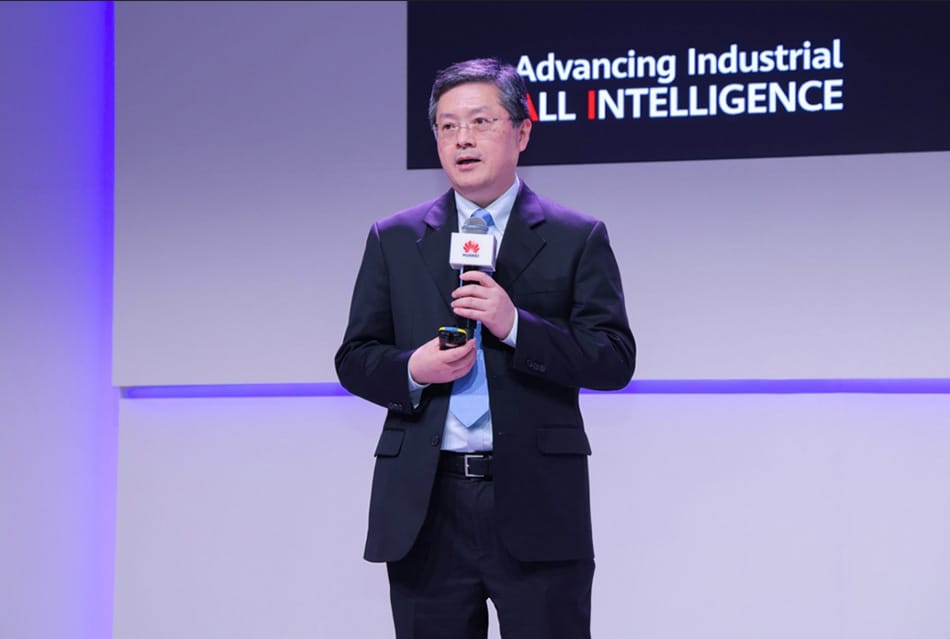
16. AI-Centric Network solutions launched for operators at MWC
Huawei launched its AI-Centric Network solutions at MWC on March 2, embedding AI across service, network, and hardware layers for telecom operators.
On the consumer side, the company presented the Mate 80 series at MWC with AI-driven photography and device interaction features through its XMAGE imaging platform. Huawei also launched a Next Generation FAN home network solution using AI-driven anti-interference technology that improves signal rates by 20% under interference conditions.
17. 115 industrial AI showcases and 22 new enterprise solutions across nine sectors
At its Industrial Digital and Intelligent Transformation Summit at MWC on March 3, Huawei released 115 industrial AI showcases with global customers and launched 22 new AI solutions covering electric power, manufacturing, retail, finance, transportation, oil and gas, media, public services, and smart cities.
The company introduced the ACT Pathway, a three-step framework for industrial AI adoption it says has helped customers identify over 1,000 core production scenarios where AI can make a meaningful difference.
18. SuperPoD AI computing cluster shown publicly outside China for the first time
Huawei showcased the Atlas 950 SuperPoD for AI computing and the TaiShan 950 SuperPoD for general-purpose computing at MWC, appearing outside China for the first time. The systems are designed for low-latency inference on trillion-parameter AI models and agentic AI in production environments.
Nvidia
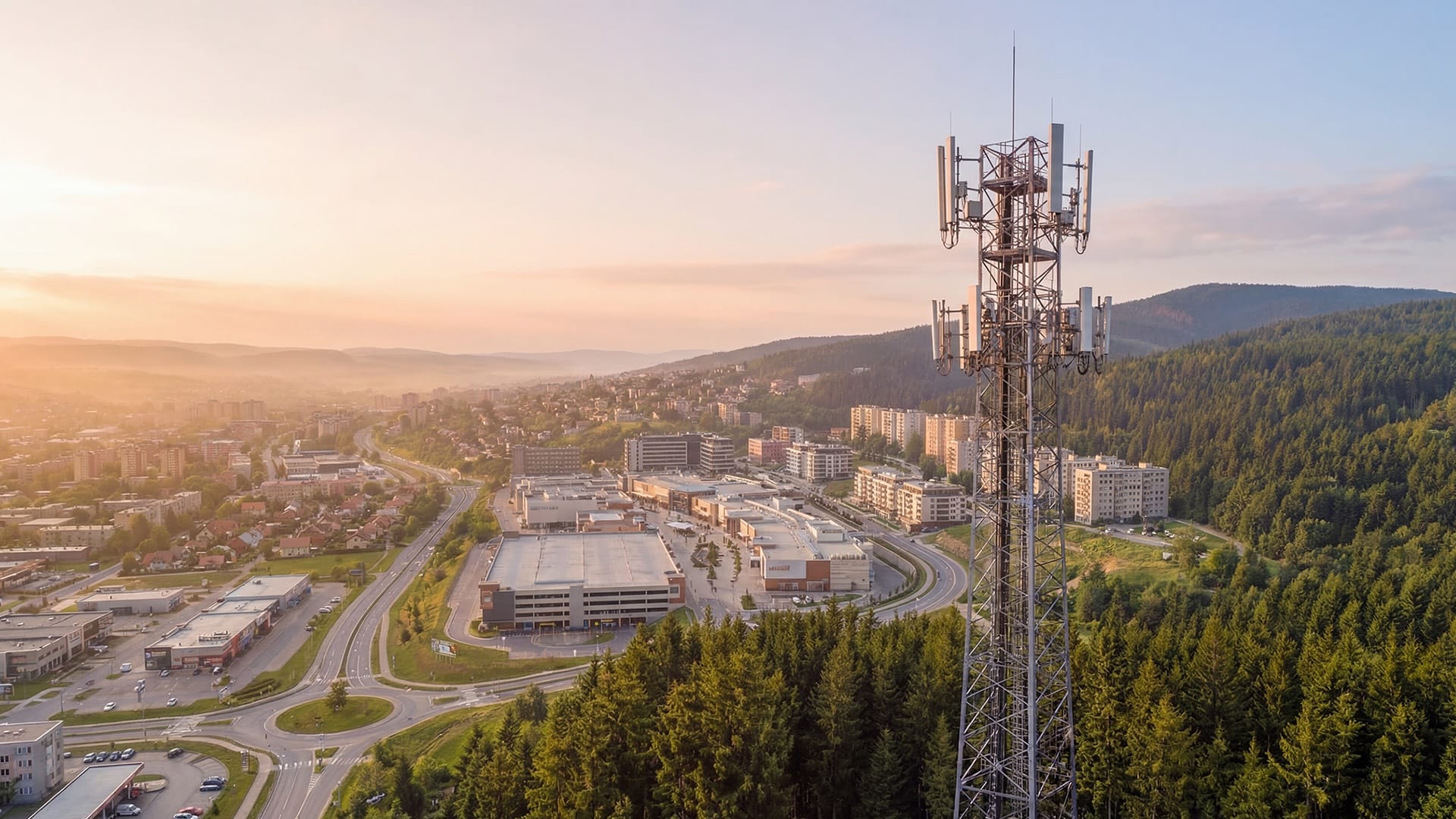
19. A 12-partner coalition to build 6G on AI-native foundations
Nvidia announced a coalition at MWC with Booz Allen, BT Group, Cisco, Deutsche Telekom, Ericsson, MITRE, Nokia, OCUDU Ecosystem Foundation, ODC, SK Telecom, SoftBank, and T-Mobile committed to building 6G on open, AI-native, software-defined platforms.
Alongside the coalition, Nvidia released an open-source 30-billion-parameter Nemotron Large Telco Model fine-tuned on telecom datasets including industry standards and operational logs. The model improves incident summary accuracy in network operations centres from roughly 20% to 60%, reducing the volume of alerts requiring human review. MWC 2026 is hosting triple the AI-RAN innovation compared to last year, with 26 of 33 AI-RAN Alliance demos built on Nvidia AI Aerial.
On the show floor, T-Mobile US ran concurrent AI and 5G workloads combining video streaming, generative AI inference, and AI-powered captioning live. SoftBank demonstrated an industry-first 16-layer massive MIMO on fully software-defined Nvidia hardware. According to Nvidia's State of AI in Telecom report, 77% of respondents expect AI-native wireless networks to deploy faster than any previous generation.
Jensen Huang said: "AI is redefining computing and driving the largest infrastructure buildout in human history, and telecommunications is next."
SK Telecom
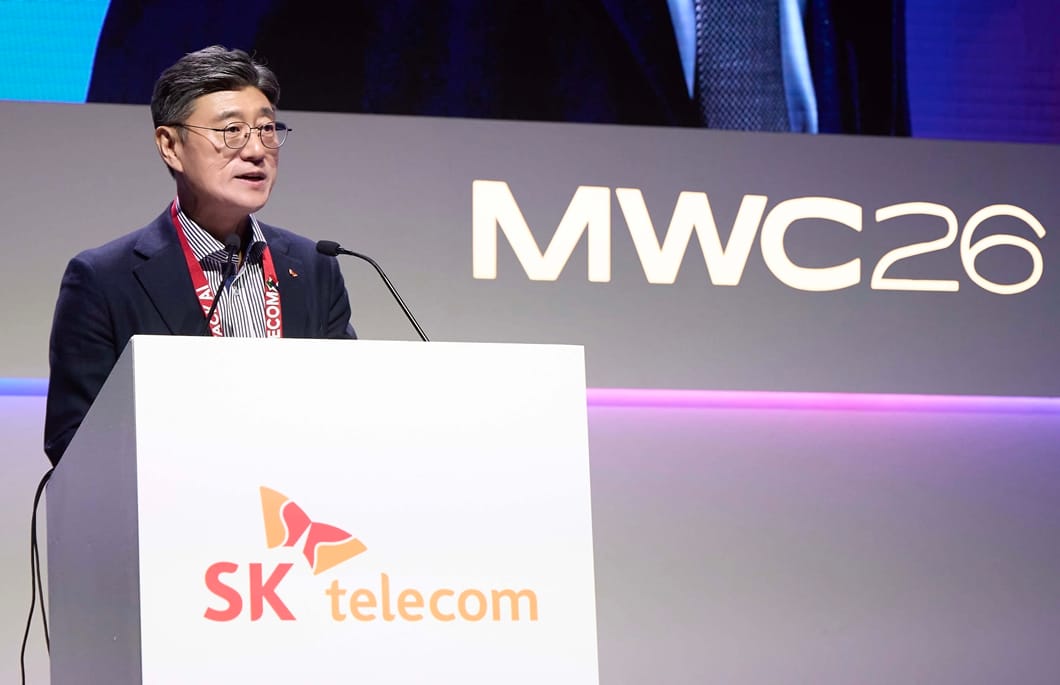
20. A rebuild from 519 billion to 1 trillion AI parameters, with OpenAI
SK Telecom CEO Jung Jai-hun used MWC to outline a full-stack AI-native rebuild of the company's network core, customer service systems, and autonomous operations infrastructure.
Plans include expanding the company's AI foundation model from 519 billion to over 1 trillion parameters and building a new AI data centre in South Korea in partnership with OpenAI.
SoftBank
21. A network that configures itself from plain English instructions
SoftBank demonstrated its AgentRAN system at MWC in collaboration with Northeastern University's Institute for the Wireless Internet of Things, Keysight Technologies, and zTouch Networks.
The system uses SoftBank's Large Telecom Model to translate natural-language operator instructions directly into real-time 5G and 6G network configurations without manual engineering.
Lenovo

22. Qira is rolling out to more than 20 devices and nine regions this month
Lenovo's personal ambient AI assistant, Qira, begins its commercial rollout in the coming weeks across more than 20 devices covering ThinkPad, Yoga, Legion, and IdeaPad product lines, in nine regions including the US, UK, India, and parts of Europe and Latin America, in six languages.
Qira learns work patterns over time, takes proactive steps across third-party apps, and works with both ChatGPT and Gemini. The profile and history carry across all supported Lenovo devices. The Idea Tab Pro Gen 2 running on Snapdragon 8s Gen 4 will be the first Lenovo tablet with Qira. Motorola smartphones follow later in 2026.
23. A desk robot that scans your documents and projects them on the wall
The Lenovo AI Workmate Concept is a long-necked desktop device with an expressive LCD face. It runs an Intel Core Ultra chip with 64GB of RAM and a built-in Pico projector outputting 1080p at up to 200 lumens, projecting onto surfaces up to 40 inches away.
All processing happens on-device. It can scan physical documents, summarise them, and assist with building presentations through voice, gesture, and spatial input.
24. A desk clock that uses AI to plan your workday
The Lenovo AI Work Companion Concept has an almost entirely display-covered front face. Its AI syncs tasks from all connected devices and generates a daily plan with a single tap.
It monitors screen time, prompts breaks, and produces weekly work summaries. It functions as a USB-C charging hub too. Both the Workmate and Work Companion are concept devices with no confirmed shipping dates.
25. A 14-inch laptop that expands to a 19-inch workspace
The ThinkBook Modular AI PC Concept carries a second 14-inch display magnetically attached to the back of its lid via pogo pins.
The second screen detaches for standalone use, props up on a magnetic kickstand, or replaces the keyboard deck entirely for a dual-display setup controlled via Bluetooth keyboard. The base unit weighs under 1kg with hot-swappable I/O ports. Lenovo confirmed this remains a concept device.
Honor
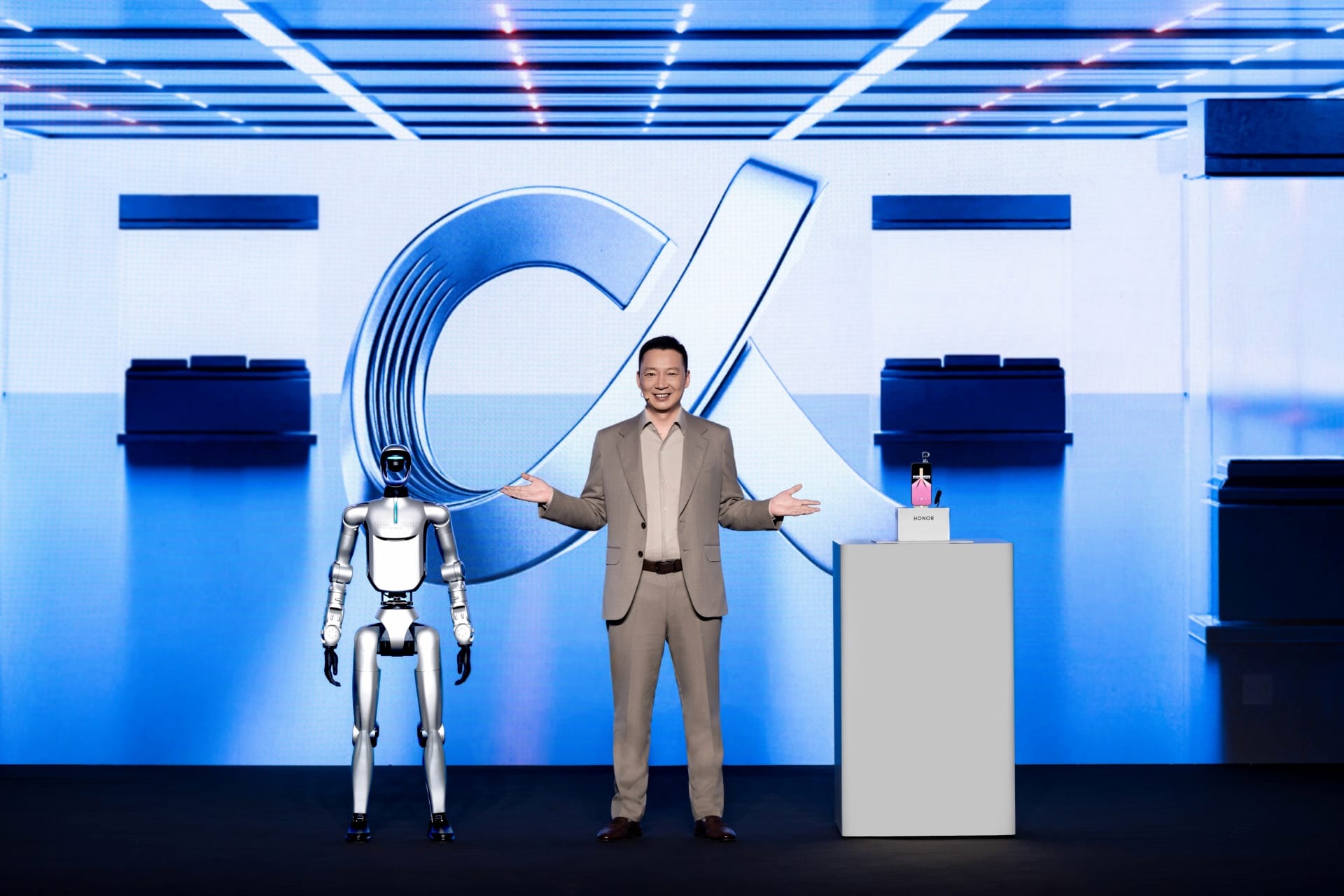
26. A smartphone with a motorised arm that moves, tracks subjects, and ships in China this year
Honor showed a fully working Robot Phone at MWC 2026. The device carries a 200-megapixel camera inside what Honor calls the industry's smallest 4DoF gimbal system, using a custom micro motor roughly 70% smaller than existing solutions and smaller than a 1-euro coin, enabling the system to fit inside a standard phone body. AI Object Tracking follows subjects in real time.
AI SpinShot supports 90 and 180-degree rotational movement for cinematic video. The phone nods and shakes its head in conversation and responds to music with physical movement. Honor also announced a technical collaboration with ARRI, the professional cinema camera company, to bring ARRI Image Science to the Robot Phone's gimbal camera.
Mass production begins in the first half of 2026. China sale confirmed for the second half. No global release date has been announced.
MWC 2026 runs through March 5. Additional announcements are still expected before the show closes.
 Louis Eriakha