Finding new music has long meant digging through charts, curated playlists, and endless genre menus. The process works, but it often nudges listeners toward what‘s popular rather than what actually fits how they feel in the moment.
That experience, though, may be about to change. OpenAI has confirmed that Apple Music will be one of the next major apps integrating directly into ChatGPT. So, instead of browsing playlists, listeners can start with a prompt.
You describe the kind of music you want, for example: “Find music that sounds like home on a long drive with no destination,” and ChatGPT translates that request into Apple Music results, whether that’s a playlist, a set of songs, or a rediscovered favourite.
Genres, charts, and recommendation algorithms still exist, but they now operate in the background. The listener no longer has to think in categories. ChatGPT handles the filtering and matching, letting people focus on expressing what they want to hear.
 Emmanuel Umahi
Why this ChatGPT integration's matters for Apple Music
Apple Music has never lacked depth. Its catalog spans more than 100 million songs, supported by strong editorial curation and close artist relationships. Where it has struggled is friction. Many users, about 25% to 30% still skip multiple tracks before finding something that clicks.
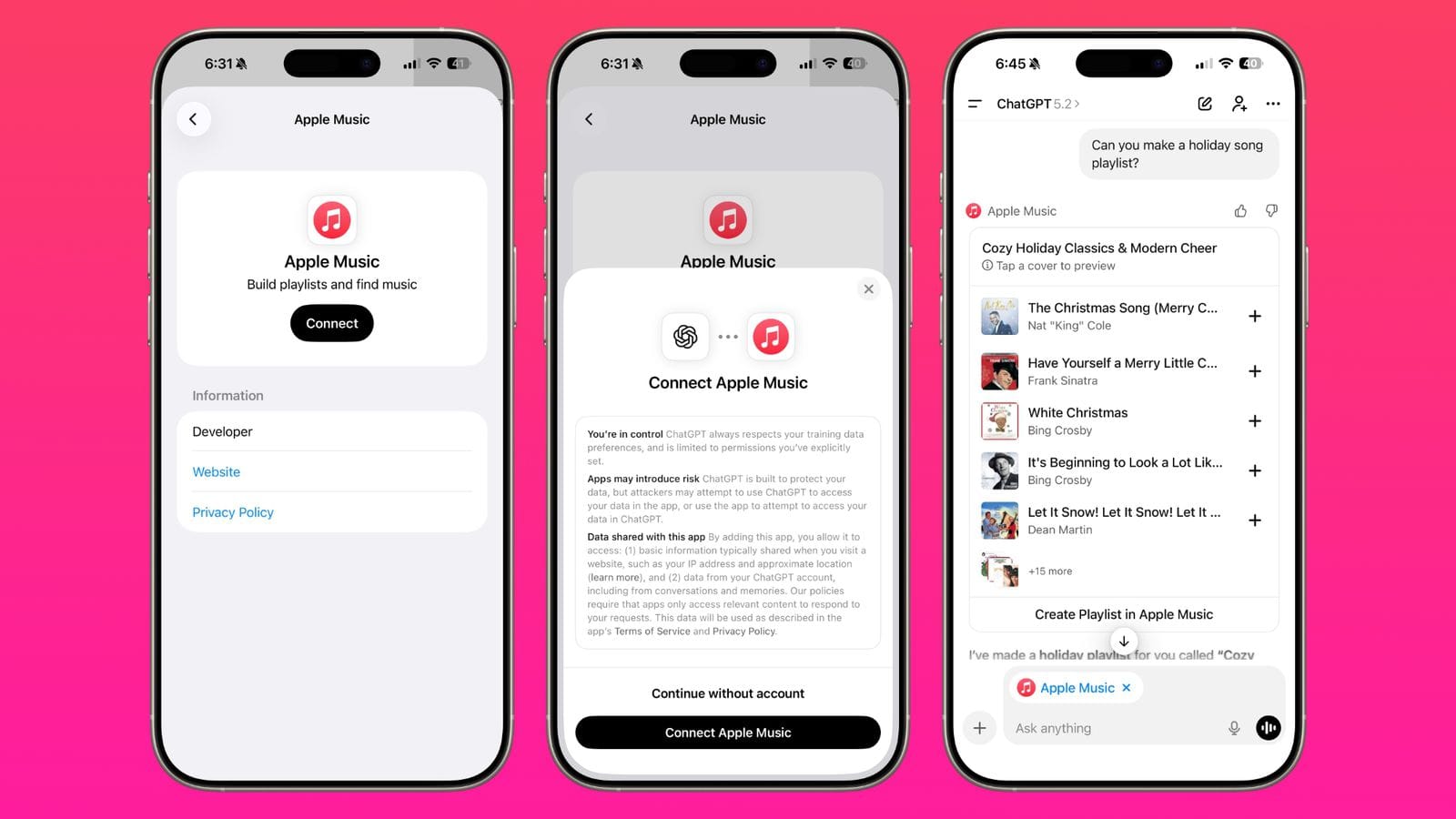
By integrating with ChatGPT, Apple Music removes a key layer of that friction. Discovery no longer begins inside the app. It begins wherever the user already is. That shift also signals a broader change in Apple’s strategy. The company is increasingly willing to let its services surface outside its tight “walled garden,” meeting users where they already spend time instead of pulling them back into a closed ecosystem.
What does the Apple Music ChatGPT integration changes for artists and the industry?
This is where things start to get interesting and a little uncomfortable.
The shift also changes the rules of visibility. Music discovery driven by conversation emphasizes relevance over trends. Songs that are emotionally specific, culturally rooted, or genre-blurring now have a better chance of being found, not because they’re trending, but because they fit a listener’s moment.
For labels and marketers, this means thinking beyond placement. It’s about context: how an AI interprets a song emotionally, geographically, and culturally. That could be great for artists who’ve always lived slightly outside the mainstream.
At the same time, it challenges labels and marketers to think differently. It’s not just about placement anymore; it’s about context. How does an AI understand your music? Where does it place you emotionally, geographically, culturally? Those questions will start to matter more than ever.
Why this feels especially important for listeners
For everyday listeners, especially in regions where music is tied to emotion, community, and memory, this feels like a win.
Being able to describe the kind of music you want and get a meaningful response removes barriers between people and the music they’ll actually love. Streaming feels less transactional: instead of “here’s what’s popular,” it becomes “here’s what fits you right now.”
Apple Music in ChatGPT is also part of a larger trend: ChatGPT is slowly becoming a front door to the internet. As more apps integrate, people will make choices without ever opening the original platforms.
This reshapes who controls discovery, how attention is distributed, and which voices get surfaced. From radio to tapes to streaming, music has always followed technology and this feels like the next turn of that wheel, quieter but just as impactful.
Music has always followed technology, from radio to tapes to streaming. This feels like the next turn of that wheel quieter, but just as impactful.
The takeaway
Apple Music’s integration with ChatGPT isn’t just a new feature; it represents a shift from menus and algorithms to language, context, and feeling. For listeners, it means easier discovery and better matches. For artists, it reshuffles visibility. For the industry, it’s a reminder that the future of music won’t just be streamed, it will be talked into existence.
 Emmanuel Umahi