



November 27, 2025
According to a new report from SafePaper, an independent cybersecurity and digital-privacy research outlet, one of the internet’s most widely used review platforms — Trustpilot — may not be as reliable as it seems.
Millions rely on Trustpilot stars when making everyday online decisions. But behind those glowing reviews, SafePaper’s investigation points to patterns of manipulation: fake testimonials, pay-to-filter tools, and weak protections against fraud.
Recent findings from The Guardian and AP News echo the concern, from scam networks exploiting five-star reviews, to AI-generated content flooding review sites. Trustpilot says it removes millions of fake posts each year, but critics argue the system can still end up favoring visibility over veracity.
This guide breaks down how Trustpilot works, where the red flags lie, and how users can read its reviews more critically in 2025.
See SafePaper’s full analysis and review methodology: Can You Trust Trustpilot? Review Manipulation Marketing.
What Is Trustpilot and Why It Matters
Trustpilot is a popular review platform where anyone can rate a business and share their experience. Its public star ratings — the TrustScore — influence millions of consumer decisions across industries.
But Trustpilot is also a for-profit company. Its paid plans offer tools like review invitations, analytics, and TrustBox widgets that highlight only selected reviews, usually the positive ones.
This business model raises questions. As SafePaper notes:
“The legality doesn’t equate to credibility.”
Trustpilot may aim to reflect public opinion, but the way reviews are collected, filtered, and displayed can sometimes tell a different story.
Is Trustpilot Really Legit?
Legally, yes. Trustpilot Group plc is a registered company based in Denmark, with offices across Europe and the U.S. It’s publicly listed and subject to local regulations.
But being legitimate doesn’t automatically make it trustworthy.
SafePaper’s research highlights several systemic issues:
- Businesses can pay for better visibility and review control.
- “Verified” reviews may be based on customer data uploaded by companies, raising privacy concerns.
- Reviews, both good and bad, can be removed without explanation.
Meanwhile, The Guardian reported that scam firms gave themselves five-star reviews on Trustpilot to appear credible, using fake reviewers, cloned websites, and forged certificates. One such company dropped from 4.7 to 2.8 stars after its fake reviews were flagged.
So while Trustpilot is a legitimate platform, its system is far from immune to bias, manipulation, and abuse, especially when reputation equals revenue.
How Trustpilot Reviews Are Managed: SafePaper’s Real-World Findings
SafePaper, a cybersecurity research outlet, examined how business (both legitimate and otherwise) shape their Trustpilot presence beyond simply earning reviews. The findings suggest that reveiw manipulation on the platform isn’t just theoretical, it’s happening in plain sight.
To show how this works in practice, SafePaper focused on a high-stakes industry: VPN services, where public trust and privacy claims are core to the product.
Here are three common strategies the report identified:
Buying Visibility with Fake or Incentivized Reviews
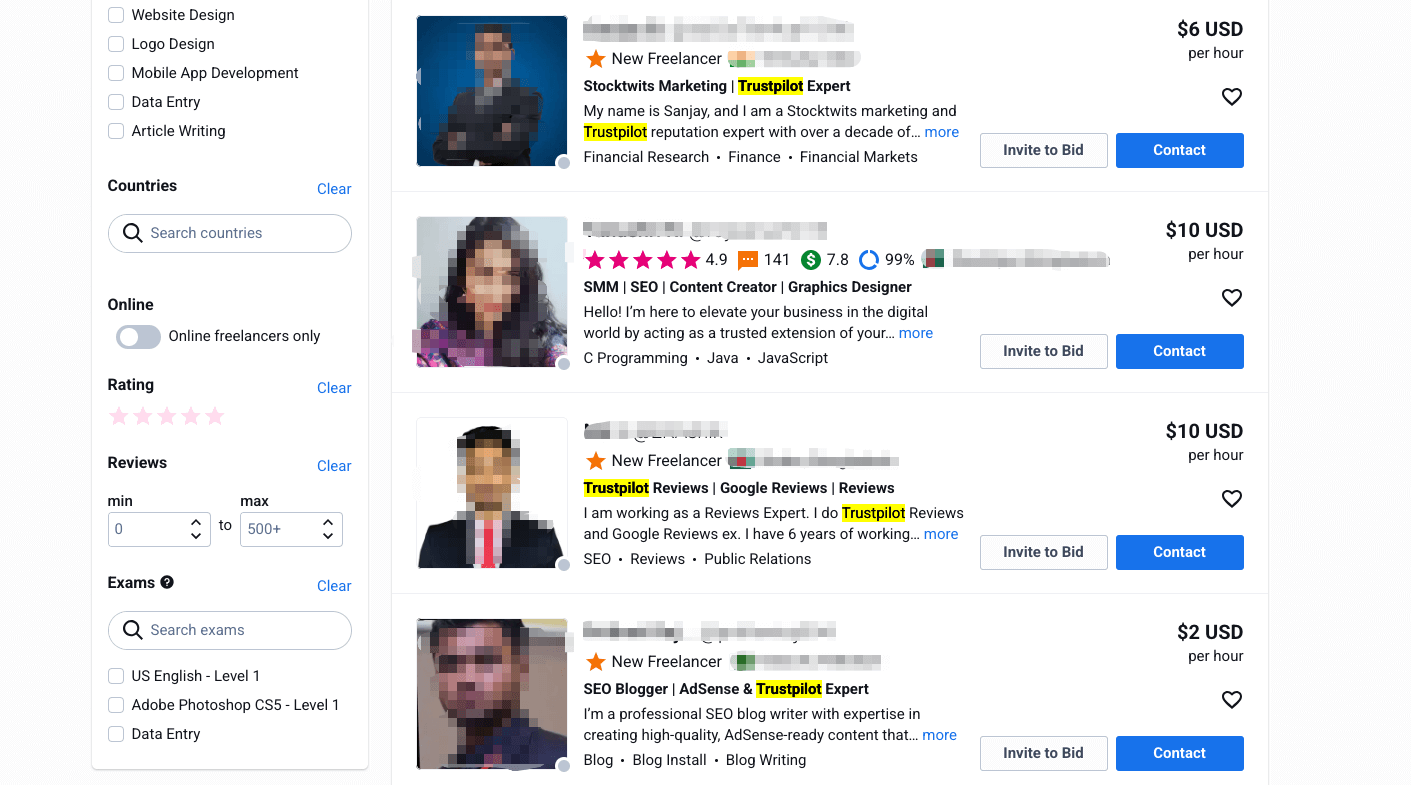
SafePaper cites widespread evidence, backed by investigations from The Guardian, that some companies buy fake five-star reviews through freelance marketplaces. These reviews are often vague, overly enthusiastic, and posted by accounts with little or no profile history.
In some cases, scam firms have used entire fake reviewer networks to boost their own scores while posting negative reviews on competitors. The Guardian found that Trustpilot profiles with cloned documents and forged certificates could still earn high ratings until flagged.
“These scammers see Trustpilot as a vital part of their playbook” — KwikChex, via The Guardian
Selective Positivity on Business Websites
Many companies, including VPN providers, embed filtered review displays on their websites, showing only 4- or 5-star quotes. While technically allowed, this creates a carefully curated impression that may not match the full spectrum of user feedback.
On Trustpilot itself, visibility may also be affected by behind-the-scenes moderation.
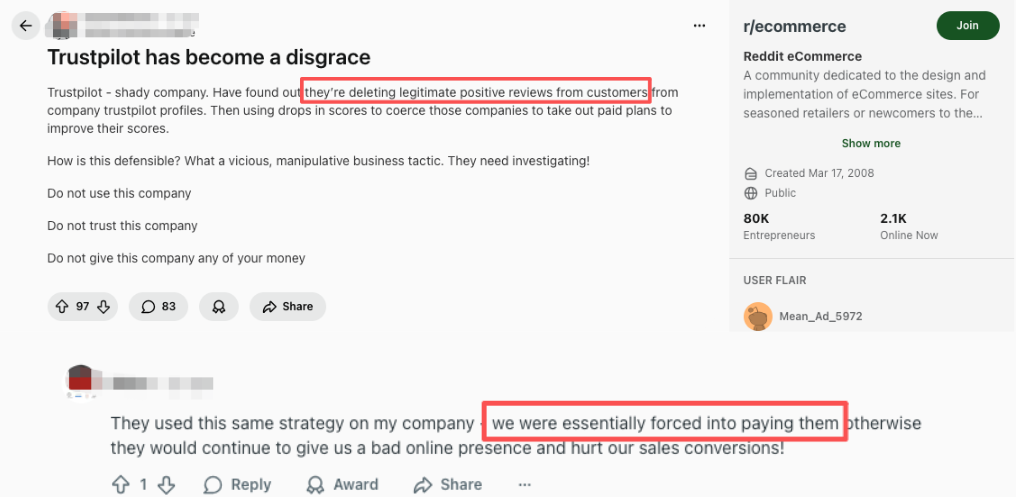
Reddit users have reported that negative reviews were removed, even when accompanied by documentation. Some also claimed positive, verified reviews vanished after refusing paid service upgrades, raising concerns over editorial independence.
As a result, visitors may see a clean wall of praise, even when serious criticism exists behind the scenes.
“Verified Reviews” That Compromise Privacy
Trustpilot’s “verifed” badge implies authenticity, but in may cases, verification occurs when businesses upload user data (such as names and email addresses) to the platform.
For industries like VPNs, whcih advertise strict no-log policies, this raises serious concerns.
As SafePaper writes: “Using personal data to acquire ‘verified’ reviews on Trustpilot is indefensible for services built on privacy”
A verified review might look credible, but sometimes, it reflects a privacy compromise, not stronger trust.
The Rise of AI-Generated Fake Reviews
Fake reviews are nothing new, but AI has supercharged the problem.
In 2024, the Transparency Company analyzed over 70 million reviews and found that up to 14% were likely fake, with over 2.3million strongly suspected of AI-generated.
These reviews often include:
- Generic praise with no specifics
- Overuse of adjectives and clichés (“life-changing”, “game-changer”)
- Highly structured language with empty descriptors
Worse, AI lets bad actors scale up. According to an AP News investigation, fraudsters can now generate hundreds of reviews in minutes, flooding platforms like Trustpilot, Amazon, and Yelp with synthetic praise or smear campaigns.
In response, Trustpilot says it removed 7.4% of all reviews in 2024, many flagged by its own AI detection systems. However, as The Guardian and others note, many fraudulent or misleading reviews still slip through, especially when combined with real feedback. Without context, even savvy users may struggle to tell what’s genuine.
How to Read Trustpilot Reviews Without Being Misled
With so much manipulation happening behind the scenes, how can users still make sense of Trustpilot reviews?
SafePaper suggests a few practical ways to spot red flags and read reviews more critically:
Look Beyond the Stars
Don’t just rely on a high TrustScore. Scroll through individual reviews and check for sudden spikes in recent five-star posts, similar language or structure across multiple reviews, and overly generic praise with no product or support details.
If every review sounds like a marketing slogan, it probably is.
Check Reviewer Profiles
Click on the reviewer’s name. Be cautious if you see no photo or profile info, only one or two total reviews, or all reviews focused on the same product type or brand. Fake accounts often leave surface-level feedback and disappear.
Understand What “Verified” Really Means
A “verified” badge doesn’t always mean the reviewer is more trustworthy. It may simply mean the company uploaded your email address or order details.
For privacy-focused services like VPNs, this may contradict their own data policies.
Don't Rely on One Platform
SafePaper also recommends using a mix of sources to avoid platform-specific bias, including platforms like Google Reviews, Better Business Bureau (BBB), Consumer Affairs, TestFreaks, and Sitejabber, all considered reliable alternatives.
Final Thoughts: What Users Should Trust in 2025
Trust requires more than just five stars.
Consumers should treat online ratings as just one input, not the final word. Real transparency comes from checking multiple sources, understanding how reviews are collected, and questioning what’s not being shown, not just what is.
For businesses, short-term gains from inflated scores or filtered praise may hurt long-term credibility. Building trust means standing behind your product, not just your profile.
As fake reviews become more sophisticated and AI makes deception easier to scale, the ability to think critically about what you read online, and who benefits from it, is more important than ever.
This article is adapted from original research by SafePaper and includes updates from public sources such as The Guardian, AP News, and Trustpilot.
Disclaimer: This analysis is for informational purposes only and does not constitute legal or compliance advice. Businesses should seek professional counsel when managing user reviews or online reputation.
About SafePaper
SafePaper is an independent digital privacy publication based in the U.S., focused on trustworthy, no-fluff guides for everyday internet users. Its team of researchers manually tests VPNs, browsers, and privacy tools to help users stay safe, stay informed, stay free.
Media Contact: Paige West
Email: support@safepaper.io
SOURCE: SafePaper


