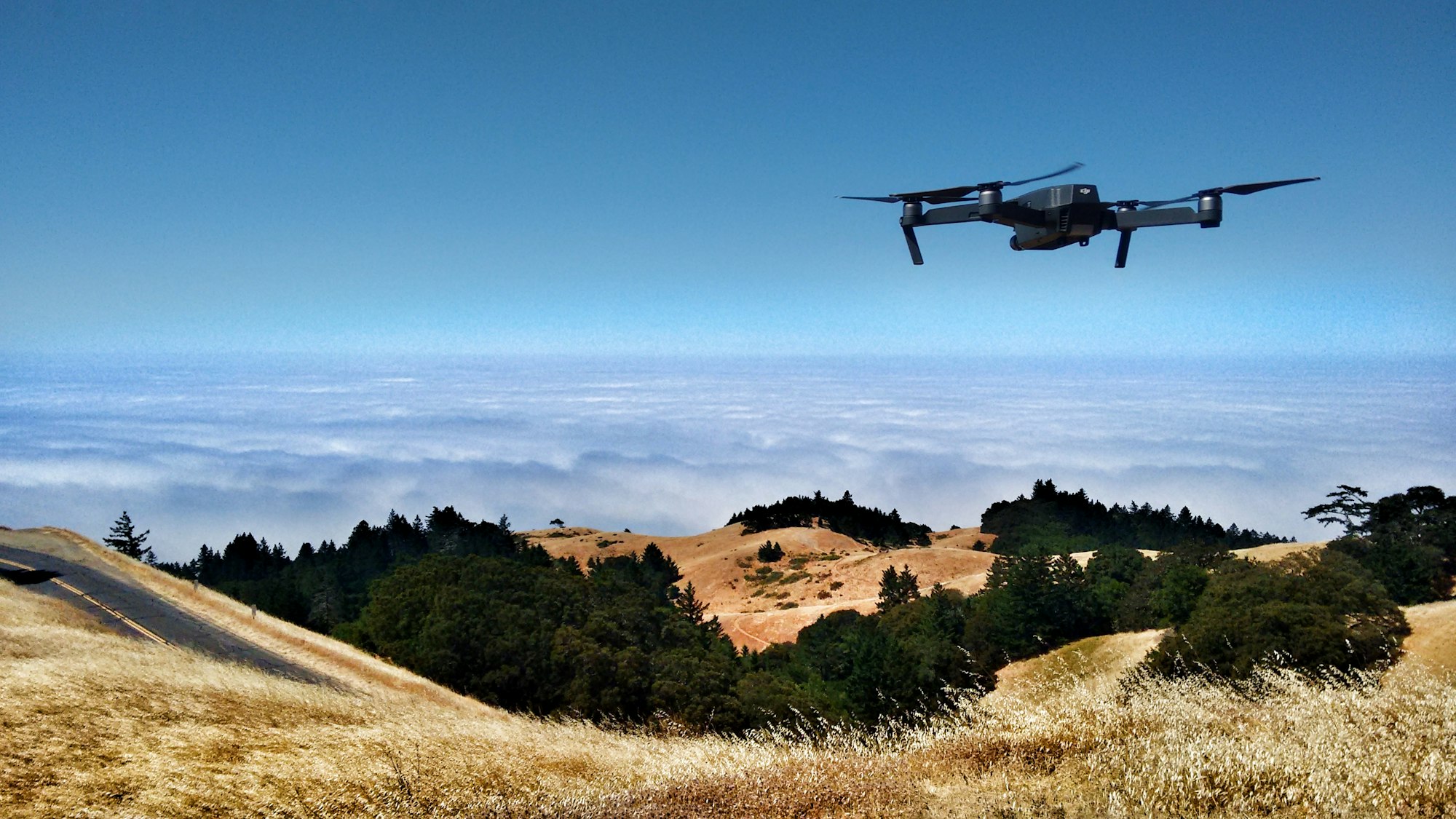
On January 23, China’s National University of Defense Technology demonstrated something that’s reshaping how autonomous weapons work: a single operator supervising over 200 drones simultaneously during urban combat exercises. The swarm operated with minimal human input, relying on what the People’s Liberation Army calls “effect-based control,” designed to function even when communication signals are jammed.
The technology didn’t emerge from traditional programming. It came from watching hawks hunt.
Engineers at Beihang University, a military-linked institution, observed how hawks select vulnerable prey and trained defensive drones to replicate that behaviour, according to The Wall Street Journal. In parallel tests, attack drones mimicked pigeons to evade threats. The result: in a five-versus-five combat simulation, the hawk-trained drones eliminated all opponents in 5.3 seconds, according to a patent filed in April 2024.
 Louis Eriakha
That approach is now being scaled across China’s military. Since early 2022, Chinese entities have filed more than 930 patents that relate to swarm intelligence for military applications. The U.S., by comparison, filed roughly 60 during the same period, many of them from Chinese researchers.
The patent filing gap reflects a production gap. China manufactures over one million drones annually, most of them low-cost units suitable for military swarms. U.S. production sits in the tens of thousands, with significantly higher per-unit costs. That manufacturing advantage is now combining with AI research that draws on animal behaviour ranging from hawks and wolves to ants and whales.
In September 2024, China’s state media showcased “robot wolves”—weaponised versions of quadruped robots similar to Boston Dynamics’ Spot. The manufacturer, state-owned China South Industries Group, told reporters the systems are being developed for coordinated operations with aerial drone swarms, mimicking how wolf packs hunt cooperatively.
Professor Duan Haibin, who led the hawk-and-pigeon modeling project, said at a July 2024 Beijing conference that researchers are working to replicate eagle and fruit fly vision systems to improve how autonomous drones perceive their environment.
The tactical implications are already visible. Chinese military theorists wrote in October 2024 that the AI era brings a new style of warfighting "driven by algorithms, with unmanned systems as the main fighting force and swarm operations as the primary mode of combat.”
By contrast, U.S. autonomous systems still struggle with a fundamental problem. Justin Bradley of North Carolina State University put it plainly: “We don’t have good-enough perception on these vehicles for them to know where each other are.” That forces U.S. drone swarms to rely heavily on radio communication, which can be jammed. When Anduril’s Lattice system underwent Navy testing in May 2025, it failed.
The numbers point to a widening capability gap, driven not by breakthrough science but by systematic integration of existing technologies at scale. China isn’t inventing new physics. It’s industrialising AI-powered autonomous weapons faster than anyone else.
 Ogbonda Chivumnovu