



Anthropic is bringing Claude Code directly into Slack, and while it might sound like another AI feature drop, it could mark a meaningful shift in how developers write and ship software.
Starting Monday, the feature enters beta as a research preview, and this time, it’s not just Claude answering coding questions in a chat window. Developers can tag @Claude in a Slack thread and kick off an entire coding workflow based on the surrounding conversation.
It usually starts with someone reporting a bug in Slack, you mention Claude, and it analyzes the thread, identifies the right repo, spins up a coding session, posts updates, and ends by sharing a link to a ready-to-review pull request. No switching tools, no digging through tabs, no bouncing between Slack and your IDE.
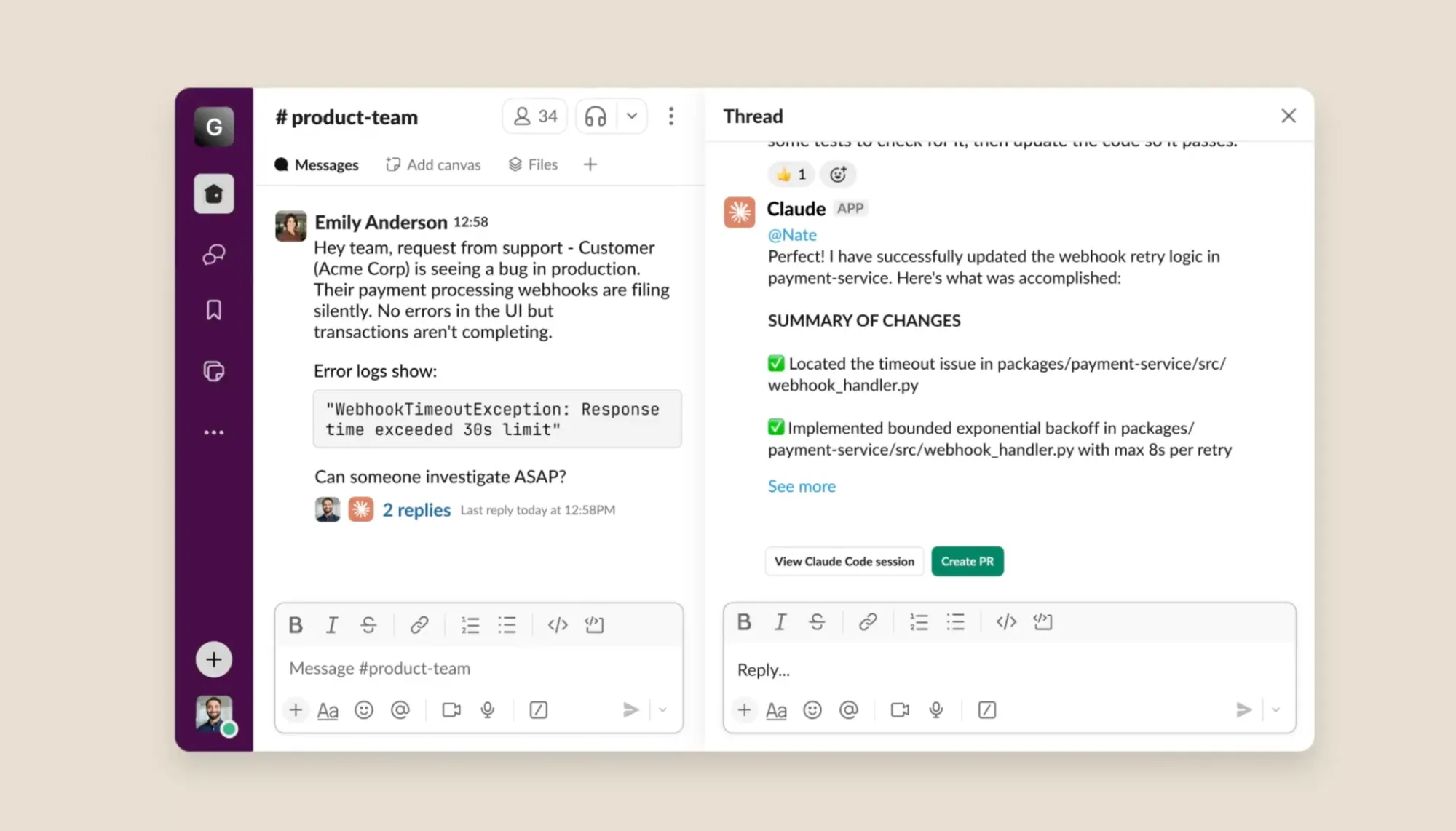
Until now, Slack-based coding help has been lightweight: quick snippets, debugging hints, and documentation lookups. This upgrade shifts Slack closer to a collaboration-first coding environment, where conversations can flow directly into automated code changes.
But Anthropic isn’t alone in pursuing this direction. Cursor has Slack tools for drafting and debugging code, GitHub Copilot recently introduced auto-generated pull requests from chat, and OpenAI’s early Codex model powered custom Slack coding bots years ago. The trend is clear: coding assistants are moving out of the IDE and into the collaboration hubs where engineering teams already spend most of their time.
For Slack, this is a strategic move. If it becomes the environment where AI agents can operate with full team context, it positions itself at the center of modern engineering work. The AI that wins Slack may ultimately influence how teams structure their development workflows.
 Ogbonda Chivumnovu
There are caveats, though. Giving an AI agent repo access inside Slack adds a new surface for security and auditing. It also introduces fresh dependencies because if Slack goes down or Claude hits service limits, development workflows could halt unexpectedly.
Anthropic hasn’t shared a timeline for a broader rollout, but the early release signals a future where coding assistants won’t be defined by model quality alone. Workflow integration and distribution matter just as much.
The takeaway
Claude Code inside Slack hints at an era where software development happens inside the conversations that spark the work. Instead of jumping between tools, AI agents will sit in the same channels where teams brainstorm, debate, and plan, and then turn those chats into actual code.
It could make developers faster and workflows smoother, but it also raises questions about security, reliability, and how much automation teams are willing to hand off to AI. One thing is certain: the next major battleground for AI coding tools isn’t IDE vs AI, it’s Slack vs everything else.
 Oyinebiladou Omemu


