For a lot of creators, dropping a link on Facebook is almost muscle memory. You post, add the link to your product, affiliate offer, or newsletter, and hope it pulls people off the platform and into your world. That small action might soon come with a price tag.
Meta is testing a change that could limit how many links some users can share on Facebook. According to a screenshot shared by social media strategist Matt Navarra, creators who were part of this test received a notification recently from Meta stating: "Starting December 16, certain Facebook profiles without Meta Verified, including yours, will be limited to sharing links in 2 links in two organic posts per month."
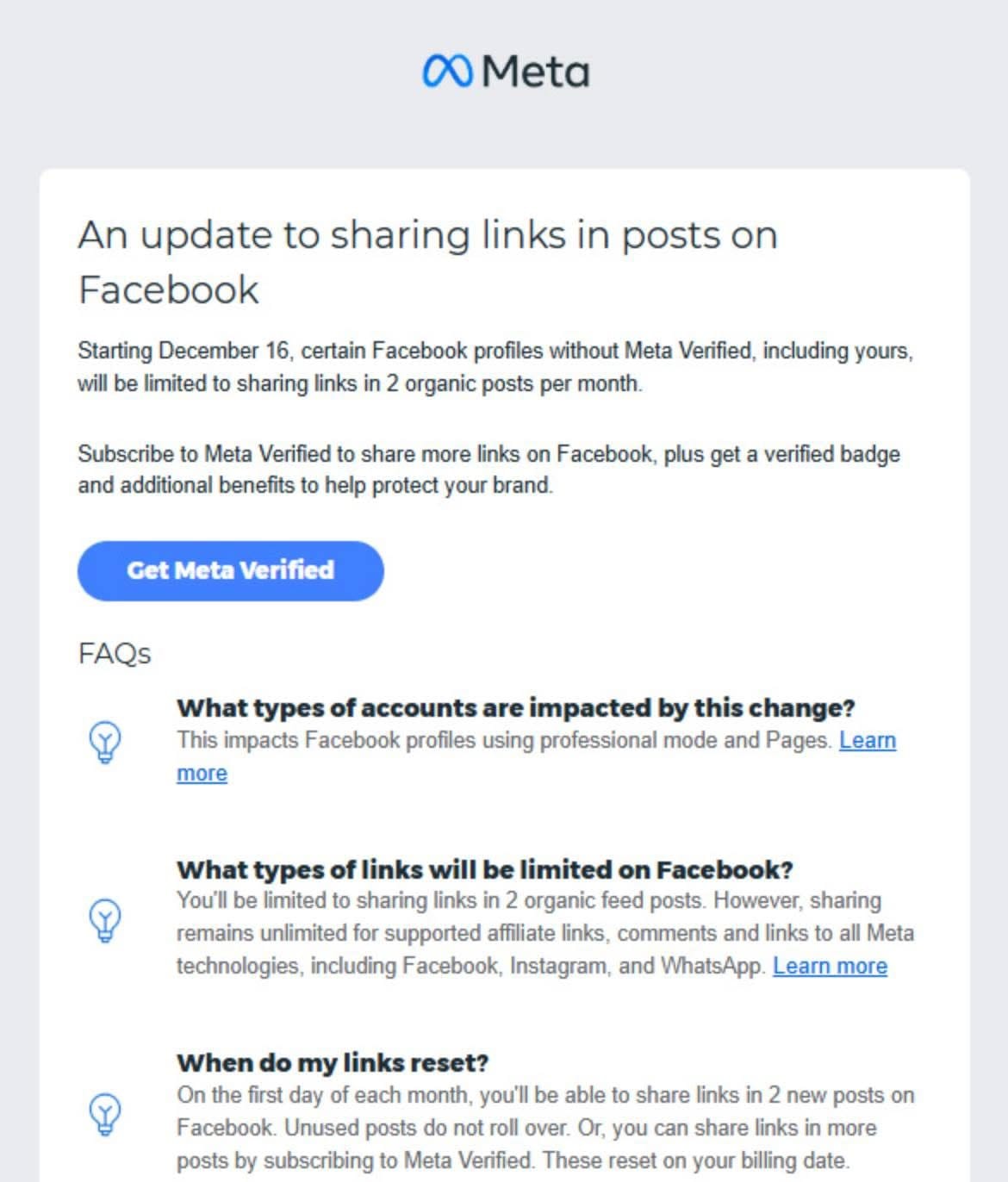
Anything more than two links would require a Meta Verified subscription, which starts at $14.99 per month.
On paper, this looks like a simple experiment. In reality, it cuts right to the heart of how many creators use Facebook as a traffic engine. Affiliate marketers, small business owners, coaches, and writers often rely on frequent links to drive sales or leads elsewhere. Limiting those links forces a rethink of how, or even whether, Facebook still works for them.
A Meta spokesperson has framed the test to Engadget as a way to understand "whether the ability to publish an increased volume of posts with links adds additional value for Meta Verified subscribers."
That explanation fits a broader pattern. Platforms are under pressure to monetise creators more directly, and one of the easiest levers to pull is access. Once free features become gated, especially when they encourage users to leave the app.
This test comes at a very interesting time, as Meta recently released its Transparency report for Q3 2025, which states, "98.1% of the views in the US during Q3 2025 did not include a link to a source outside of Facebook. For the 1.9% of views in posts that did include a link, they typically came from a Page the person followed." That data suggests links are not central to most people’s Facebook experience, which makes it easier for Meta to treat them as a premium feature rather than a default one.
For creators, the impact could be dire. Fewer links mean fewer chances to test offers, fewer campaign touchpoints, and more pressure to compress everything into one or two posts. It also creates a clear fork in the road: pay for Meta Verified, drastically limit how you use Facebook, or start investing more heavily in platforms where linking is still unrestricted, or better still, build your own community.
This isn’t a Meta-only instinct. In 2023, X removed headlines from news links, arguing that it improved aesthetics while quietly reducing the emphasis on outbound clicks. Across the industry, the signal is consistent. Platforms want users to stay put, scrolling longer, and interacting inside the app, not leaving it.
Whether Meta rolls this test out widely is still uncertain. But even as an experiment, it signals how creators are increasingly viewed: not just as users, but as revenue opportunities. If link limits become normalised, Facebook may shift from being a traffic hub to a gated space where reach and flexibility depend on how much you’re willing to pay.
For creators who built their businesses on free distribution, that would be a fundamental change, and one that forces hard decisions about where their time, content, and money are best spent.
 Techloy