Google DeepMind launched Project Genie on January 29, an experimental web app that turns text prompts into navigable environments. The prototype, powered by the company's Genie 3 world model alongside Nano Banana Pro and Gemini, is rolling out exclusively to Google AI Ultra subscribers in the U.S. who are 18 and older.
The app operates through three main functions. Users start with "World Sketching," typing prompts or uploading images to define environments and characters. From there, they enter "World Exploration," where the system generates the path ahead in real time as they move through the scene. Finally, "World Remixing" lets users modify existing creations by adjusting prompts or building on worlds others have shared.
 Partner Content
That shift, from pre-rendered content to real-time world generation, marks a technical leap. Where traditional game engines require artists to model every tree and building over months, Project Genie builds the path ahead as you move. To put that in perspective, creating a single explorable game level typically takes development teams weeks. This does it in seconds.
The technology runs on three systems working together. Genie 3, predicts what should appear next based on your movements. Nano Banana Pro converts text prompts into visual foundations. And Gemini handles camera controls and character movement. According to Google’s announcement, Genie 3 “simulates physics and interactions for dynamic worlds, while its breakthrough consistency enables the simulation of any real-world scenario.”
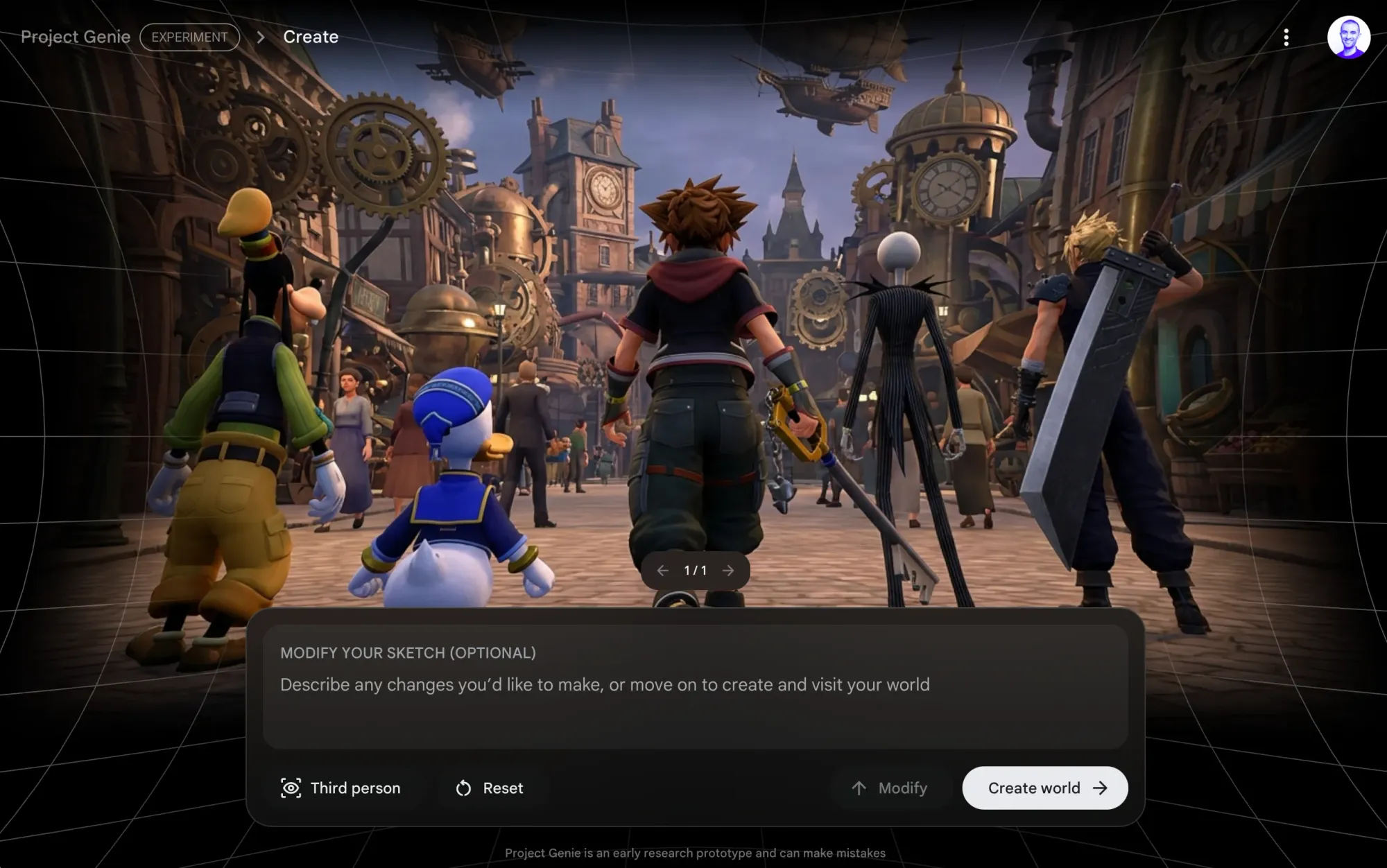
What really sets this apart isn’t just the speed, but the accessibility barrier Google has built around it. Access costs $249.99 per month through Google AI Ultra—roughly the price of a new PlayStation 5 every month—available only to U.S. users 18 and older.
Sessions cap at 60 seconds due to computational demands. That’s enough time to explore a single room or walk down a short path, but nowhere near the hours-long sessions gamers expect. The system also runs at 24 FPS in 720p—half the frame rate and resolution of most modern games, which typically hit 60 FPS in 1080p or 4K.
Still, the release signals where interactive AI is heading. Google says it plans to expand access beyond the U.S., though no timeline has been announced. For now, Project Genie offers the first glimpse of AI-generated worlds you can actually navigate—at a premium price, for a premium minute.
 Damilare Odedina