On March 12, 2026, Google introduced two major new features for Google Maps, bringing its Gemini AI models deeper into the navigation platform used by more than 2 billion monthly users worldwide.
The new tools — Ask Maps and Immersive Navigation — were announced on March 12, 2026, in a blog post by Miriam Daniel. Both features use Google’s Gemini to change how people search for places and navigate while driving.
“Today, Google Maps is fundamentally changing what a map can do,” Daniel wrote. “By bringing together the world’s freshest map with our most capable Gemini models, we’re transforming exploration into a simple conversation and making driving more intuitive than ever with our biggest navigation upgrade in over a decade.”
 Damilare Odedina
Ask Maps: Searching With Natural Questions
The first feature, Ask Maps, introduces a conversational search experience inside Google Maps.
Users can tap a new Ask Maps button in the app and type questions in natural language instead of using traditional search queries. Gemini then interprets the request and returns relevant suggestions alongside a map.
For example, Google says users could ask questions such as:
- “My phone is dying, where can I charge it without waiting in line for coffee?”
- “Is there a public tennis court with lights on that I can play at tonight?”
Maps then displays nearby locations that match the request.
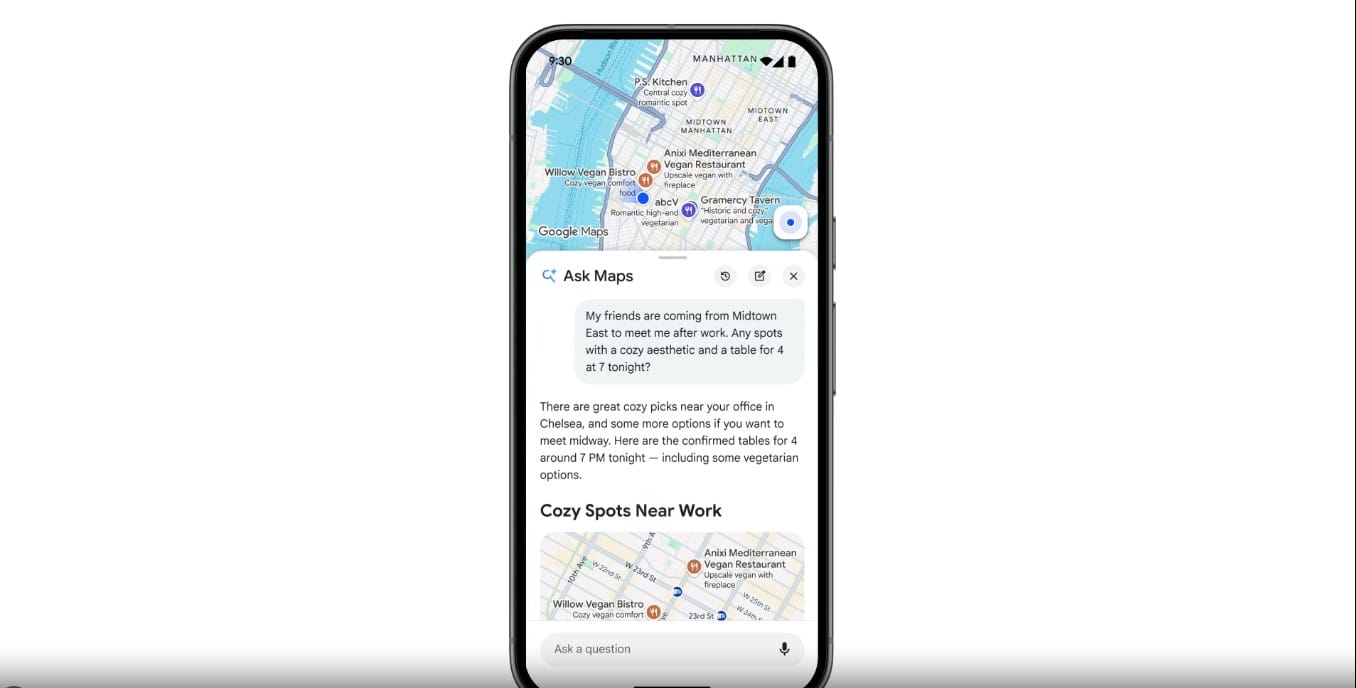
The tool can also help with trip planning. A user might ask for recommended stops along a route to destinations like the Grand Canyon, and Maps will return suggestions with directions, estimated travel times, and tips from other visitors.
Google says Ask Maps draws from a database of more than 300 million places, supported by contributions from over 500 million users.
Results are also personalised. The system uses a person’s search history and saved places within Google Maps to tailor recommendations. For example, someone who frequently searches for vegan restaurants may see those options prioritised in suggestions.
Once a result appears, users can take action directly in the app — booking reservations, saving locations, sharing them, or starting navigation.
Ask Maps is rolling out now in the United States and India on Android and iOS, with desktop support expected later.
Immersive Navigation: A Major Update to Driving Directions
The second feature, Immersive Navigation, is a redesigned driving experience that Google describes as its largest navigation upgrade in more than a decade.
The update changes how routes, road details, and directions appear during navigation.
One of the biggest additions is a 3D visual map, which renders buildings, terrain, and elevated roads along the route using fresh Street View and aerial imagery processed by Gemini.
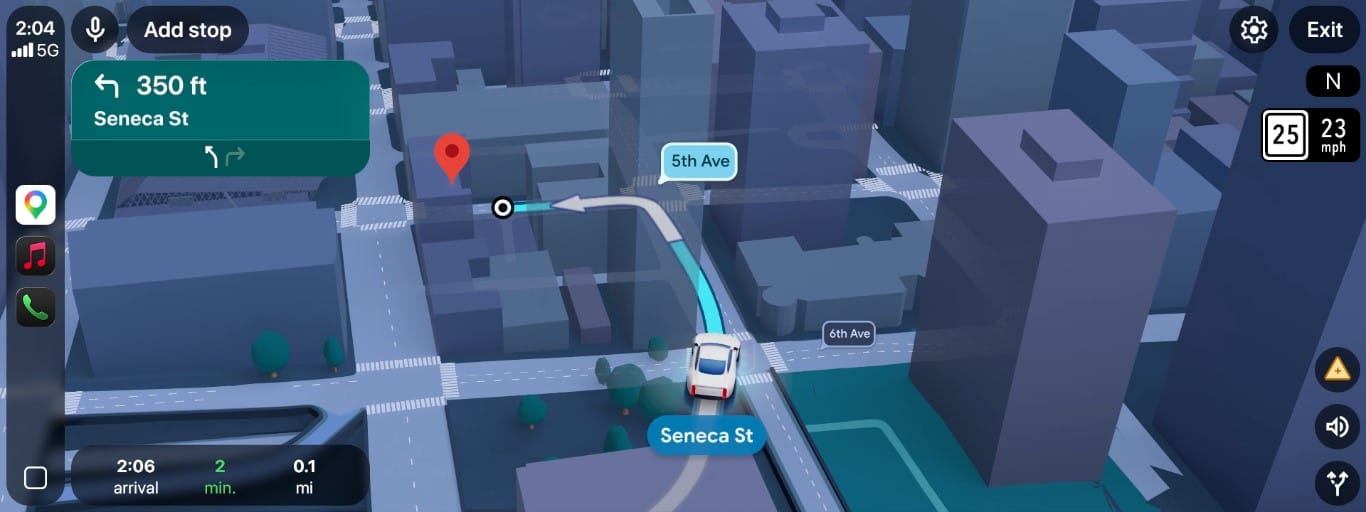
Other improvements include:
- More detailed road guidance: Lane positions, crosswalks, traffic signals, and stop signs appear as drivers approach turns or merges.
- Expanded route visibility: Buildings can appear transparent on the map so drivers can see further ahead at complex intersections.
- More natural voice directions: Instead of distance-based prompts, directions may sound more conversational, such as “Go past this exit and take the next one.”
- Route comparison: Maps now explains trade-offs between alternate routes, such as a longer drive with less traffic or a shorter route that includes tolls.
- Improved arrival guidance: Drivers can preview parking areas and building entrances using Street View before reaching their destination.
Google says the system processes more than five million traffic updates every second, drawing on reports from both Maps and Waze users, which generate more than 10 million road reports daily.
Immersive Navigation is beginning its rollout in the United States, with support for additional countries and devices — including Apple CarPlay, Android Auto, and vehicles with Google built-in — expected in the coming months.
Gemini’s Expanding Role in Google Maps
Google first introduced Gemini-powered features in Maps in late 2025, followed by updates to walking and cycling navigation earlier in 2026.
With Ask Maps and Immersive Navigation, the company is now using its AI models to improve both how users search for places and how they move through the world using Maps.
 Damilare Odedina