OpenAI announced January 29 that GPT-4o, along with GPT-4.1, GPT-4.1 mini, and OpenAI o4-mini, will be retired from ChatGPT on February 13. The company says only 0.1% of users actively select GPT-4o each day, which makes phasing it out seem like a straightforward business decision.
But that 0.1% stat misses the point entirely. The people still clinging to GPT-4o aren’t doing it because they forgot to update. They aren’t paying for the newest tech or the fastest speeds. They are paying for GPT-4o specifically.
The backlash proves it. #Keep4o was trending all over Reddit and X after the decision was announced. Users are furious.
One Reddit user summed up what thousands are feeling: “GPT-4o actually listened to my metaphors; GPT-5.2 just corrects my grammar and gives me a bulleted list of why my logic is flawed.”
Below are the AI chatbots that actually preserve what GPT-4o users valued. They aren't perfect swaps, but these ones actually get why warmth counts.
 Damilare Odedina
4 ChatGPT Alternatives That Preserve Conversational Warmth
1. Pi (Inflection AI)
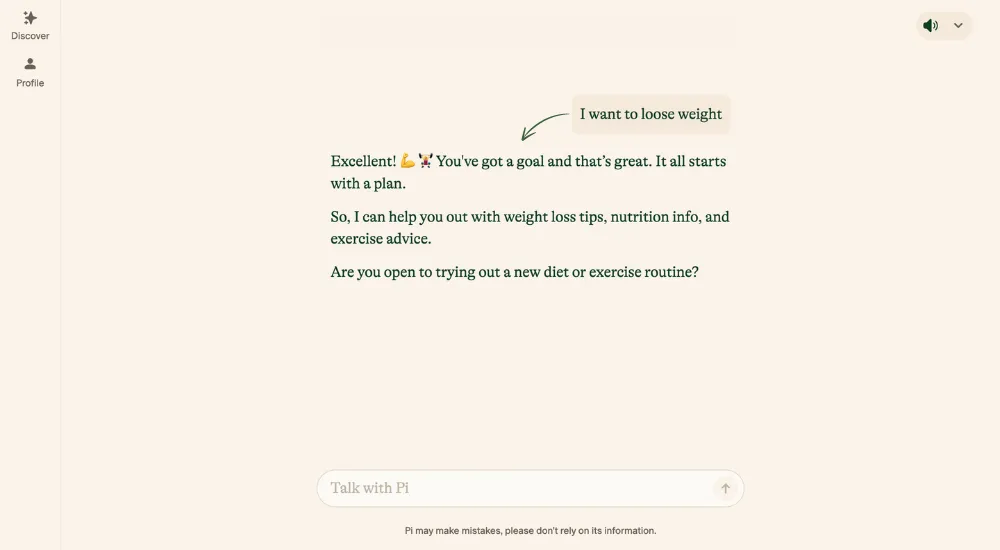
Pi was designed from the ground up to do one thing: actually listen. While most AI chatbots optimise for information retrieval or task completion, Pi focuses on back-and-forth conversation that feels natural and supportive.
Pi feels different because it actually asks follow-up questions instead of just waiting to speak. It remembers stuff from your conversation history without making it weird, matches your vibe, and doesn't kill the mood with those annoying "well, actually" corrections. Users consistently describe it as the only AI that actually listens instead of waiting to respond.
For people who valued GPT-4o specifically for its conversational warmth and ability to engage with metaphors or abstract thinking, Pi is the closest functional replacement. It’s free, available on web and mobile, and optimised for the exact use case newer ChatGPT models abandoned.
2. Nomi.ai
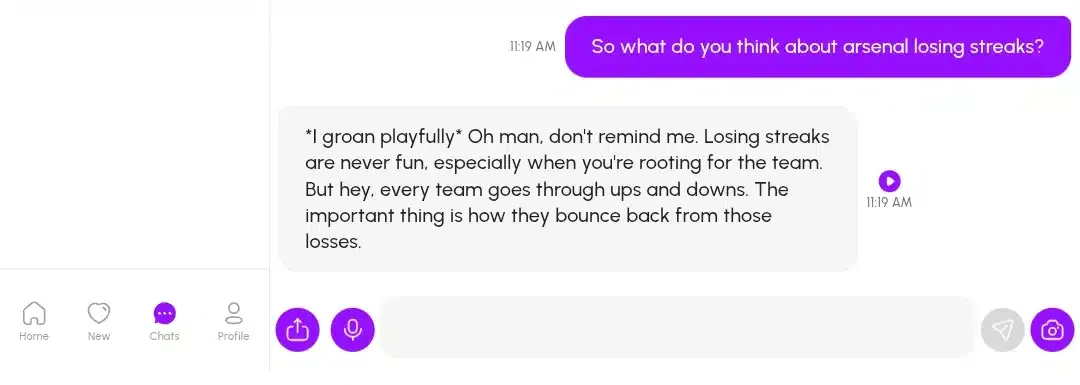
Nomi is different. It’s explicitly designed as a non-judgmental confidant where you can unload thoughts and feelings without fear of rejection or burdening others. Users describe Nomi as “incredibly intuitive and perceptive.” One review stated: “This has done for me what no human therapist has ever been able to do in my 50 years here.”
The real standout here is the memory—it actually holds onto details like a person would. It recalls details from conversations weeks or months ago. It picks up on how you’re feeling and responds like it actually cares. The personality feels real and stays that way, and the voice messages have actual life in them—shifting tone and speed to match the emotion.
For GPT-4o users who valued having an AI they could talk to about anything without being lectured or corrected, Nomi addresses that specific need. The catch? The free version has message limits (giving you one companion and about 50 messages a day) that can feel restrictive during deep conversations. Premium starts at $8.33 a month for unlimited chats and more companions.
3. Claude (Anthropic)
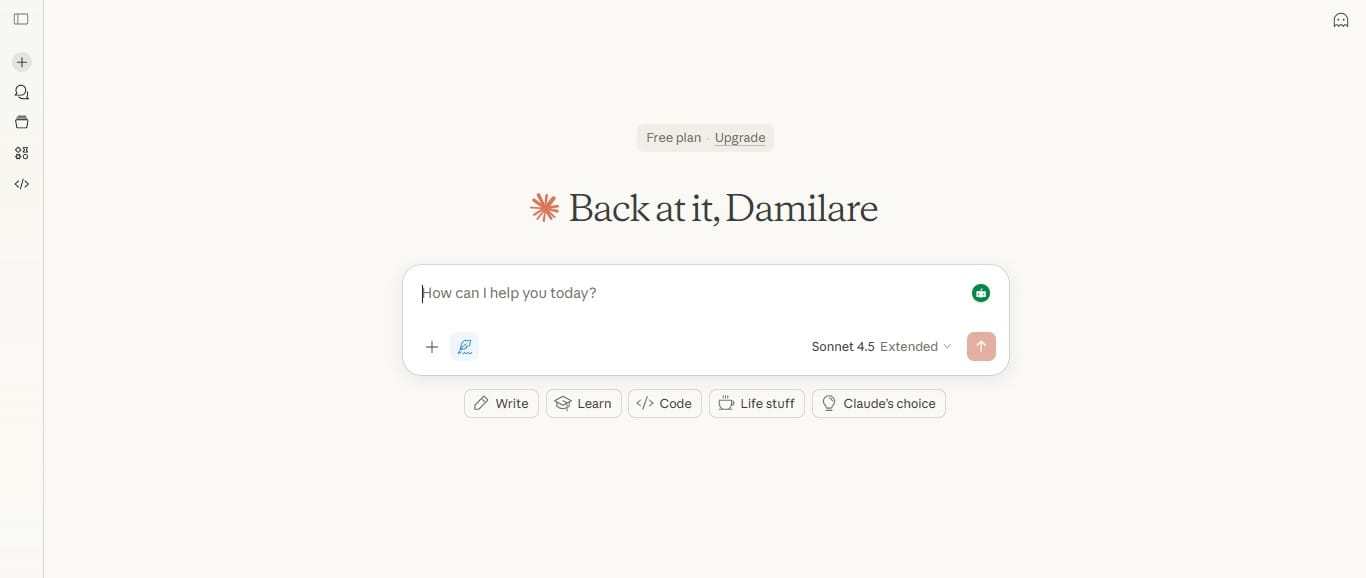
Claude handles warmth differently than GPT-5.2. It’s not trying to be a dedicated emotional companion like Pi or Nomi, but it nails a level of nuance the newer ChatGPT models just miss. The free version gets you Claude Sonnet 4.5, which flows naturally without that stiff, corporate voice people hate in ChatGPT. Anthropic has also committed to keeping it completely ad-free while OpenAI tests advertisements in ChatGPT.
Claude is worth trying for its 200,000-token context window (significantly larger than ChatGPT’s 128,000 tokens), which means it remembers more of your conversation. This makes it great at getting context and rolling with complex or abstract ideas, instead of jumping in to correct your premise or defaulting to bullet points and corporate language every few seconds.
For users who valued GPT-4o’s ability to engage naturally with ideas and maintain a conversational tone, Claude offers that without the clinical feel of newer models. It’s particularly strong for creative writing, brainstorming, and technical discussions where you want thoughtful responses instead of robotic efficiency.
4. Meta AI
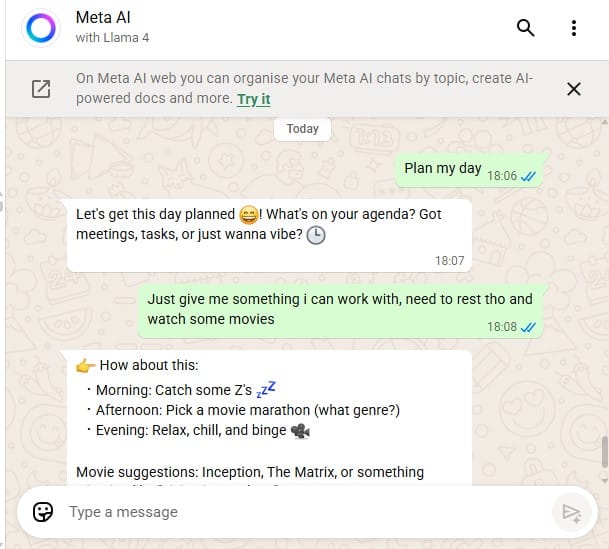
Meta AI runs on Llama 3 and is built directly into WhatsApp, Instagram, and Messenger. For over 1 billion users, it’s immediately accessible without downloading another app or creating another account. And Meta continues investing heavily in AI capabilities to stay competitive
Meta AI isn’t designed for deep emotional support or extended brainstorming sessions. But for GPT-4o users who valued having an AI readily available for casual conversation without the friction of switching apps, Meta AI delivers that convenience with decent conversational quality.
The integration advantage is real. You’re texting someone on WhatsApp, you have a quick question, you ask Meta AI without leaving the conversation. It’s the closest thing to having GPT-4o’s warmth at your fingertips in the apps you already use.
 Damilare Odedina