Perhaps you’ve been thinking about working in North America, whether as someone just starting their career or an experienced, skilled worker in tech.
Wondering which route would be faster or allow you to legally work without needing a Labour Market Impact Assessment (LMIA) or a pre-arranged job offer can be a hassle.
Working Holiday Visa is oftentimes the easiest way to get started as it allows you to live and work in a country offering it temporarily without strict requirements.
This year, Canada has started the 2026 season for the International Experience Canada (IEC) program, with a first set of 10,689 applications sent under the Working Holiday Visa category. Out of the total Working Holiday quota of 42,127, some 35,283 spots are still available at this early stage.
If you are considering applying, here’s what you need to know and how to do it.
Canada’s Working Holiday Visa and Who It’s For

Canada’s Working Holiday Visa is one of the most accessible ways for young people to live and work abroad temporarily for up to 2 years. It falls under the International Experience Canada (IEC) program, which opens the door for participants between 18 and 35 years old, from over 36 partner countries.
Unlike work visas that require a specific job offer or employer sponsorship, the Working Holiday Visa provides you the luxury of an open work permit where you can take up employment with any employer in Canada. Basically, it gives you the freedom to move between jobs and experience life in multiple cities.
Eligibility and Required Documents Checklist

While this open work permit allows you to travel without sponsorship and work for almost any employer in Canada, there are still key criteria you need to meet before applying. These requirements are what makes the Working Holiday Visa possible, so it’s important to keep them in mind early on. As an applicant, you must meet the following conditions.
Eligibility Criteria
- Applicants must be between 18 and 35 years old. The exact age range may depend on your country of citizenship.
- You must be a citizen of one of the countries that has a bilateral youth mobility agreement with Canada under the IEC program.
- Applicants are required to have at least CAD $2,500 ($1,846) available upon arrival to support themselves.
- Proof of health insurance covering medical care, hospitalization, and repatriation is mandatory for the full duration of your stay.
- Applicants must have a clean criminal record and be admissible to Canada.
Document Requirements
To complete your application, you’ll need to prepare and submit the following documents:
- A valid passport covering the entire duration of your stay in Canada, with at least one blank page.
- Proof of funds showing a minimum of CAD $2,500 ($1,846) to cover initial living expenses.
- Health insurance documentation covering medical care, hospitalization, and repatriation for the full length of your stay.
- Police certificates from every country where you have lived for six months or more since the age of 18.
- An updated curriculum vitae.
- An Invitation to Apply (ITA) issued through the IEC pool.
- A passport-style photo that meets Canada’s size and formatting requirements.
- A completed Family Information Form (IMM 5707).
- A Letter of Introduction (LOI), which must be presented to Canadian immigration officers upon arrival.
Step-by-Step: How to Apply for Canada’s Working Holiday Visa

After preparing your documents, the first thing you want to do is confirm that you’re eligible for the Working Holiday Visa. This should take priority before you applying for a work permit. Here is how you can do that:
Step 1: Confirm your eligibility through your IRCC account
You want to start by creating or signing into your IRCC secure account, then select International Experience Canada. You’ll complete a short eligibility questionnaire covering details such as your age, nationality, and travel plans. Here, your responses determine whether you qualify for the Working Holiday Visa.
Step 2: Create your IEC profile
If you’re found eligible, you’ll be guided to create your IEC profile online. This is where you enter your personal details, passport information, and other required information. At this stage, you will pay a total application fee of CAD $364 ($269) which includes the compulsory IEC fee CAD $184 ($135), an Open Work Permit fee CAD $100 ($74), and biometrics CAD $85 ($63).
Step 3: Enter the Working Holiday pool
Next, you want to submit your profile once it's completed under the Working Holiday category. As long as your profile is submitted before the final invitation round for your country, you remain eligible for selection.
Step 4: Wait for selection
IRCC conducts regular draws from the IEC pools and issues Invitations to Apply to selected candidates. If your profile is chosen, you’ll receive an ITA directly in your IRCC account. The timing and frequency of invitations depend on your country’s quota and how competitive the pool is.
Step 5: Accept your invitation and move forward
If you receive an ITA, the invitation will outline your IEC category and the steps required to apply for a work permit. You’ll have 10 days to accept the invitation before it expires. The exact deadline will be shown in your account. If the invitation expires without a response, you’ll need to submit a new IEC profile and wait for another opportunity.
How Much Does Canada’s Working Holiday Visa Cost?
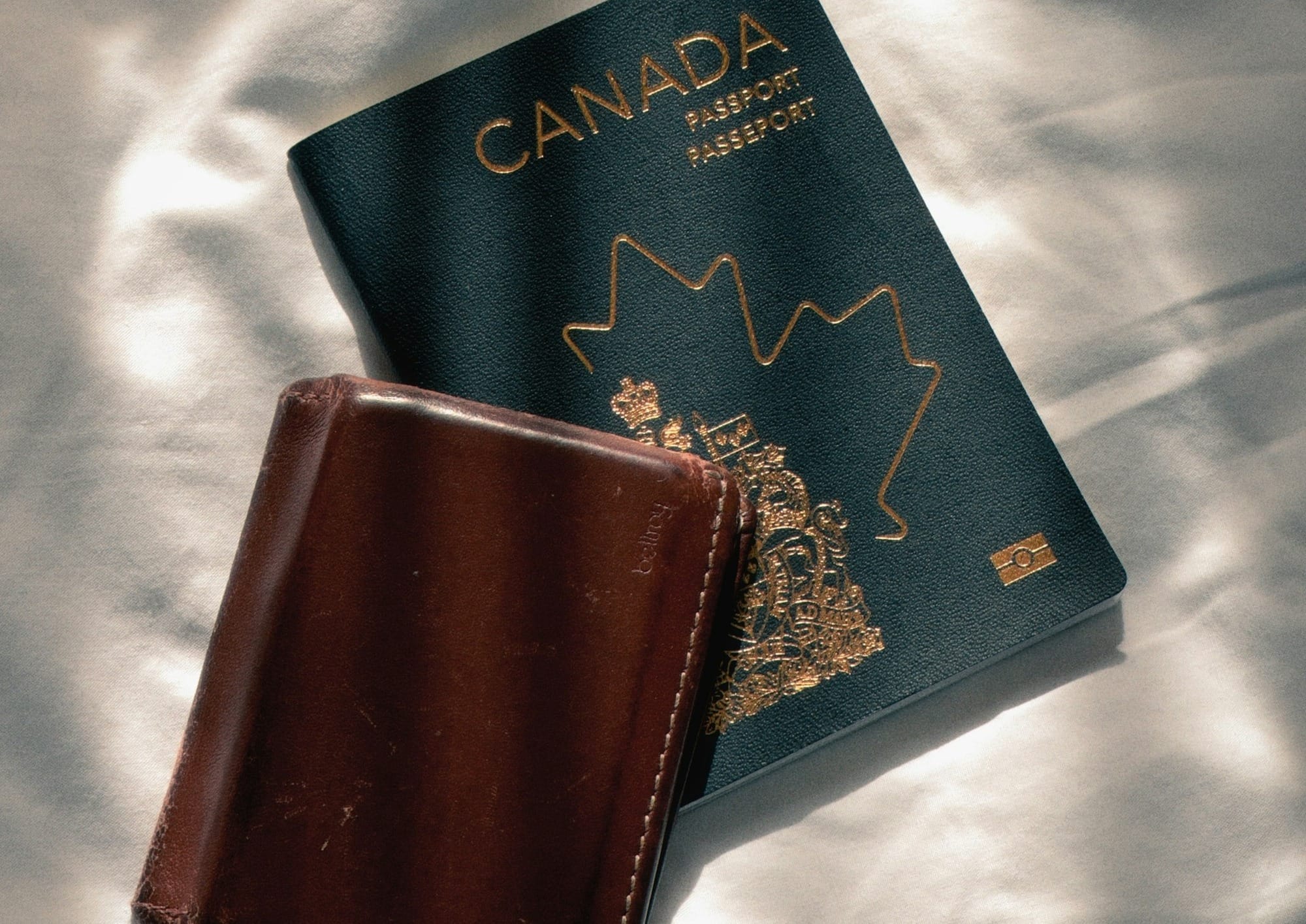
For the 2026 International Experience Canada (IEC) season, applying for Canada’s Working Holiday Visa comes with a set of standard government fees that total roughly CAD $365 ($269). This amount covers several required charges, including the IEC participation fee, which is around $184 ($135), a CAD $100 ($74) open work permit holder fee, and an $85 ($63) biometrics fee for fingerprinting and photographs. These fees are mandatory and must be paid before your application can move forward.
How Long Does the Process Take?

Processing times for the Canada Working Holiday Visa are around 8 weeks once your application is complete. That is, after you submit your full work permit application and complete biometrics. However, the overall timeline is often longer from the moment you enter the IEC pool to receiving an Invitation to Apply (ITA) and final approval. The process can stretch to 2 to 3 months or more, depending on draw timing, country quotas, and application volume.
Bringing Your Dependents

When it comes to family inclusion, the Canada Working Holiday Visa does allow you to bring your family along, but there are important limitations to be aware of. Your work permit applies only to you. Your partner or children cannot be added to your Working Holiday application or work under your permit. Instead, they must apply separately to enter Canada as visitors, which usually allows them to stay for up to six months at a time.
This means your family members can accompany you and live with you in Canada, but they won’t automatically have the right to work or study unless they qualify for and obtain their own permits.
Pathway to Permanent Residency (PR)

As a temporary permit, the visa allows holders to transition to permanent residency, but this can only be done by gaining valuable Canadian work experience of up to 2 years, which is a key requirement for several immigration pathways. When combined with factors such as language proficiency and educational background, this experience can help you qualify for programs like Express Entry, through the Canadian Experience Class (CEC), as well as various Provincial Nominee Programs (PNPs).
 David Adubiina