At some point, most people hit a crossroads in their career. Maybe you’re unsure whether to apply for that new role, switch industries, or work on a skill that could set you apart. It’s easy to feel stuck, but that’s where a personal SWOT analysis can help.
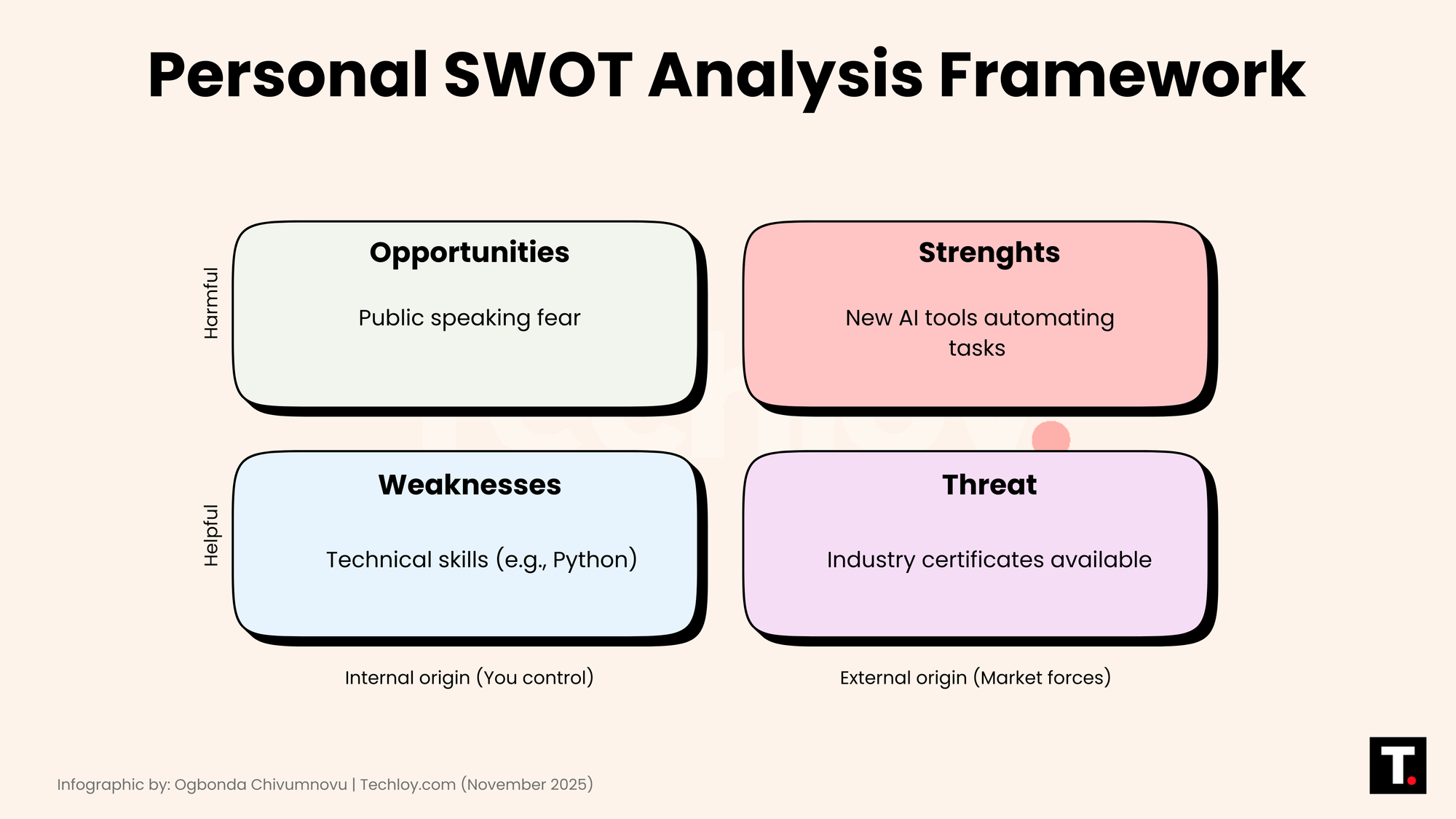
SWOT stands for Strengths, Weaknesses, Opportunities, and Threats. It’s a simple framework originally used by businesses to evaluate strategies and make better decisions. But when you apply it to your own career, it becomes a mirror, showing you what you do well, where you need improvement, what chances you can take, and what might stand in your way.
Doing a SWOT analysis helps you think strategically about yourself. Instead of guessing your next move, you can base your decisions on real insight. You’ll see how your personal and professional traits fit into your goals and the job market around you, and that awareness makes every step more intentional. Let's break down how you can do this for yourself and create a actionable career plan.
 Henry Chikwem
/1. Recognize Your Strengths
The process begins with identifying what your business already does well. These are your strengths, the assets, qualities, and resources that give you an edge. It could be your skilled workforce, loyal customer base, or innovative technology.
Recognising these strengths is essential because they form the foundation of your strategy. Understanding what drives your success also reveals which areas deserve continued investment.
Once you have a clear sense of what you’re good at, the next step is to examine what might be holding you back.
Example:
Maybe you’re the person colleagues turn to when a project needs organisation, that’s a strength in planning and leadership. Or you might have a natural ability to build trust with clients, which is powerful in sales, consulting, or customer success.
/2. Address Your Weaknesses
Every business has its weak spots, internal issues that limit growth or efficiency. These weaknesses might include outdated systems, limited funding, gaps in skills, or overdependence on a single client or supplier.
The purpose of identifying weaknesses isn’t to dwell on them but to manage and improve them. By confronting weaknesses early, you prevent them from turning into larger problems that could damage performance.
Once you have a balanced view of your strengths and weaknesses, you can start looking outward, to where new possibilities for growth exist.
Example:
Maybe you struggle to delegate tasks because you like being in control, or you find it difficult to speak up in meetings. Recognising that helps you take action, perhaps by practising delegation or enrolling in a communication course.
/3. Spot New Opportunities
With a solid understanding of your internal position, the next step is to scan the environment for opportunities, external factors that could accelerate growth or open new paths. These could come from emerging technologies, changing customer preferences, regulatory shifts, or competitors leaving gaps in the market.
Spotting opportunities early gives your business a strategic advantage, but to sustain that advantage, you also need to stay alert to what could threaten it.
Example:
If you work in marketing and your company is investing in AI tools, that’s an opportunity to upskill in data analytics or automation, giving you a head start. If you’re a software developer and notice a shortage of talent in cybersecurity, you can train in that area to position yourself for future roles.
/4. Prepare for Threats
Turn your attention to threats, the external risks that could harm your business. These might include economic downturns, supply chain disruptions, new competitors, or even rapid changes in consumer expectations.
The aim here isn’t to eliminate threats altogether (which is impossible) but to understand them well enough to plan around them. For instance, if a major supplier faces instability, you could start diversifying your supply base before it becomes a crisis.
By preparing for these risks in advance, you strengthen your resilience and ensure your strategies remain effective even when conditions change.
Example:
If your industry is rapidly automating, that’s a threat, your current role might evolve or disappear. But you can turn that awareness into action by learning new, AI-adjacent skills. If you’re in a shrinking market, you could start exploring emerging ones before the transition becomes urgent.
/5. Analyze and Take Action
Finally, once you’ve filled in your SWOT chart, step back and connect the dots. The goal is to use what you’ve discovered to create a clear action plan.
Start by matching your strengths with opportunities, this is where you can grow the fastest. Then see if any weaknesses overlap with threats, those are your risk areas that need attention.
Example:
If you’re a skilled communicator (strength) and your company is expanding into international markets (opportunity), you could volunteer to lead client relations abroad. That’s using your existing skill to unlock new possibilities. On the other hand, if you lack experience with digital tools (weakness) and your industry is going remote (threat), it’s time to take online courses or seek mentorship.
Final Thoughts
A personal SWOT analysis is a self-reflection tool that helps you take charge of your career. It helps you identify where you shine, where you need to improve, and where you should focus your energy next.
That’s the power of self-awareness. When you understand your position clearly, you stop guessing and start growing.
So grab a blank page, draw four boxes, and start listing. Your next career breakthrough might just begin with a few honest words.
 Henry Chikwem