



Let me paint a scenario for you – You're out in the open, relying on your power station to get through an outdoor event, when your critical appliances are struggling to perform at max that is.
This widespread disappointment exposes a fundamental issue regarding portable power – AC output. AC output: This is the amount of power the power station can run as household appliances, ensure your device is smaller than 800W, if the appliance is a motor, like a refrigerator, please be careful with its output Parameters: AC output power: 110V Rated, 120W Peak; please check the label of most appliances, which you want to use, most labels will be less than 1000 wattage.
A lot of users are restricted by the limited output of their power station, which has a fixed output rating and cannot be easily maxed out using renewable energy sources such as solar panels. Such restrictions can inhibit the use of all available power, particularly at peak utilization times. But there are newer technologies that hold great promise via advanced inverter technologies, expandable capacity options, and smart power management capabilities that can dramatically increase your power station's performance and utility.
Understanding Power Station AC Output Fundamentals
AC output in power stations is a vital step in changing stored DC power into household AC power. While DC power is the battery stored at its various voltage levels, the AC output must be achieved through an inverter, usually to 110V and 220V according to the different national grid systems. The efficiency of this conversion has a direct effect on the maximum wattage that your power station can provide to your devices.
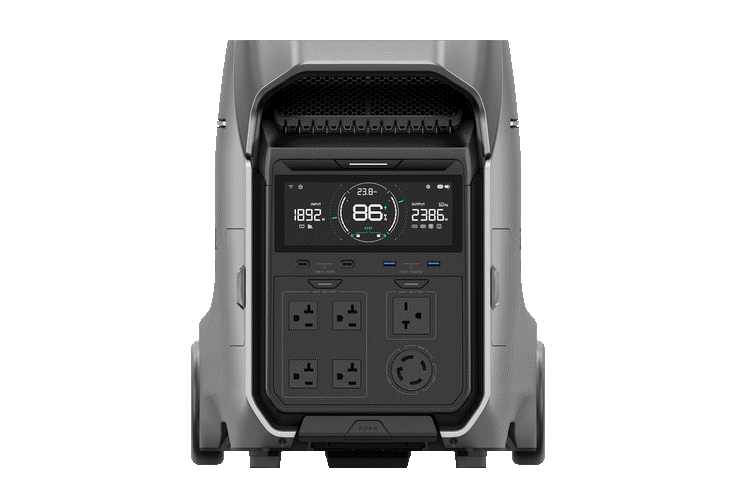
The waveform type generated by the inverter determines the AC power quality. A pure sine wave inverter, such as that within an EcoFlow power station, provides clean and stable electricity, just like the grid one, perfect for sensitive devices such as laptops and medical devices. Sinusoidal inverter substitutes, such as modified sine wave inverters, are cheaper, but can interfere with some appliances, and could lower the efficiency or the longevity of others.
It is important to know real-world limitations - surge power ratings provide for the maximum short-term output and are used to start motor-driven tools and appliances; sustained output is like sorting power value - continuous power delivery. For instance, a 2000W power station will have a 4000W capacity for a few seconds but will run only 2000W for an extended period of time.
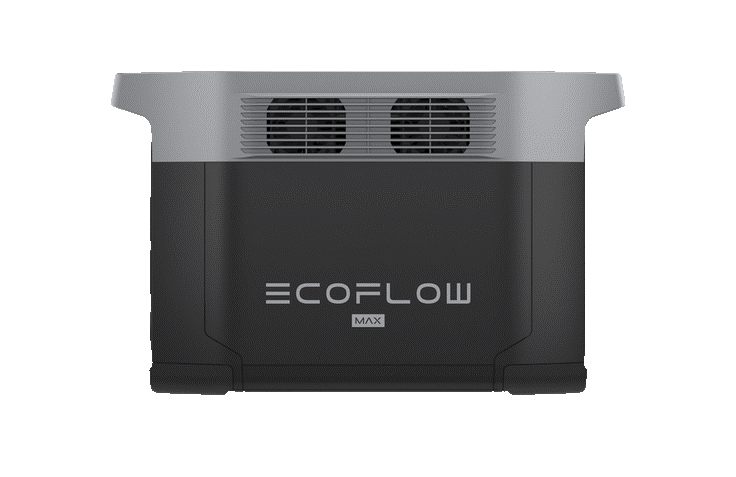
AC Output Technology Advancements
Next-Generation Inverter Systems
Advanced Inverter Technology: Modern generations of power plants: New universal devices are revolutionizing the primary sides of AC networks. Today, high-frequency inverters can achieve efficiency higher than 90%, far better than the typical 75-80% efficiency of low-frequency systems. These new systems employ advanced semiconductor devices that operate at switching frequencies greater than 50kHz, thereby minimizing the energy loss incurred during conversion of DC to AC, and providing a stable output under a wide range of load conditions.
Parallel Connectivity Solutions
The power station now supports daisy chain function, which means users could connect 2 S200 power stations in parallel to expand the AC throughput. This is accomplished via advanced phase matching in the power circuit and this has the benefit of syncing several units together and turning them into one super-powerful supply delivering much higher wattage to connected tubes. For example, you can link two 2000W devices together to create a constant 4000W output for more power-hungry jobs.
Expandable Battery Capacity Strategies
Advanced power plants now use cutting-edge modular battery systems that facilitate continuous capacity expansion. These also use standardized connection types with incorporated safety functions such as reverse polarity protection and thermal monitoring. When you stack new battery modules together, intelligent management systems ensure overall charging isn't disrupted and automatically add the capacity back into the balance.
Choice of battery chemistry is key to scalability. Yet other LiFePO4 (Lithium Iron Phosphate) batteries provide a higher cycle life and thermal stability, suitable for modular systems such as these. With a somewhat reduced energy density compared with NMC (Nickel Manganese Cobalt) versions, the LiFePO4 is a compatibility record holder in parallel connection and are generally connected in parallel without any tension.
Smart Battery Systems Optimization
AI-Powered Load Management
New generation power plants are already using Artificial Intelligence algorithms to monitor power consumption and match the power distribution. These technologies automatically place vital machinery in priority order during periods of peak demand to guarantee the uninterrupted performance of key pieces of equipment. The AI trains itself over time of usage and can even predict power needs based on historical data and adjust the output parameters not reactively but proactively.
Implementing Green Energy Solutions
The combination of the output inverter and conventional power station can be complex to ensure the voltage suitability and connection method of the solar power, and the combination in this way is relatively complex. By adding microinverter technology and power station between the solar panel and the power station, users can do better than traditional MPPT design. Sophisticated MPPT controllers, meanwhile, can vary their voltage dynamically to maximize power transfer from panels to battery.
The Future of Portable Power Solutions
The future-proofing of your power station's AC output capacity is about much more than advanced technology - it's intelligent control systems too. - Upgrade to High Frequency Inverters - Parallel Connection - Increase in Battery capacity with modular solutions - Ability to use it in any geography. PERFORMANCE - Maximum power delivery under extreme conditions.
And it's more than just a boost in power – it's a step closer to genuine energy independence. With increased solar compatibility and advanced power management, we can provide an alternative to building new generator facilities. The positive environmental impact of improved charging cycles and less reliance upon the grid fits exactly with global sustainability strategies.
Begin your upgrade path by increasing your power station's modular components, mainly the battery system as well as inverter technology. With power station technology evolving and progressing, we can be sure that more and more groundbreaking solutions will appear from new materials for energy storage to more intelligent AI regulatory processes, making the sustainable, high-capacity portable power more available and efficient.


