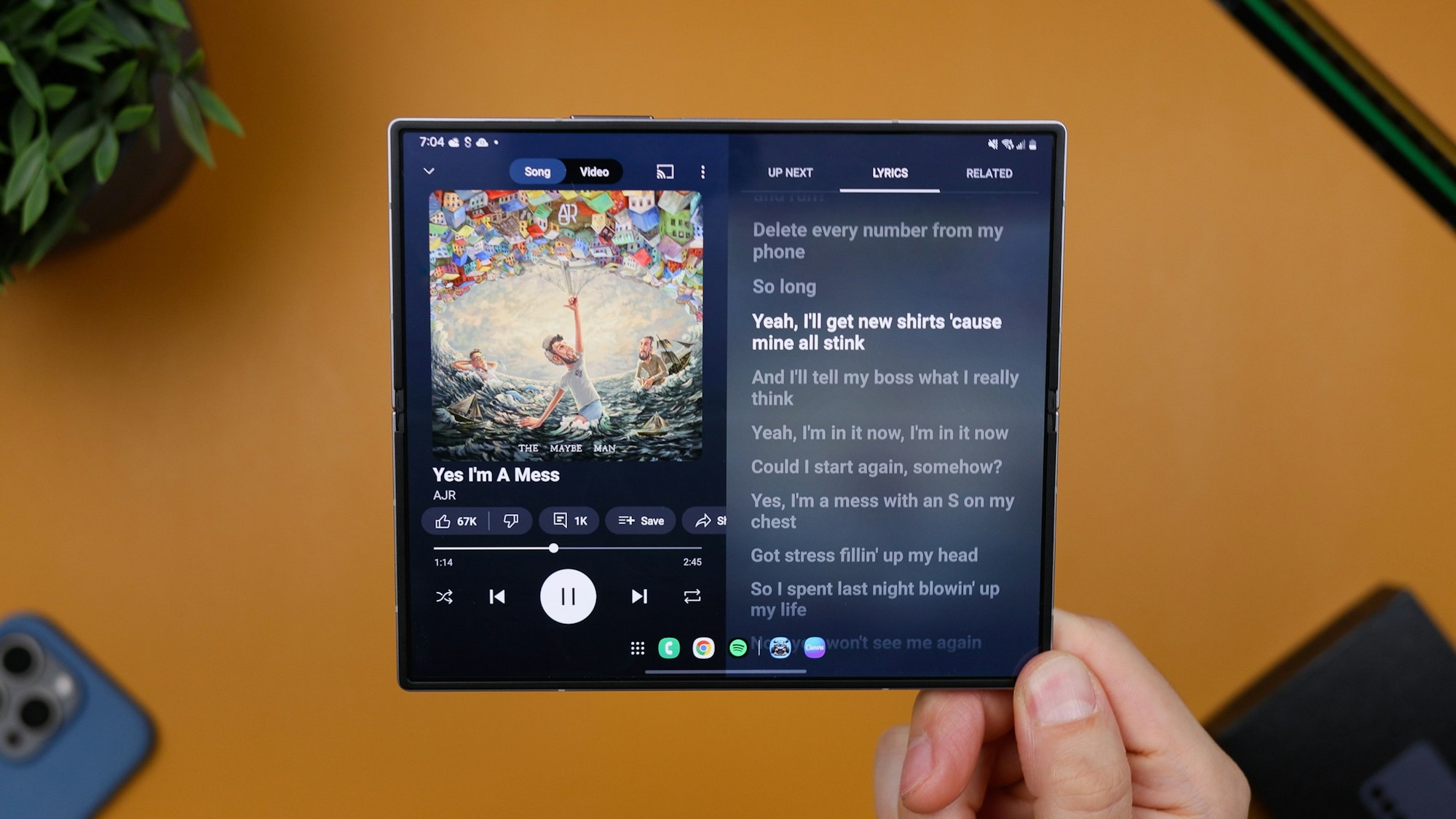
The concept of Foldables isn't exactly new. We've seen modern smartphones fold up since 2018, which, in tech time, is a really long time ago. Companies have had the chance to master their craft over the years, so much so that now companies have decided it's time to try out newer terrain.
In late 2024, the world got the chance to finally try out the world's first tri-fold phone, the Huawei Mate XT. The company had everyone high on expectations with months of teasing and leaks here and there before it dared to release. And to be honest, it didn't disappoint. Everybody wanted to grab the new phone that unfolded into a full mini-tablet. But, as time went on, though, Huawei was not to be left unchecked. Another massive asian company decided to throw its hat in the ring.
South Korean company, Samsung, unveiled the Galaxy Z TriFold, its own take on the new form factor, and let me tell you, the battle is on. Samsung is arguably one of the biggest forces in popularising the regular fold-and-flip phones with the launch of its Fold and Flip series, so, as expected, much of that expertise has been put into the manufacturing of this device.
Both devices are really good-looking pieces of art with the promise of a new category of mobile computing, but in slightly different ways. But which TriFold is better for you? Here’s a full breakdown across every major category so you can decide which tri-fold makes sense for you.
 Kelechi Edeh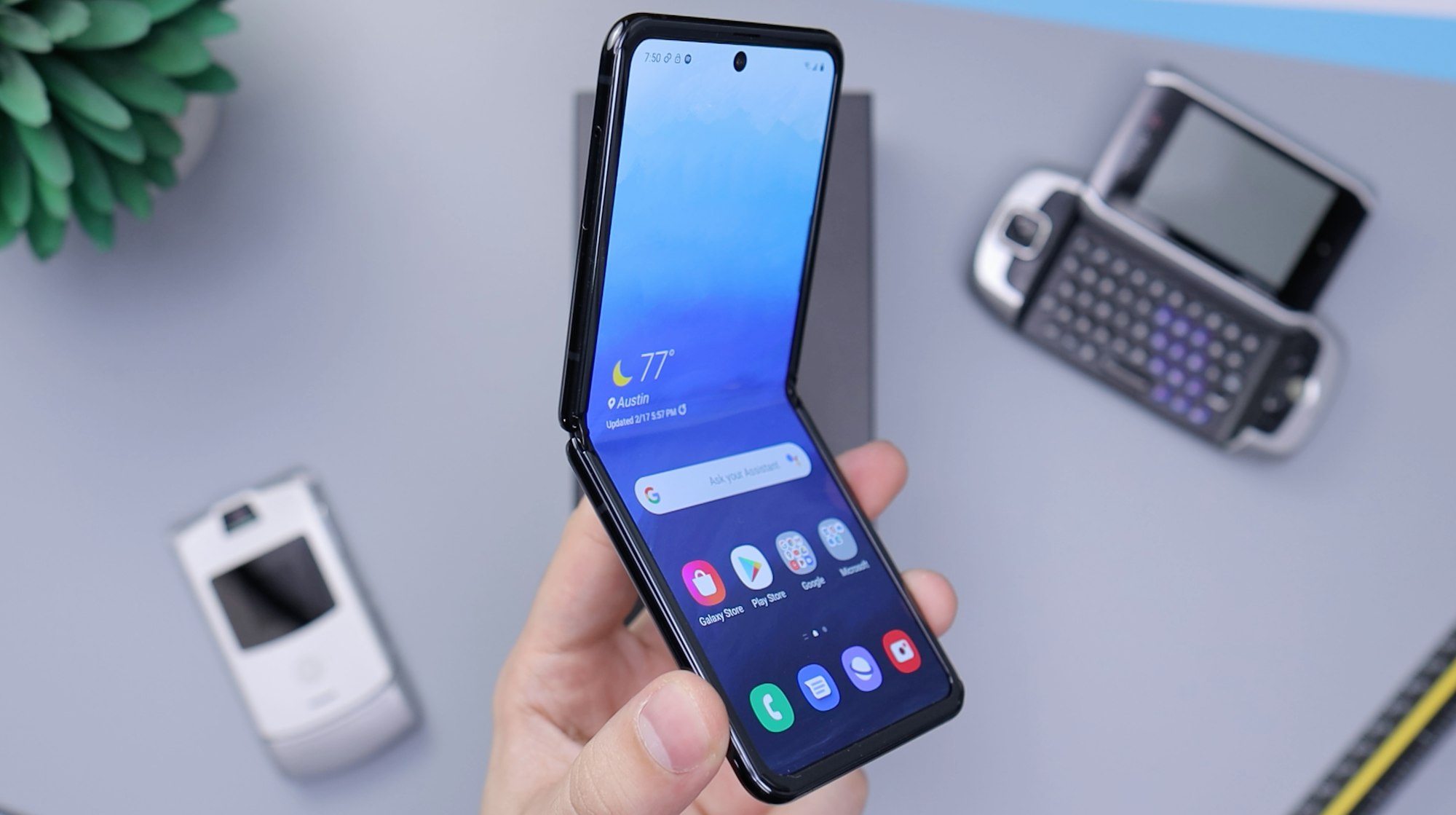
/1. Design
The Mate XT leans into luxury. It comes in two colours, one being a striking red finish and the other being an obsidian black phone, both with gold accents and a slim chassis, considering the engineering challenge behind three folding sections. The device folds accordion-style with one side folding inwards and the other folding outwards, which means you can choose to either use one screen, two screens when unfolded slightly, or all three when completely unfolded.
When folded, it’s slightly thicker than a standard foldable, but once fully opened, it spreads into a wide, tablet-like canvas that feels like a single, uninterrupted slab of screen. Huawei describes it as “one machine with multiple functions,” and the hardware definitely leans toward that elegant, all-purpose identity.
Samsung takes a more industrial, engineering-driven route. The Galaxy Z TriFold uses two inward-folding hinges, meaning the main display is always protected, a choice many have described as more intuitive than the way Huawei went about it. Its 3.9 mm thickness when unfolded is incredibly thin for a product with two hinges, and the overall look fits Samsung’s mature foldable design language: clean, polished, understated. It doesn’t shout for attention the way Huawei’s red-and-gold finish does, but it feels sturdier and more practical.
/2. Display
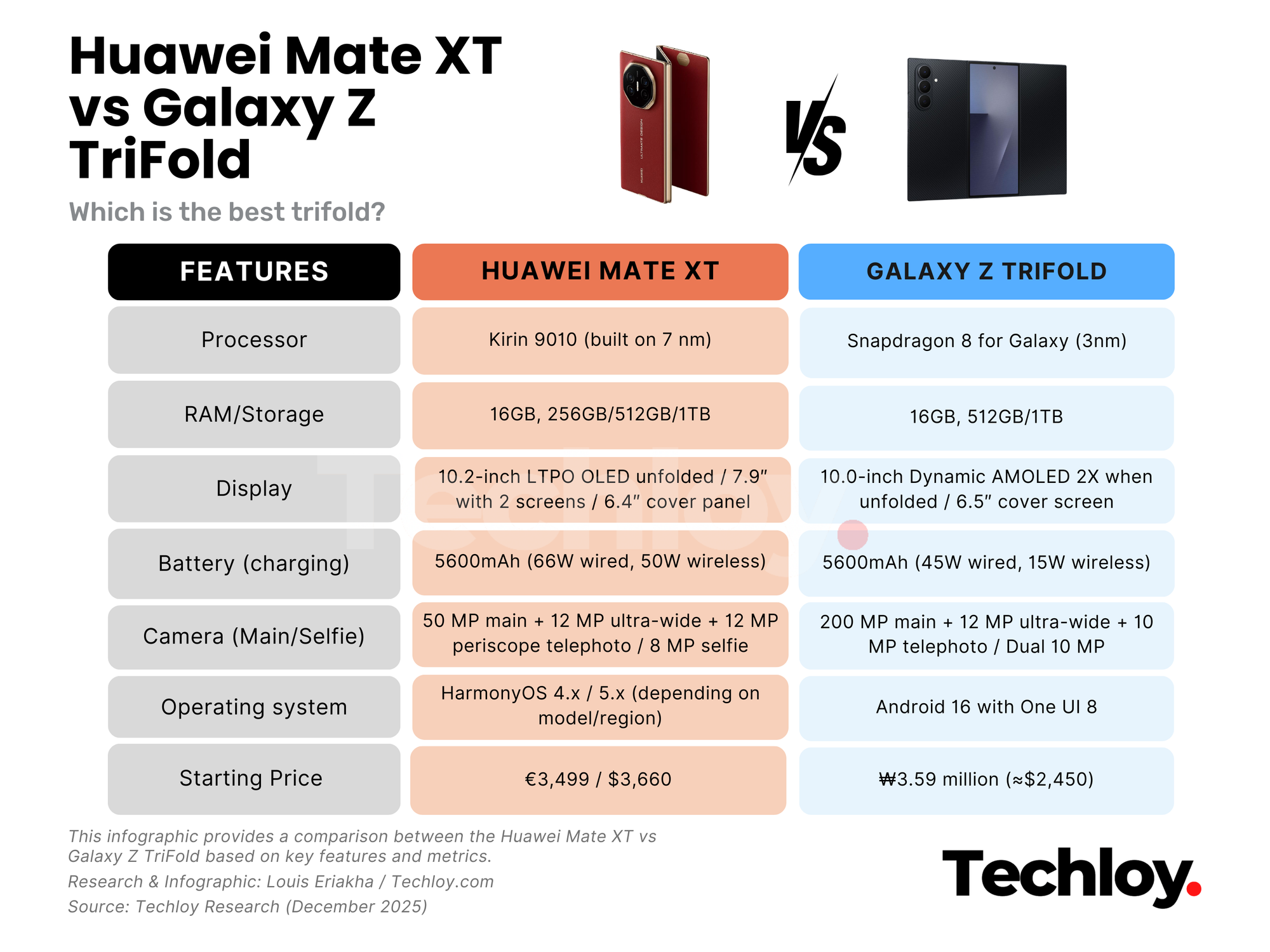
Huawei equips the Mate XT with a large 10.2-inch LTPO OLED panel, bright, ultra-thin, and fluid thanks to its adaptive refresh capabilities. It’s one of the biggest displays ever put on a smartphone form factor, giving it a true tablet feel when unfolded. Colours are bold, contrast is excellent, and the extra 0.2 inches gives you slightly more workspace for multitasking, note-taking, or content consumption.
Samsung’s Z TriFold comes in at 10 inches, just shy of Huawei’s footprint, but compensates with a smoother 1–120Hz adaptive refresh rate and Samsung’s signature OLED calibration, which usually beats most competitors in punch, accuracy, and brightness. Animation fluidity, especially with Samsung’s One UI optimisations, feels exceptionally polished.
/3. Performance
Huawei’s Mate XT is powered by its in-house silicon and HarmonyOS optimisation. Performance is strong, especially in multi-window scenarios, but it isn’t targeting raw, top-end benchmark dominance. HarmonyOS is efficient, responsive, and designed to push the tri-fold layout smoothly. Still, without Google Play Services, its full performance potential will always depend on where you live and which apps you rely on.
Samsung doesn’t hold back. The Z TriFold runs the Snapdragon 8 Elite for Galaxy, not the latest flagship chip, but still currently one of the fastest Android chips in the world. Combined with Samsung’s AI-driven optimisations and DeX-level multitasking, the phone feels closer to a portable workstation than a smartphone. Running three apps side-by-side, shifting layouts, or connecting accessories happens seamlessly, without thermal throttling or UI stutter.
/4. Cameras
Huawei gives the Mate XT a capable imaging setup centred around a 50MP main sensor. It captures sharp photos in good lighting, handles everyday shooting well, and benefits from Huawei’s proven computational photography. The camera system is reliable, but not particularly groundbreaking, especially for a device of this size.
Samsung raises the bar with a 200MP main camera, joined by an ultrawide and a telephoto lens. Dynamic range is better, detail is stronger, and Samsung’s post-processing is more refined. It’s also more versatile if you rely heavily on mobile photography. Though the idea of unfolding a tri-fold to take a picture still feels unintentionally comedic, the results speak for themselves.
/5. Software and Features
HarmonyOS on the Mate XT turns the phone into something that behaves more like a hybrid between a smartphone and a PC. Its UI scales intelligently across the tri-fold layout, apps snap into tablet mode smoothly, and Huawei includes built-in AI features for translation, messaging, and photo editing. It’s functional, polished, and surprisingly fluid, but again, the lack of Google services limits global usability.
Samsung’s software experience is much more flexible. The Z TriFold supports three full-sized apps on the main display, enhanced drag-and-drop, floating windows, and full DeX mode without needing an external display. AI tools are baked deeply into multitasking, camera features, and navigation. The ecosystem is simply more complete, familiar, and globally supported.
/6. Storage and Memory
Huawei ships the Mate XT with 16GB of RAM and at least 256GB of storage, which is more than enough for heavy use, multiple apps, and extended multitasking. It’s efficient, fast, and consistent.
Samsung matches Huawei’s RAM at 16GB, but offers bigger storage options: 512GB or 1TB. If you’re planning to use the Z TriFold like a laptop replacement, that extra storage matters, especially for gaming, offline Netflix files, or DeX workflows.
/7. Battery and Charging
Both phones include 5,600mAh batteries, huge capacities considering the size of their displays and the complexity of their hinge systems. Huawei’s battery life holds up well under tablet use, and HarmonyOS is generally good at power management. Charging is also fast, with the Mate XT offering 66W wired and 50W wireless support, though availability can vary by region.
Samsung matches the 5,600mAh capacity but adds deeper software optimisations and better efficiency thanks to Qualcomm’s Elite chip. Even with heavy multitasking, the Z TriFold keeps pace, and while Samsung’s 45W wired and 15W wireless speeds are solid, they’re not exactly class-leading.
/8. Price and Availability
This is where things diverge. Huawei’s Mate XT has now launched beyond China and entered international markets, with a starting price of around €3,499 (about $3,660). It has appeared for sale in regions like the UAE and Saudi Arabia, and Huawei said users should watch for local announcements as availability expands, though it still isn’t officially sold in the U.S. or UK yet.
Samsung’s Galaxy Z TriFold, on the other hand, is rolling out with a much wider global strategy. It debuted in South Korea on December 2, 2025, and is expected to reach China, Taiwan, Singapore, the UAE, and the U.S. in early 2026, priced at about $2,445 (for the 512GB model), still premium, but cheaper than Huawei’s option and far more internationally usable.
Conclusion
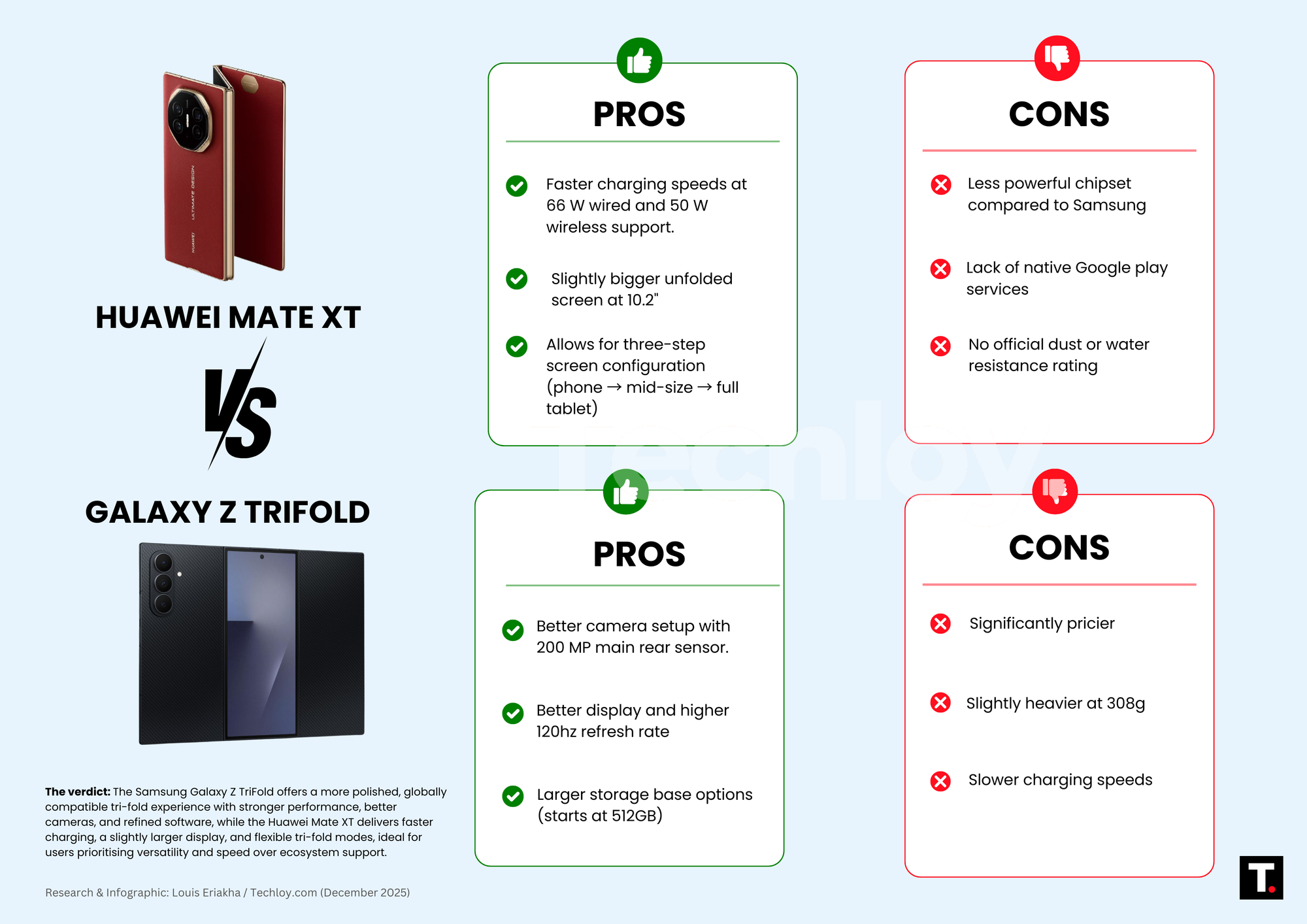
Both phones are important for very different reasons. The Huawei Mate XT deserves credit for being the first real tri-fold phone, ambitious, striking, and genuinely innovative. Its huge screen, bold design, and HarmonyOS scaling make it a fascinating device, but its lack of Google apps limits its mainstream appeal.
The Samsung Galaxy Z TriFold builds on that foundation with more power, better software, stronger cameras, and a global rollout that makes it the tri-fold most people can actually use. It feels like the first tri-fold meant for real-life adoption, not just tech enthusiasts.
If you want a polished, powerful, globally supported tri-fold with workstation-level software, Samsung is the clear winner. But if you want to experience Huawei’s bold hardware vision and don’t mind the ecosystem limitations, the Mate XT still stands as a stunning piece of engineering.
 David Adubiina