



The Internet of Things (IoT) has gone way past the hype cycles in the initial days. It has emerged as a key driver of actual business value, particularly in industrial applications. Over the past few years, the adoption of advanced Artificial Intelligence (AI) and Generative AI has accelerated this development much more quickly, allowing for more intelligent, autonomous, and responsive Industrial IoT (IIoT) solutions.
The Evolution of IoT with AI and Generative AI
Historically, IoT solutions targeted device connectivity and real-time data capture. With recent innovations with AI and, more significantly, GenAI, these have been expanded to enable companies not just to capture but also to predict and automate the reaction to operating contexts dynamically.
Generative AI, having been trained by massive historical and real-time IoT data streams, now delivers predictive analysis that dramatically enhances supply chain, manufacturing, procurement, and retail decision-making. For instance, predictive maintenance software employs Generative AI to predict likely equipment breakdown and schedule maintenance for optimal benefit, reducing downtime and significantly enhancing overall operational effectiveness.
Integration of Business Context with IoT Data
In order to maximize the value derived from IoT installations, the merging of IoT data with business context remains a consideration. AI systems today automatically augment sensor data with operational and transactional information to deliver rich, context-rich insights. For example, inventory sensors in manufacturing silos provide not only real-time inventory quantities but also automatically correlate with production forecast data, supplier performance data, and forecasted replenishment recommendations.
Generative AI has a revolutionary role to play here as it comes up with optimal supply chain management strategies, responding dynamically to market volatility, disruptions in trade, and changing consumer demands. This allows businesses to stay efficient, agile, and responsive.
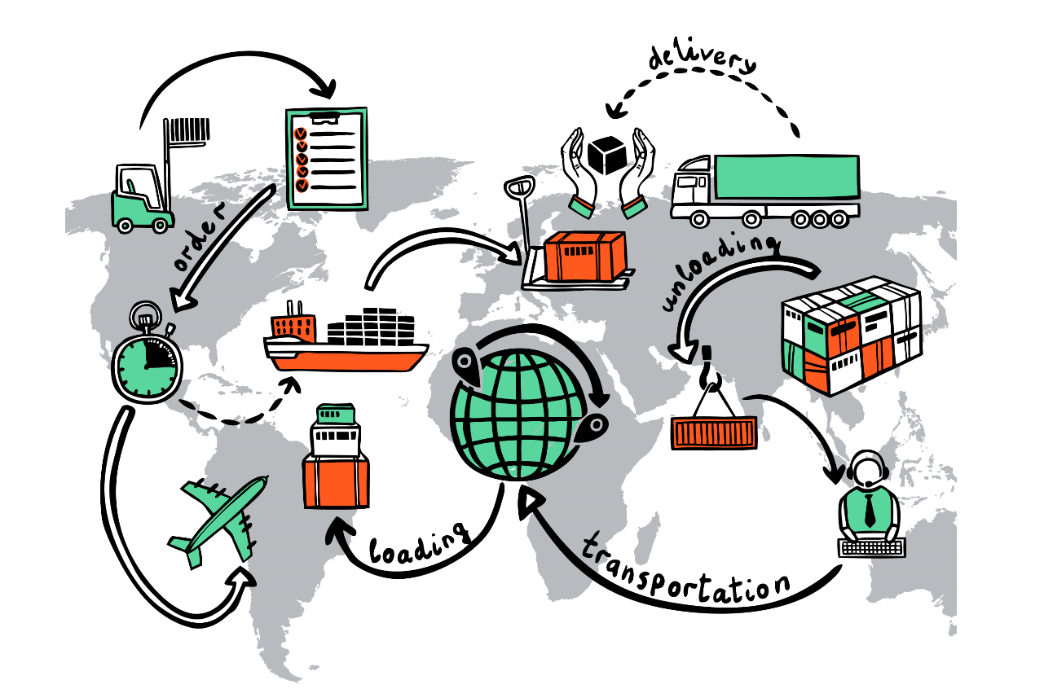
Key Trends Shaping Industrial IoT's Future
1. Edge AI Computing: Edge AI computing, driven by artificial intelligence, is now leading Industrial IoT deployments with real-time decision-making and analytics at the source of the data. Edge devices driven by AI process data at the edge, which reduces latency dramatically, enhances security, and provides rapid autonomous operational feedback.
2. Hyper-Connectivity and 5G Rollout: Deployment of 5G networks is revolutionizing the world of IoT applications dramatically. Enhanced connectivity enables high-speed, robust, and reliable communications needed for real-time use cases that vary from factory shop-floor autonomous robots to remote monitoring of complex, geographically dispersed supply chains.
3. Generative AI for Autonomous Operations: Integration of Generative AI in IoT infrastructure enables self-optimizing and autonomously operated manufacturing processes. Autonomously driven AI-powered systems execute sophisticated processes, such as adaptive logistics scheduling, quality checks, and intelligent inventory management, with significantly reduced human interventions and operation-related errors.
4. Data-Driven Culture: Data fuels success in the AIoT era. Organizations are fostering a culture that values data as a strategic asset, and one important source is the massive amounts of data generated by IoT systems. In use cases where real-world data is challenging to acquire or highly sensitive (e.g., healthcare, defense), GenAI can produce synthetic data that mimics the properties of real-world data, accelerating model development and scalability for testing and simulation.
5. Blockchain and IoT Interoperability: The combination of blockchain technology with IoT and AI is enhancing transparency, traceability, and security across industrial processes. Blockchain transactions aided with IoT and AI drive an auditable and self-orchestrated multiparty process in supply chains, logistics, and warehouse management scenarios.
Future Trends in IoT with AI
The rise of Industry 5.0 is a response to the evolving capabilities and the larger ecosystem of products and services built with AI. As AI systems become adept at handling increasingly complex analytical and operational tasks, it will lead to the creation of powerful autonomous systems. The future will be characterized by organizations running ubiquitous autonomous operations, end-to-end AI-driven management platforms, advanced threat detection and response with AI, and general utilization of hybrid edge-cloud infrastructures. The ability to extract valuable, actionable insight from massive, difficult-to-process data sources and streams will become the source of competitive advantage. Those organizations that implement AI-driven IoT solutions will achieve improved levels of operational efficiency, reduced costs, and faster time to market, setting new benchmarks for innovation in this space.
Despite our best beliefs, technology always manages to throw in surprises and disrupt our grand plans. What do you think about the future of Industrial IoT? Reach out to me on @LinkedIn. I am always happy to learn something new and share what I know.
Opinions expressed are solely my own and do not express the views or opinions of my employer.
About the Author:

Shyam Ravindranathan is a senior product leader with deep expertise in enterprise cloud applications in domains ranging from supply chain, manufacturing, IoT, blockchain, and PaaS. Currently, he leads the product efforts in building AI-enabled compliance applications for the enterprise. With a career spanning global markets and multiple patents in AI, ML, and blockchain systems, he helps organizations build and scale technology initiatives that deliver measurable outcomes.


