



Imagine a car that watches every lane, calculates thousands of variables per second and maneuvers like a human—but faster. That’s not science fiction anymore. Tesla has placed itself at the frontline of this revolution, shaping how the world perceives self driving and automated mobility.
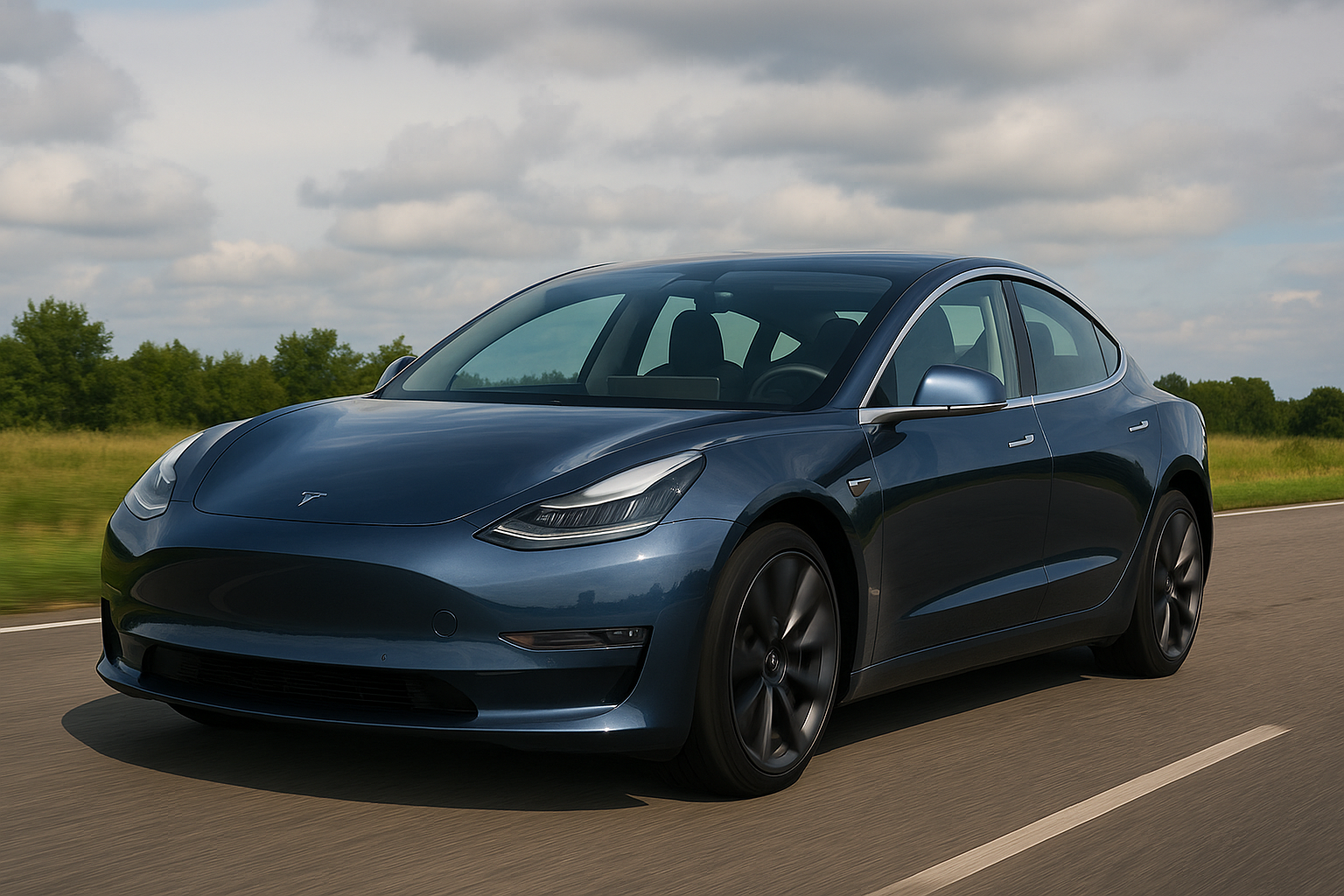
What Sets Tesla Apart?
Unlike most manufacturers that rely heavily on LIDAR or pre-mapped routes, Tesla builds its vision from real world data captured through its fleet. You don’t need to speculate.
Tesla uses cameras, ultrasonic sensors and radar (until recently) combined with neural networks to train its vehicles. These systems allow the cars to interpret signs, recognize objects and react to complex driving conditions with remarkable precision.
If you're planning to buy a Tesla with Full Self Driving or Enhanced Autopilot, it’s smart to start with a trusted auction platform. A Better Bid gives direct access to over 300,000+ vehicles, including Tesla cars equipped with intelligent systems. You can browse salvage or clean title listings, check real-time vehicle data and bid without needing a dealer license.
ABB supports nationwide shipping, provides access to Copart inventory and offers VIN-based vehicle history so you know exactly what you’re getting before you buy. Whether you're after a Model S, Model 3, or Model Y, this platform gives you a competitive edge and more data.
Autopilot System vs Full Self Driving
Tesla's journey began with basic autopilot, but now includes full self driving packages that go far beyond highway assist.
Each level of self driving introduces more autonomy, culminating in the ability to navigate city streets, detect traffic light changes and even search for a parking spot without human help.
Inside Tesla's Software-Driven Brain
Tesla’s software isn’t static. It evolves. The company pushes over the air updates directly to vehicles, improving decision-making, control logic and driver assistance algorithms without needing a service visit.
The neural net learns from billions of miles driven by real people. This massive amount of behavioral data helps eliminate human error, which is a leading cause of road accidents.
Even now Tesla owners receive software enhancements that help their Tesla vehicles better understand traffic signs, improve lane centering and optimize automatic emergency braking responses.
Real World Data and Neural Networks
Unlike traditional testing environments, Tesla collects real world data from every Model 3, Model Y and Model S actively on the road. This dataset feeds Tesla’s neural networks, enabling continuous machine learning and behavioral adaptation.
Think of it like this: each time other drivers brake too late or hesitate during lane changes, the network updates and improves reaction time for the rest of the fleet.
This method allows Tesla to train its systems on rare edge cases, something static simulators and labs can’t replicate at scale.
Comparing Tesla to GM's Super Cruise
While Tesla goes the vision-based route, GM’s Super Cruise employs high-definition mapping and geofencing. It can be effective—but only in known zones.
Tesla bets on a wider reach. Their autonomous driving system doesn’t rely on pre-mapped terrain. That means it can potentially function in areas Super Cruise hasn’t charted. And this difference matters. Because future fully autonomous systems must operate beyond the predictable.
Here’s how the two compare:
- GM’s Super Cruise
- Great on mapped highways
- Built-in driver monitoring
- Geofenced
- Tesla Full Self Driving
- Expanding to city streets
- Uses camera-based perception
- No fixed boundaries
So what makes you trust a vehicle’s decision when driving at night through construction zones with blurry signs? Real-time AI. That’s what Tesla offers.
The Role of Driver Attentiveness
Despite the hype around autonomy Tesla drivers must stay alert. The system frequently checks driver attentiveness using steering wheel torque sensors. Letting go of control for too long triggers warnings and eventual disengagement.
Tesla’s logic is simple. Until full autonomy becomes viable, humans remain the ultimate backup. This hybrid mode—between human and AI—requires balance, which Tesla’s autopilot system attempts to enforce.
Tesla App and Remote Features
With the Tesla app, drivers can interact with their vehicles remotely. Features include:
- Monitoring charging status
- Starting climate control
- Locating the parking space
- Using Smart Summon to retrieve the car from a short distance
It’s like giving your car a leash. You stand in a parking lot, tap a button and the car creeps toward you on its own.
Enhanced Autopilot and City Capabilities
Enhanced autopilot includes critical automated driving features like highway navigation and lane merge automation. It assists during dense traffic, long commutes and multi-lane lane changes.
But Tesla’s ambition lies in expanding these features to city streets, where unpredictability rules. From merging in poorly marked zones to dodging parked delivery vans, every corner brings a new challenge.
Stop Signs and Intersections
Thanks to stop sign control and traffic light recognition, Teslas now handle intersections with calculated intent. The system identifies the signal, evaluates other vehicles and proceeds only when safe.
Tesla uses bounding-box recognition, timing models and behavior prediction to navigate intersections just like human drivers—but without panic or distraction.
What’s Next for Tesla’s Driving Features?
Tesla claims new Teslas will reach fully self driving capabilities in the near future. But legal and ethical hurdles remain. Still, each update brings the vision closer to reality.
With Elon Musk promising robotaxi fleets and full self driving subscriptions becoming commonplace, the road ahead feels less distant.
Tesla offers something more than automation. It offers the possibility of letting go while still sitting in the driver’s seat.
Final Thoughts
So what technology does Tesla use for self driving cars? A symphony of real world data, neural networks, vision cameras and over-the-air intelligence—all working in sync.
It's not perfect yet. But if you’ve ever driven a Tesla, you’ve felt the difference. The vehicle doesn’t just follow commands. It thinks. It adapts. It learns. That’s what sets it apart.
FAQ
1. Can Tesla self driving handle roundabouts or complex intersections? Yes, newer beta versions of full self driving demonstrate improved logic in handling roundabouts, four-way stops and non-standard intersections, though driver supervision is still mandatory.
2. How does Tesla differ from other brands like Waymo or Cruise? Waymo and Cruise rely on LIDAR and geofencing. Tesla avoids these, instead relying on camera-based vision and real world data collected across millions of miles to teach the fleet.
3. Is Full Self Driving safer than a human driver? Not yet. While Tesla aims to surpass human performance through AI, regulatory bodies still require human oversight due to edge-case unpredictability and rare road scenarios.
4. Can Full Self Driving be transferred to another vehicle? Currently, Tesla cars do not allow full self driving licenses to transfer between vehicles. It remains tied to the VIN of the car it was purchased for.
5. Does Tesla’s Smart Summon work in all parking lots? Smart Summon performs best in open and well-marked parking lots. Accuracy decreases in areas with poor GPS signal or where pathfinding is obstructed.


