Intel’s stock has been on a surprising run this week, briefly jumping by as much as 10% before cooling off slightly. For a company that has spent years grappling with missed deadlines, manufacturing delays, and shrinking market share, the sudden surge has caught the attention of investors and industry watchers alike.
While several factors may be contributing to the move, a growing set of reports suggests the market is beginning to take Intel’s long-promised comeback more seriously.
A major source of optimism appears to be Intel’s showing at CES 2026, where the company officially unveiled its Core Ultra Series 3 processors, codenamed Panther Lake. These chips are the first built on Intel’s new 18A manufacturing process, a milestone the company has been working toward for years.
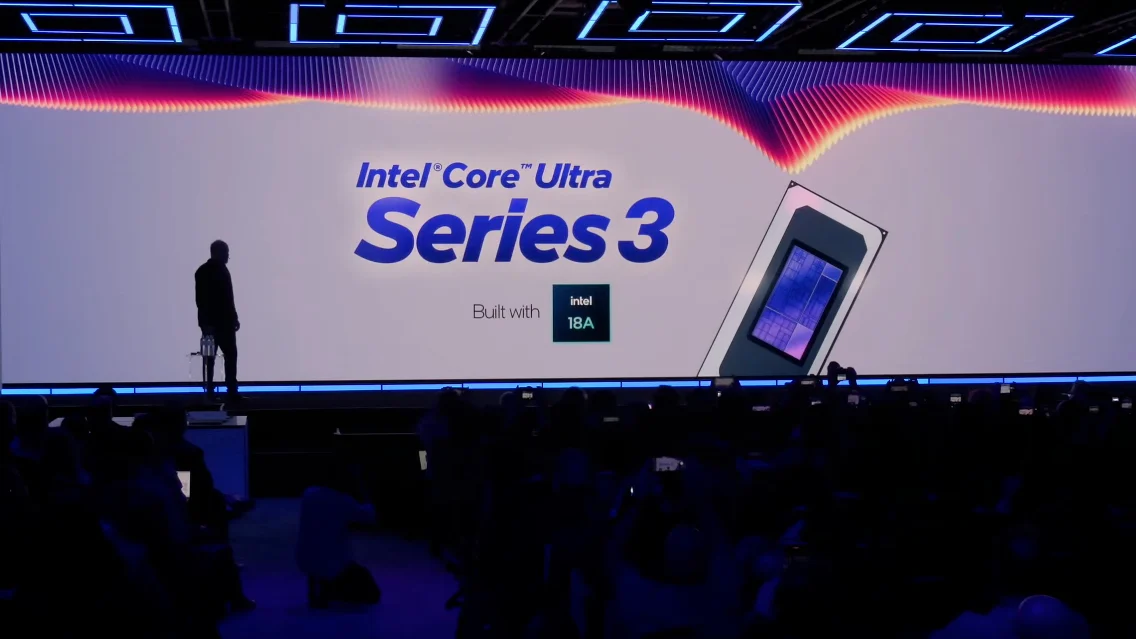
More importantly, Intel says Panther Lake is already in production, ramping up, and available for orders, directly addressing long-standing concerns about whether the company could execute on its most advanced node.
If that claim holds, it would mark a meaningful turning point. While rivals like AMD leaned heavily on TSMC’s leading-edge fabs and Arm-based chips expanded across laptops and servers, Intel remained stuck in a cycle of delayed process nodes and underused factories. The 18A process represents Intel’s most significant manufacturing leap in roughly a decade. If it performs as expected, it could help narrow the performance and efficiency gap that has widened in recent years.
For investors, Panther Lake isn't just another processor launch. It's a signal that Intel may finally be regaining control over its manufacturing roadmap, something the company has struggled to prove since the early 2020s.
 Oyinebiladou Omemu
Beyond CPUs, Intel’s stock also appears to be benefiting from positive sentiment around its broader portfolio. The company still owns a controlling stake in Mobileye, meaning developments in autonomous driving and AI-adjacent markets can influence Intel’s valuation. Mobileye’s recent announcement of a $900 million acquisition of AI robotics startup Mentee added to the bullish tone, reinforcing the view that Intel’s exposure to AI extends beyond traditional processors.
There's also renewed speculation around Intel’s foundry business, as geopolitical concerns push chipmakers and governments to consider manufacturing options outside Taiwan. While no major deals have been announced, the possibility alone has helped support investor optimism.
Taken together, Intel’s stock rally looks less like a reaction to a single headline and more like a release of pent-up confidence. Although the surge has moderated from its peak, the underlying message is clear. CES may have provided the spark, but the market response reflects a growing belief that Intel is beginning to execute, rebuild credibility, and position itself for a more competitive future.
 Damilare Odedina