



From bullet trains to precision engineering, Japan's obsession with speed and efficiency is well known. Now again, Japan is setting the mark for what “speed” means, but this time through fibre-optic cables, not rails.
According to a study presented at the 48th Optical Fibre Communications Conference in San Francisco earlier this year, the country's scientists have shattered the world record for internet transmission speed, hitting a mind-bending 1.02 petabits per second over a distance of 1,120 miles. This translates to 125,000 gigabytes every single second.
This new record, set by researchers at Japan’s National Institute of Information and Communications Technology (NICT), surpasses the previous 50,250 gigabytes per second record set in 2024, and it’s roughly 4 million times faster than the average home internet speed in the United States (242.38 Mbps according to Speedtest.net).
To put that in perspective, you could download the entire Internet Archive in under four minutes or stream nearly ten million 4K movies at once. The magic behind this milestone came in the form of a newly developed cable thinner than a mechanical pencil.
 Oluwaseun Bamisile
Specifically, the NICT team developed an ultra-dense 19-core optical fibre, packing the capacity of 19 standard fibre-optic lines into a single strand just 0.127 millimeters wide. Unlike traditional single-core fibres, this one contains 19 individual cores that can carry parallel streams of light-based data. It’s equivalent to the capacity of 19 internet cables bundled into one, without increasing the physical size, meaning it could fit easily into existing infrastructure.
But what really sets this apart isn’t just the speed, but the distance. In earlier tests, similar speeds were achieved but collapsed over long-range transmission. However, NICT pulled it off over 1,802 kilometers using a clever system of amplifiers and signal loops to preserve data strength, reduce noise, minimize distortion, and prevent data loss.
That’s more than three times the distance their earlier test achieved in 2023. It’s also the first time this kind of ultra-high bandwidth has been maintained over a truly long-haul distance, and it marks a critical shift in what’s technically possible for large-scale communication.
 Emmanuel Oyedeji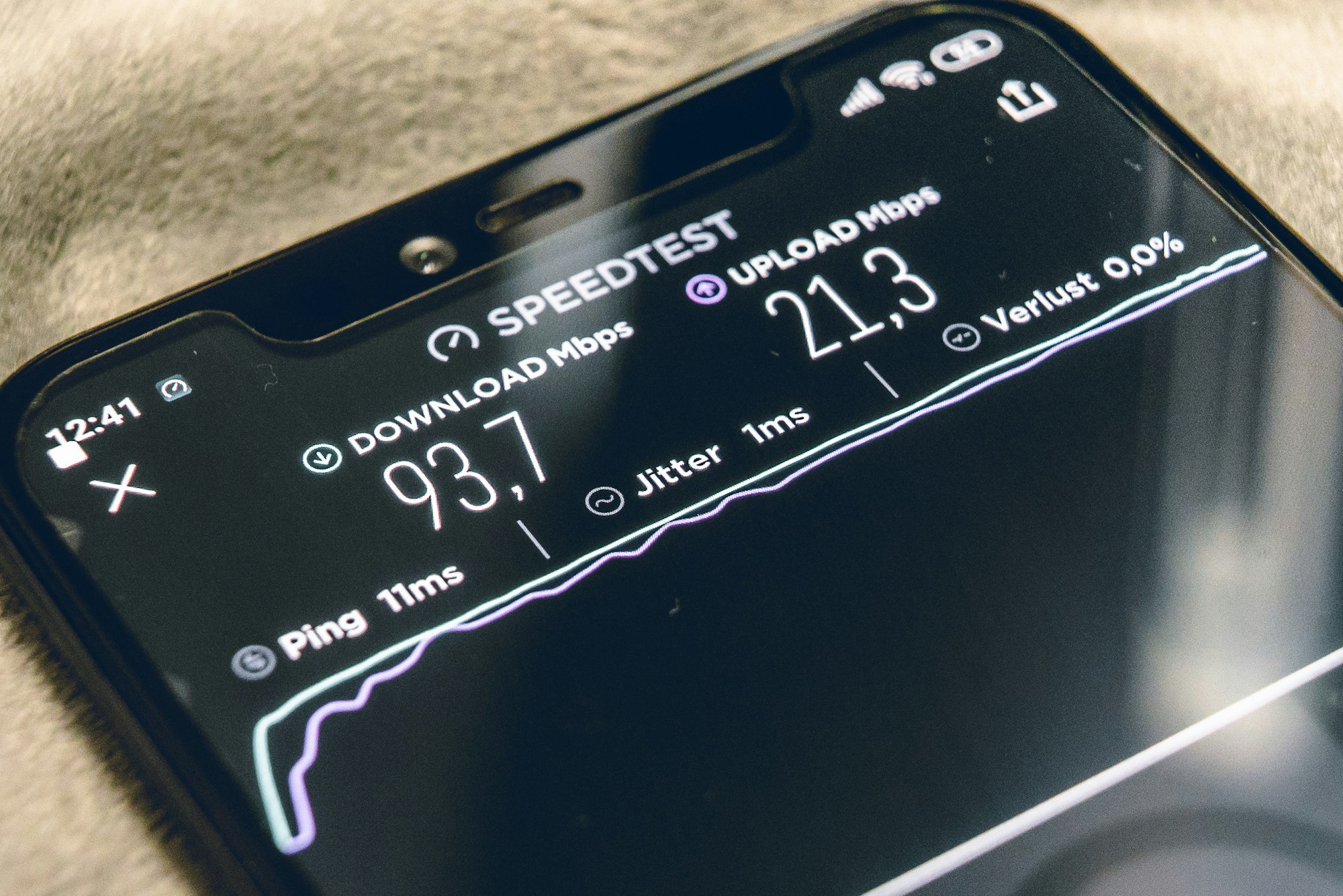
While most of us won’t need petabit speeds in our living rooms anytime soon, the implications ripple far beyond personal use. This record is about solving a much bigger problem: the increasing global demand for data, which could soon trigger a worldwide data overload.
With AI, streaming, cloud computing, smart cities, and autonomous vehicles all ramping up, data traffic volume worldwide is expected to increase significantly in the near future. Our current networks could soon be overwhelmed. NICT says global data traffic is on track to explode, and unless our communications infrastructure evolves, we’ll hit digital bottlenecks.
Luckily for us, Japan is on the case.
This breakthrough helps future-proof the global internet and could easily become the backbone for everything from live global trading platforms to autonomous vehicle networks and AI systems that learn in real time.


