


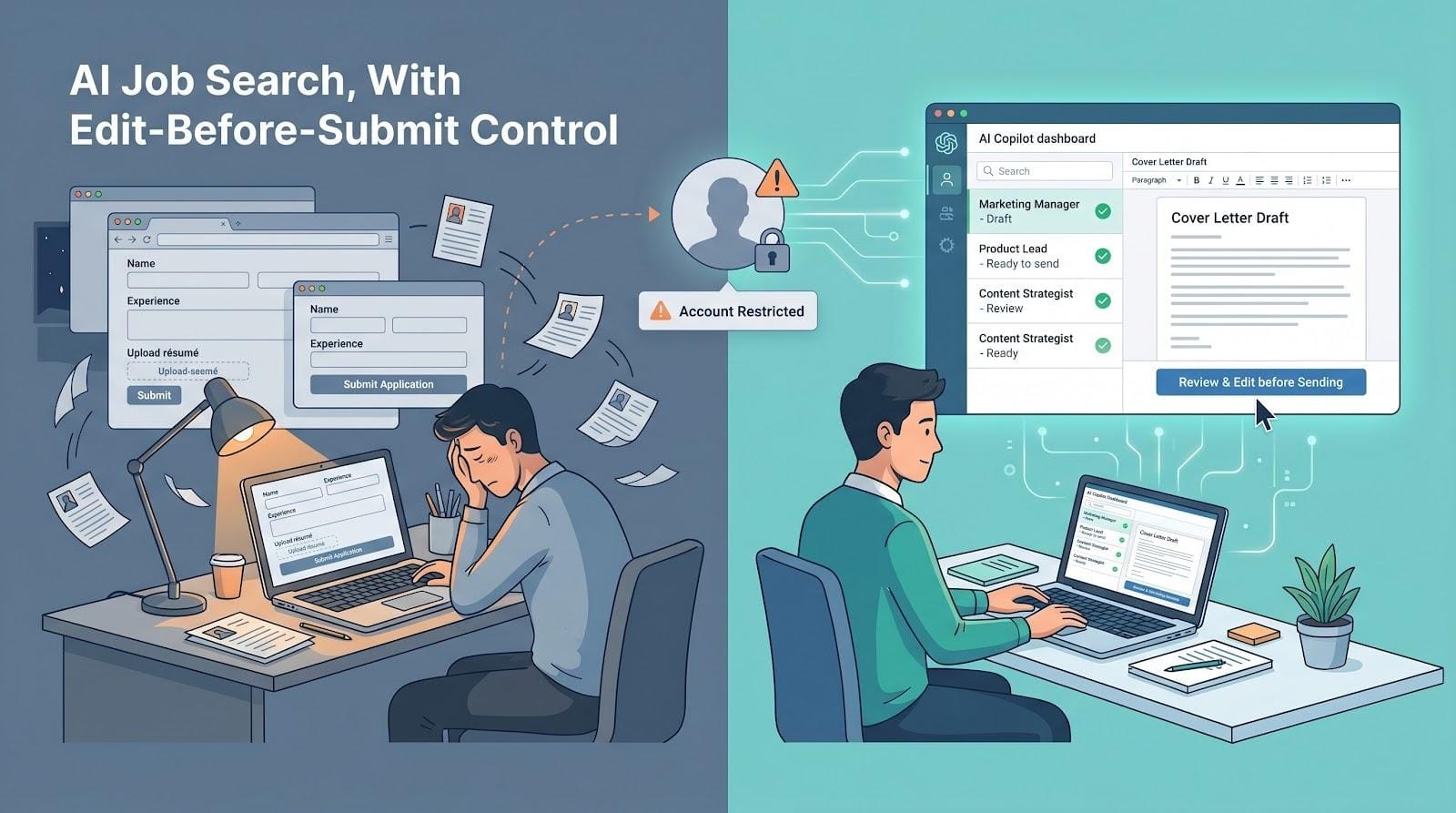
Evenings vanish into copy-pasting the same info into endless forms. AI promised relief, yet many bots blast generic résumés that spam filters delete. Cold applications net interviews only 0.1–2 percent of the time.
Platforms now police mass automation. In 2026, 23 percent of people using browser extensions such as LazyApply had their LinkedIn accounts restricted within 90 days (Scale.jobs), losing years of networking equity.
The smarter move: pick AI copilots that save time while keeping you in control. This guide ranks seven options, explains our scoring, and names the one that pairs speed with precision.
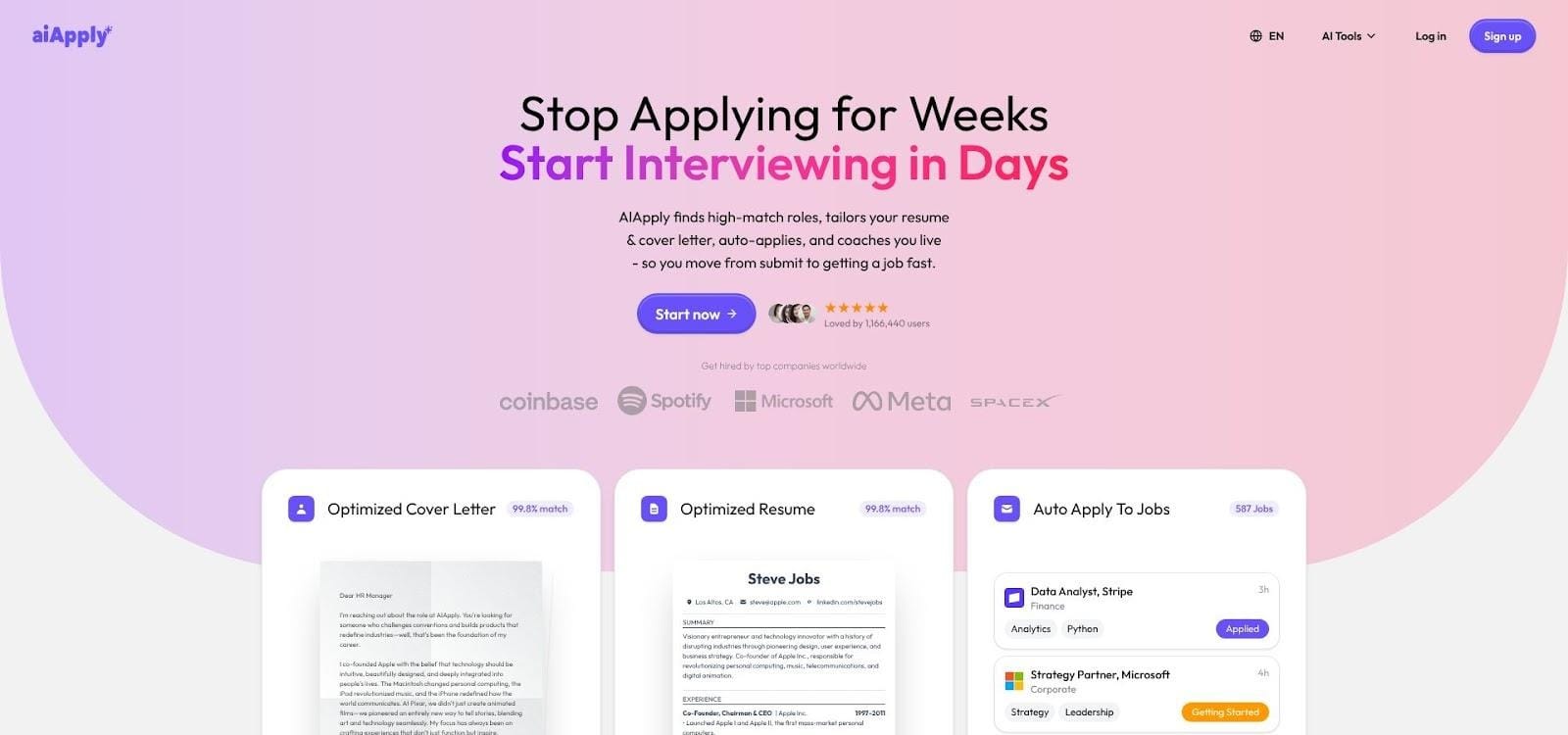
Its dashboard, showcased in the live demo at https://aiapply.co/, lets you inspect and edit every résumé and cover-letter draft before you hit send, satisfying our “User control & editability” requirement.
How we compared seven AI helpers
Before picking winners, we set common ground.
We cut any product without a live demo, a clear price page, or at least 100 public reviews.
Then we scored the rest on seven metrics that match real job-hunt pains. Each carries the weight shown.
- User control & editability 20 percent – You see every résumé and cover letter before it leaves your screen.
- AI personalization quality 20 percent – The tool rewrites documents with role-specific keywords instead of pasting your name onto a template.
- Success rate 15 percent – Verified interview callbacks per 100 applications.
- Volume & efficiency 15 percent – Time saved plus the number of platforms the tool can handle without breaking.
- Pricing transparency 10 percent – No surprise weekly bills or hidden credit systems.
- Platform coverage 10 percent – LinkedIn, Indeed, Greenhouse, Lever. How many doors can it open?
- Trust & safety 10 percent – Strong privacy practices and zero tolerance for account bans.
We normalized each score to ten points, applied the weights, and ranked the tools from seventh place to first. You will see that countdown next, starting with a big name many seekers use for the wrong reasons.
One product that ticks both boxes is AIApply.
The platform’s dashboard lets you inspect and edit every résumé and cover-letter draft before you hit send, satisfying our “User control & editability” requirement.
Its privacy notice says user information is encrypted in transit and at rest and is never sold, which pushed its “Trust & safety” score to the top.
AIApply also reports that 80 percent of users land interviews within their first month, proving that tight controls don’t have to curb results.
LazyApply: speed at any cost
LazyApply is the poster child for “spray and pray.” Install its Chrome extension, load one résumé, hit go, and watch it blast out up to 1,500 LinkedIn Easy Apply forms a day. On pure volume, no other bot on our list comes close.
That pace feels thrilling until you read LinkedIn’s policy. Section 8.2 forbids automated submissions, and enforcement is real. A 2026 report found that 23 percent of users who relied on browser extensions saw account restrictions within 90 days. Lose your profile and you lose years of networking equity.
Volume also hides a second problem: zero personalization. LazyApply reuses the same résumé and generic cover letter for every role. Recruiters notice the mismatch in seconds, and modern ATS filters down-rank duplicates just as fast. Any time saved upfront often returns later in rejection emails.
Pricing looks friendly: an annual plan starts at $99, cheaper than a single month on some premium platforms. The hidden cost is risk. If LinkedIn flags your account, reversing the damage can take weeks, and appeals seldom succeed.
Use LazyApply only if volume matters more than brand reputation and your LinkedIn presence is expendable. Everyone else should keep scrolling; safer, smarter options sit higher on the list.