Afrobeats isn’t “emerging” anymore—it’s here, everywhere. With a dedicated Billboard U.S. chart, a brand-new GRAMMY category for Best African Music Performance, and Rema’s Calm Down crossing a billion Spotify streams, we’re not talking hype anymore but infrastructure.
That means more artists, more cross-continental collabs, and more pressure on your digital audio workstation (DAW) to turn ideas into records that can live on a global playlist next to Drake, Karol G, or Ed Sheeran.
So, if you’re producing Afrobeats right now—drums, shekere, rubbery basslines, bright guitars, lush vocals—which DAW actually helps you deliver faster and better: Logic Pro X or FL Studio?
Let’s break it down.
 Fishon Amos
1. Workflow & Vibe Check
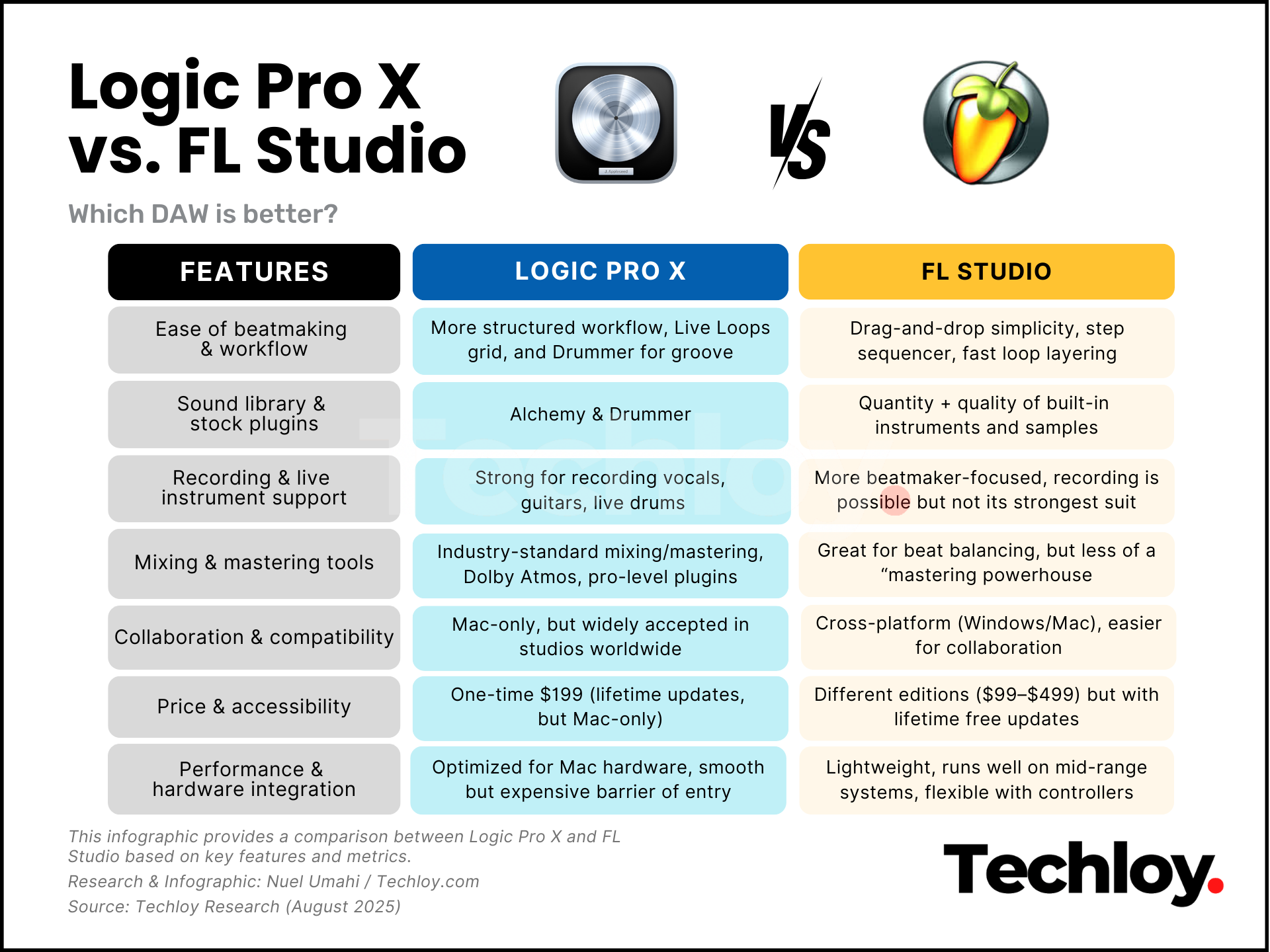
- FL Studio: Immediate groove machine. The step sequencer + Piano Roll combo makes it effortless to layer percussion, rimshots, log drums, or ghost notes with bounce. Idea to loop in minutes—perfect for Afropop, amapiano, and street-hop. Lifetime free updates = budget friendly.
- Logic Pro: Feels like a studio in your laptop. Brilliant for recording live instruments (guitars, horns, percussion) alongside programmed drums. Apple’s new AI tools in Logic Pro 11 streamline editing, and the built-in instruments/FX are pro quality from day one.
Verdict: Quick beat sketching = FL. Full studio sessions with live elements = Logic.
2. Drums
- FL Studio: Polyrhythms and microtiming are second nature. Adjusting velocities and groove feels human, not robotic.
- Logic Pro: Capable, but takes more steps—its MIDI transform tools and Drummer plug-in are deep, but less immediate.
Verdict: For percussion-first production, FL Studio has the edge.
3. Instruments & Sound Design
- Logic Pro: Ships with a massive instrument library—Alchemy, Studio Strings, Brass, Retro Synth. Great for Afro-fusion, layering live guitars, and real percussion. Stock sounds = “plug-and-play” organic.
- FL Studio: Stock instruments skew electronic (Sytrus, Flex, Harmor). Solid, but most producers lean on third-party Afrobeat packs or VSTs (Omnisphere, Kontakt) for that organic feel.
Verdict: Logic wins for in-the-box organic instrumentation.
4. Mixing & Finishing
- Logic Pro: Built-in mastering-grade EQs, compressors, reverbs, and spatial tools rival third-party plugins. Radio-ready mixes possible without extra purchases.
- FL Studio: Has improved (Parametric EQ 2, Maximus), but pros often add FabFilter, Waves, or Ozone. Mixer is flexible but less polished out of the box.
Verdict: Logic offers the stronger stock toolkit for global polish.
5. Collaboration & Accessibility
- FL Studio: Cross-platform (Windows + Mac), lifetime free updates, widely understood among beatmakers. Great for sharing projects across continents.
- Logic Pro: Mac-only, which limits accessibility. But perfect for finishing records with session musicians or mixers in the Apple ecosystem.
Verdict: FL wins for global collaboration; Logic wins for Apple-based teams.
6. Cost & Access
- Logic Pro: One-time $199.99, insane value if you already own a Mac. But the hardware buy-in is the real cost.
- FL Studio: Tiered pricing, free lifetime updates, no upgrade fees. Budget-friendly, especially if you’re just starting out.
Verdict: For affordability and updates, FL Studio takes it.
Conclusion
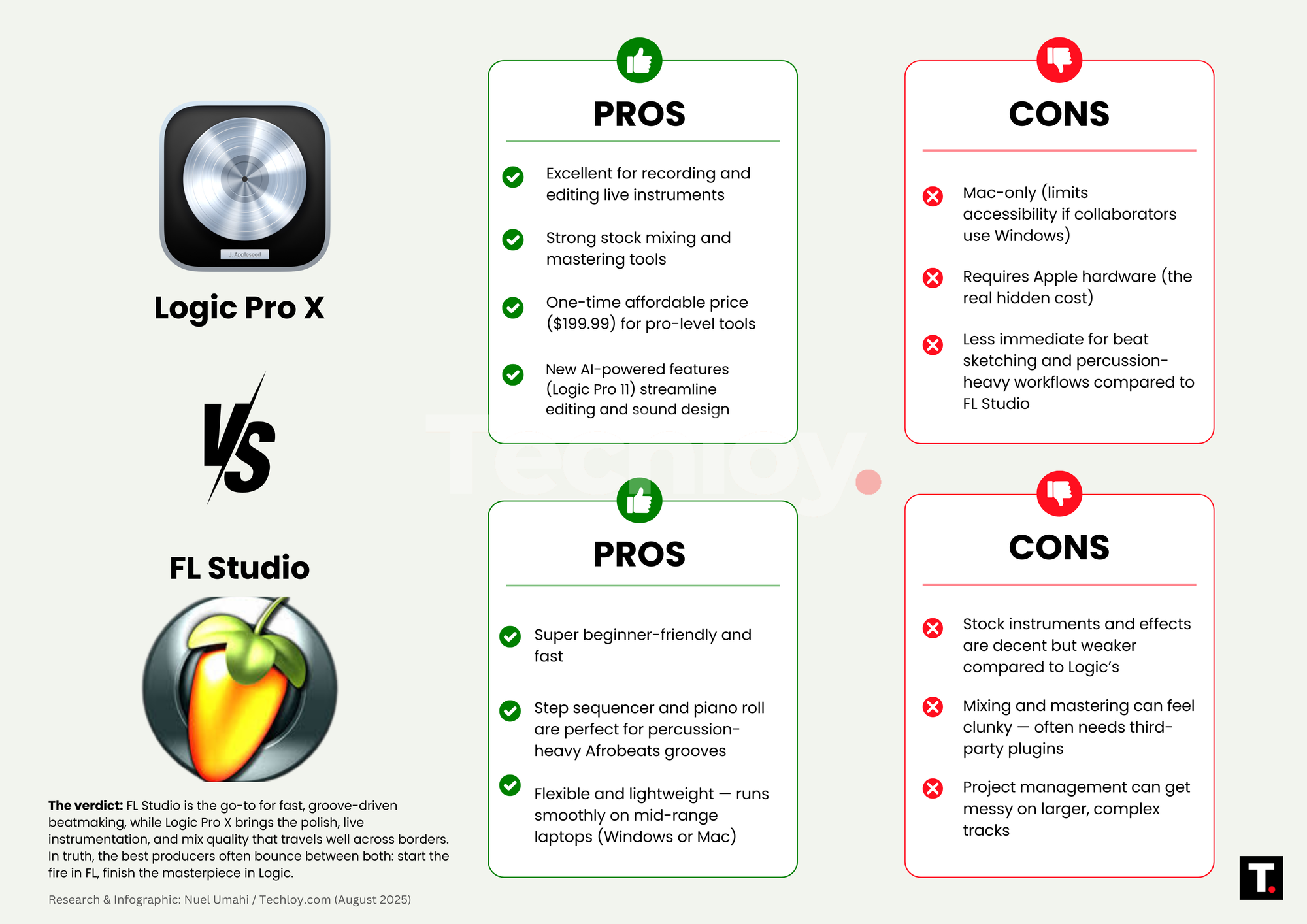
Both DAWs fit Afrobeats’ global moment—just differently.
FL Studio is the hustler’s DAW: fast, cross-platform, budget-friendly, and percussion-driven. It’s perfect for sketching ideas that bounce across Lagos, London, and LA in minutes.
Logic Pro is the studio finisher: polished, Mac-only, with a library and toolset that make mixing, recording, and arranging feel premium.
The hybrid truth? A lot of hits you’re hearing are born in FL and finished in Logic. That workflow—start fast, finish elite—matches the globalization of Afrobeats itself.
 David Adubiina