It’s funny how social media keeps recycling the same ideas. Threads, Meta’s answer to X (formerly Twitter), just rolled out a new feature called Communities. The twist? It’s almost a carbon copy of X’s own “Communities,” right down to the name. No attempt at disguise, no playful rebrand, just a straight lift.
Meta framed the move as a way to give Threads users dedicated spaces to dive into topics they care about. Join one, and it shows up on your profile for everyone to see. Each group even has its own custom “like” emoji, basketballs for the NBA crowd, book stacks for the lit lovers. Over time, the most active builders will earn badges. All neat enough on paper, but it comes with a catch: unlike on X, you can’t create your own community. Meta is the gatekeeper, deciding which groups exist and which don’t.
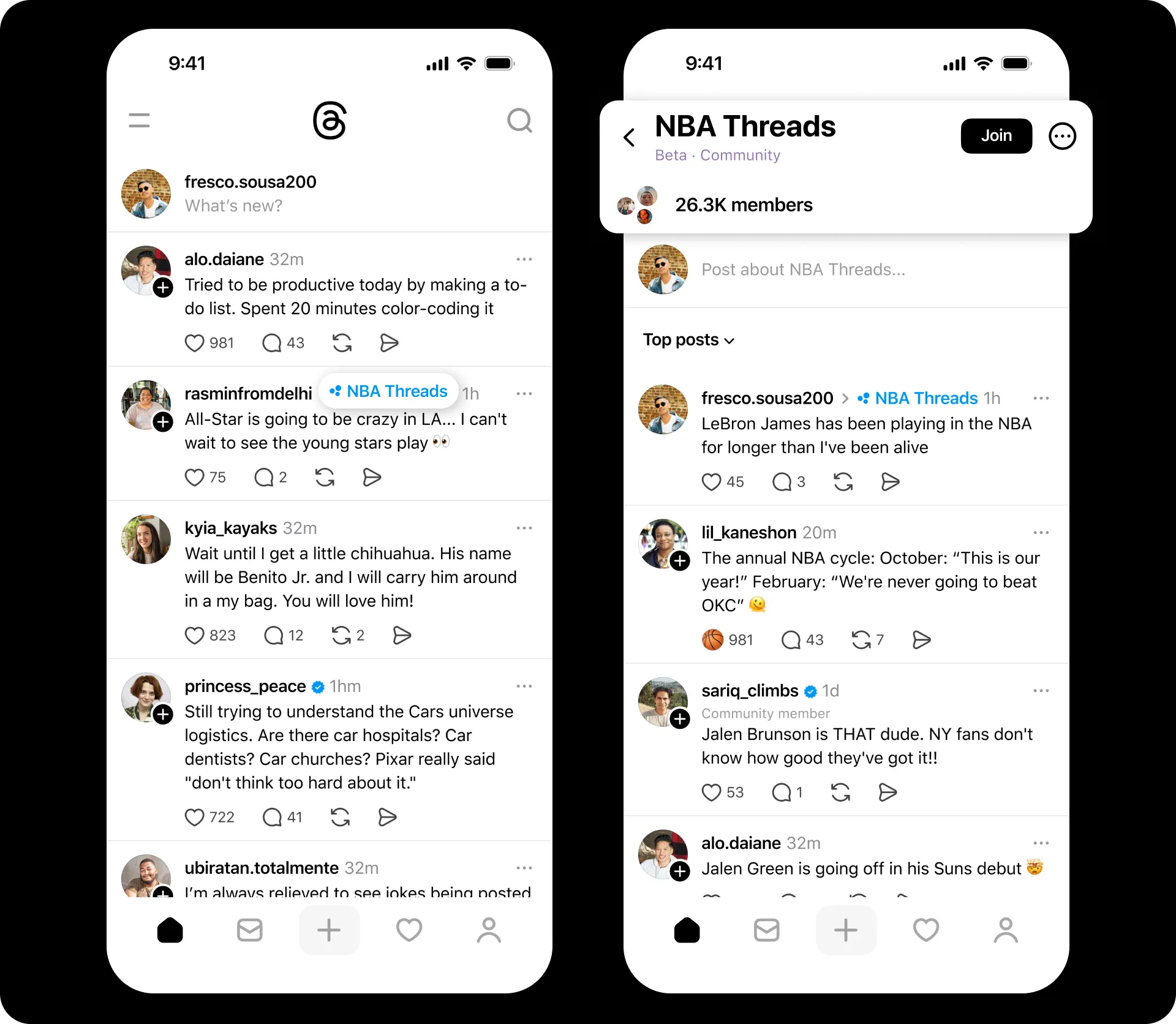
That’s where the contrast sharpens. On X, communities work more like Reddit, built and moderated by users, not handed down from the platform itself. They’re messy, sometimes chaotic, but organic. On Threads, the design feels more top-down, with Meta deciding the playing field while letting non-members still weigh in on discussions. It’s a curious balance: more open in one sense, less in another.
The real reason this matters is because users had already been improvising their own “communities” on Threads long before Meta made it official. Topic Tags, a stripped-down evolution of hashtags, became the default way people found their niches. NBA Threads, Book Threads, even smaller hobby groups: they all took root without needing Meta’s blessing. What Threads has done now is package that organic behaviour into a system it can shape and control.
That kind of playbook isn’t new. Twitter once did the same, taking user-created habits like hashtags and retweets and baking them into the platform. In some ways, Threads is walking that same path, only faster, because the template is already out there.
The bigger picture? Meta knows Threads has to do more than just mimic X if it wants staying power. Communities could help keep people inside the app longer, reshaping casual scrolling into more structured conversations. But the heavy-handed control might limit the very chaos that makes online groups thrive. If everything feels curated rather than created, will people stick around?
For now, the feature is still in testing, with Meta focusing on its most active interest areas before expanding further. It’s a clear signal that the platform wants to move beyond being seen as “Instagram’s text app” and closer to a standalone space where subcultures can form.
Threads may have borrowed the name and the structure from X, but whether it can foster the same kind of energy, that’s the real test.
 Louis Eriakha