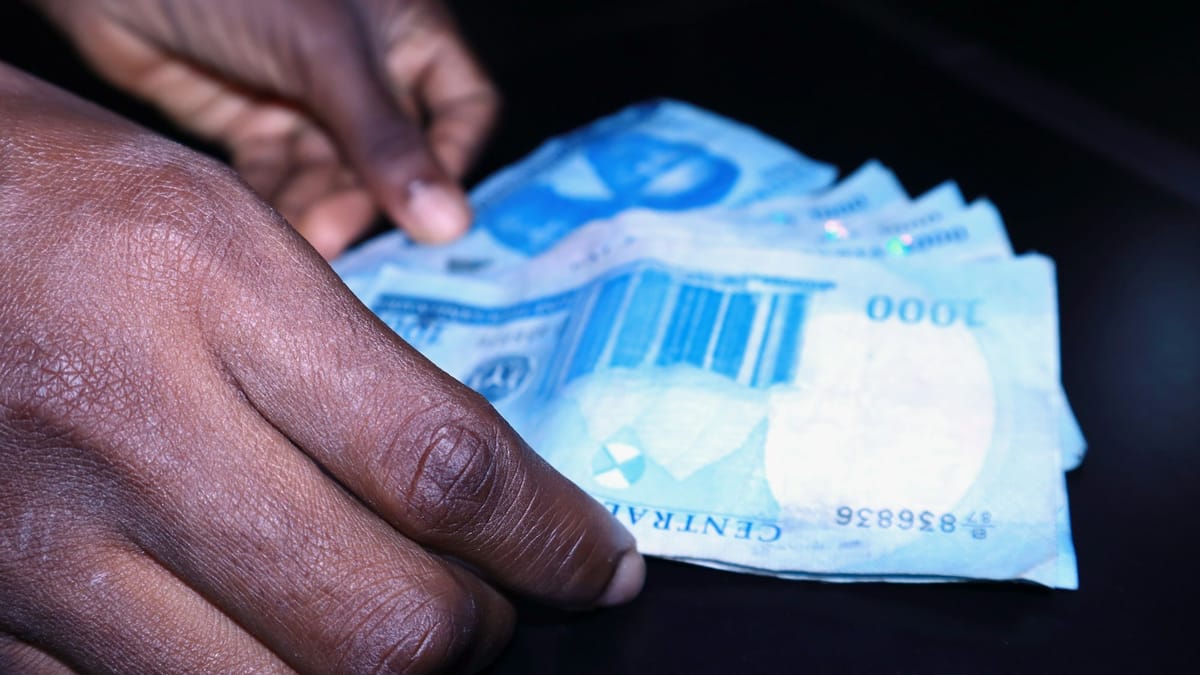
In Nigeria, digital lending has become close to what many would consider a trend. According to a report from Business Day in October 2024, digital lending in Nigeria surged by 80% from the previous year, with personal loans hitting ₦7.5 trillion.
When a sector grows this big, this fast, it’s almost inevitable that some players will cut corners, and in digital lending, that’s often meant predatory interest rates, misleading ads, and even debt collectors harassing borrowers’ friends and family. Now, the Nigerian government is stepping in with its most aggressive intervention yet.
In July, the Federal Competition and Consumer Protection Commission (FCCPC) rolled out the Digital, Electronic, Online, or Non-Traditional Consumer Lending Regulations, 2025, a mouthful of a name, but a clear signal that the Wild West days are over.
 Acquah Nana Yeboah
The rules slap hefty penalties on unethical behaviour, such as harassing borrowers and their contacts, using misleading advertising, hiding fees, or approving loans that borrowers clearly cannot repay. Individual lenders who are found guilty can be fined up to ₦50 million, while companies can be fined up to ₦100 million or 1% of their annual turnover (whichever is higher), and company directors risk up to five years of sanctions.
This marks a shift from the ad hoc crackdowns of the past, like office raids or sudden app delistings, to a more structured, predictable system.
The law also tightens licensing requirements, with approval fees now going as high as ₦1 million for digital lenders, covering only two apps, and ₦500,000 for each additional app. Each company is limited to owning a maximum of five apps. Licences last three years and must be renewed, with operators also paying a ₦500,000 yearly levy.
The new licensing rules also extend to airtime lending, a service that brought in ₦83.19 billion for MTN’s fintech arm in the first half of 2025, bringing it under FCCPC oversight for the first time. Only microfinance banks are exempt from the licensing requirement, and even they must apply for a waiver.
 Louis Eriakha
For borrowers, the rules aim to make digital lending safer and fairer. Lenders aren’t allowed to make false claims in ads and must be upfront about all fees, so no surprise charges suddenly double your debt. Lenders also aren’t allowed to approve loans that can’t realistically be repaid and must ensure interest rates aren’t “exploitative or inimical to consumer interest.” They’ll also be held to Nigeria’s data protection and telecom laws and must be ready to hand over records within 48 hours of an FCCPC request.
Interestingly, this push comes just months after the government announced a new credit system linking borrowers’ loans to their National Identification Numbers (NINs), making it easier to track credit histories and assess risk. Taken together, these moves suggest a coordinated effort to bring structure, transparency, and accountability to Nigeria’s fast-growing consumer credit market, protecting borrowers while forcing lenders to operate like legitimate financial institutions.
Digital lending in Nigeria may still be booming, but with these new rules, things are arguably becoming a bit more fair for both the lenders and the borrowers.
 Louis Eriakha