NVIDIA CEO Jensen Huang made two seemingly contradictory statements about artificial intelligence in a new interview—and both are now driving conversation across the industry.
Speaking on the Lex Fridman Podcast, Huang said, “I think we’ve achieved AGI.” Later in the same conversation, he added that the chances of AI agents building a company like Nvidia are “zero per cent.”
Taken together, the comments raise a bigger question: what exactly does Huang mean when he says AGI is already here?
 Damilare Odedina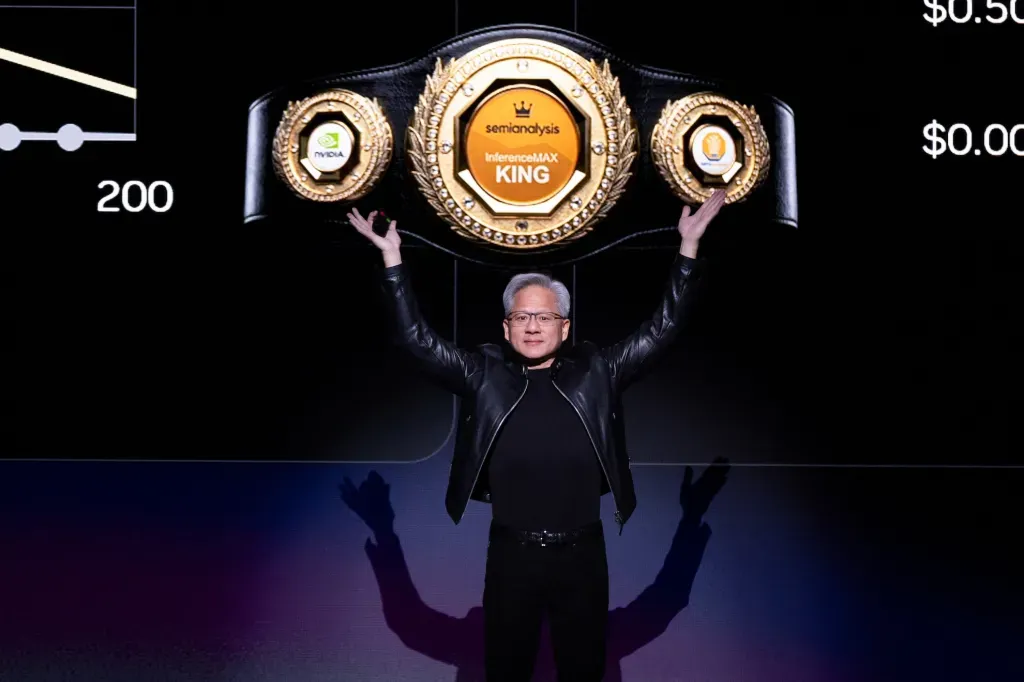
What Huang Said About AGI
Huang’s claim that AGI has been achieved comes with an important qualifier. He is not describing an AI system that can run a corporation, manage people, or make long-term strategic decisions.
Instead, he pointed to a more limited—but still significant—capability.
In the interview, Huang described a scenario where an AI system could create a simple product, launch it to millions or even billions of users, and generate short-term value before disappearing.
“It is not out of the question that an AI could create a web service, some interesting little app that all of a sudden a few billion people used for 50 cents, and then it went out of business again shortly after,” he said.
To him, this kind of output—building functional, widely used digital products with minimal human input—is enough to qualify as a form of general intelligence.
He pointed to OpenClaw as an example of how quickly these capabilities are evolving, describing it as a breakthrough moment for AI agents similar to what ChatGPT represented for generative AI.
Where Huang Draws the Line
But Huang draws a sharp line between building something small and running something complex.
When asked whether AI could build a company like Nvidia, his answer was definitive: it cannot.
“The odds of 100,000 of those agents building NVIDIA is zero per cent,” he said.
This is where his definition of AGI becomes clearer. For Huang, today’s AI can handle tasks, even sophisticated ones. But it cannot handle systems—especially those that require sustained coordination, long-term thinking, and organisational leadership.
Building a company like Nvidia is not just about writing code or launching products. It involves managing thousands of employees, navigating uncertainty, making strategic bets over decades, and continuously adapting to new market conditions.
Those are not just technical challenges. They are human and organisational ones.
Why AI Isn’t Replacing Jobs (Yet)
Huang used the example of radiologists to explain how AI changes work without eliminating them.
After AI systems became highly effective at analysing medical images, many predicted that radiologists would become less necessary. Instead, the opposite happened.
“There is now a shortage of radiologists,” Huang said.
His reasoning is straightforward. AI made it faster and easier to process scans, which increased the number of patients being diagnosed. That, in turn, increased demand for human experts to interpret results, make decisions, and manage care.
He sees the same pattern playing out in software engineering.
“The number of software engineers at Nvidia is going to grow, not decline,” Huang said, adding that the goal is not to reduce headcount but to enable engineers to solve more meaningful problems.
 Damilare Odedina