When OnePlus launched the Pad Go in 2023, its appeal was simple: a lightweight tablet that delivered acceptable performance and display quality at a budget-friendly €230. It was designed to be easy to carry, easy to recommend, and easy on the wallet.
The OnePlus Pad Go 2 takes a different approach. Priced closer to €350, it targets a higher tier with a larger 120Hz display, a newer chipset, and a much bigger battery. These upgrades are meaningful, but they also come with clear compromises in weight and portability.
This comparison examines whether the Pad Go 2’s move upmarket results in a better tablet overall, or whether the original Pad Go remains the more sensible choice for users who valued affordability and true “grab-and-go” convenience.
 Ejiro Onose
/1. Display
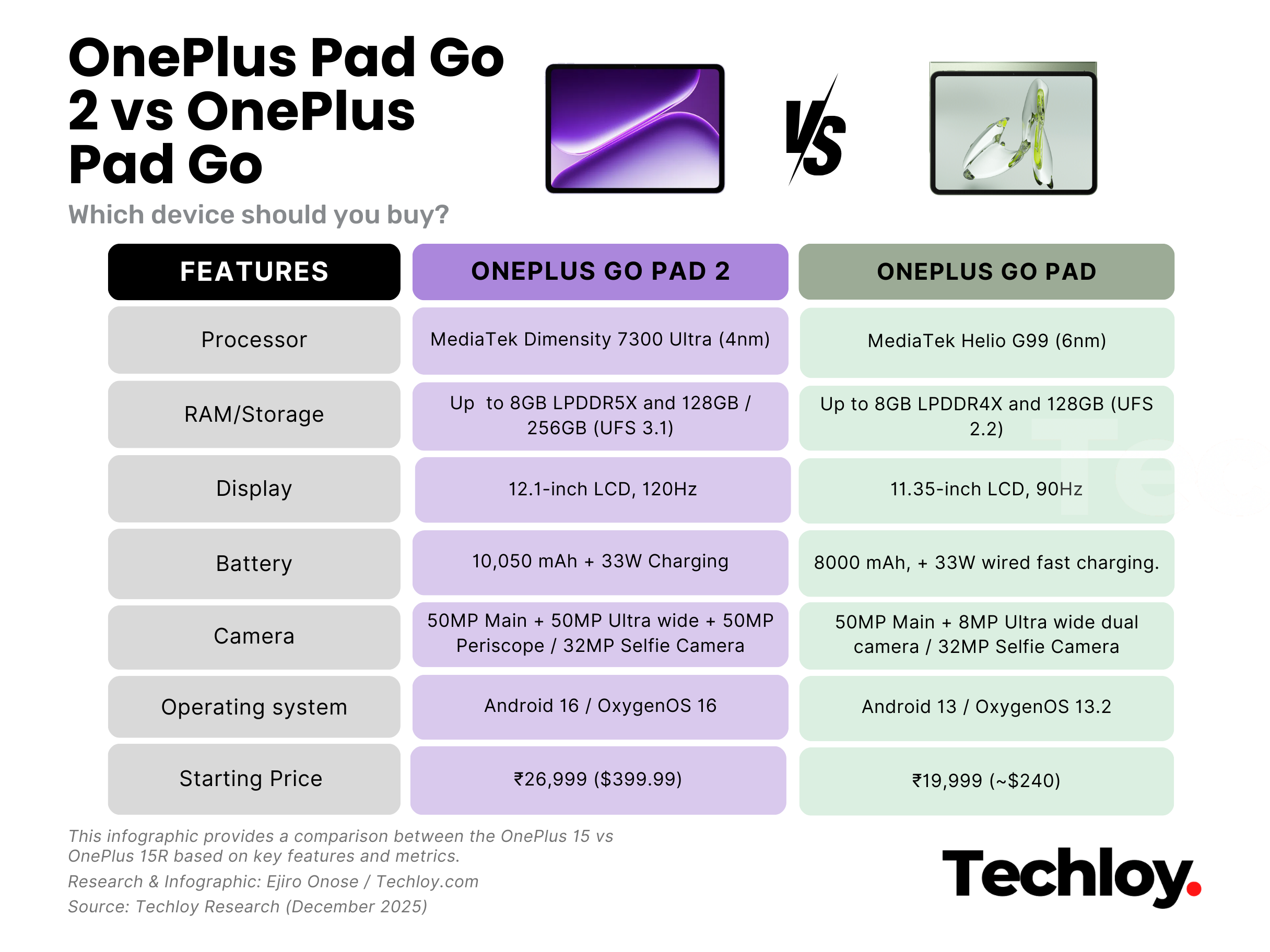
The display upgrade is the most significant differentiator between these two tablets. The Pad Go 2 has a substantial 12.1-inch screen, dwarfing the original Pad Go's 11.35-inch panel. This new screen offers a smoother 120Hz refresh rate, a noticeable step up from the previous 90Hz standard.
Brightness sees a massive leap as well. The Pad Go 2 hits a peak of 900 nits, making it usable in bright environments where the original's 400-nit panel struggles. For visual fidelity, the newer model renders the original obsolete.
/2. Performance
Under the hood, the engines drive two very different experiences. The Pad Go 2 utilizes the MediaTek Dimensity 7300 Ultra (4nm) chipset running Android 16, marking a generational leap in efficiency.
While the Pad Go relies on the older Helio G99 (6nm) and Android 13, the new model ensures significantly better longevity and gaming performance. The Pad Go 2 manages multitasking and heavier applications with superior stability, whereas the original is strictly suited for basic tasks.
/3. Battery
OnePlus increased the fuel tank significantly in the new model. The Pad Go 2 houses a massive 10,050 mAh battery, a major increase over the original's 8,000 mAh unit. This guarantees extended screen-on time for long media sessions.
However, a crucial critique remains: both tablets rely on the same 33W charging speed. Because the Pad Go 2's battery is much larger, it requires significantly more time to reach a full charge. This stagnation in charging tech creates a friction point for power users.
/4. Portability
The "Go" branding implies portability, but the Pad Go 2 compromises on this front. It weighs approximately 597g, making it noticeably heavier than the 532g of the Pad Go.
The larger footprint also makes the new device less distinct from standard full-size tablets. Users seeking a truly lightweight, grab-and-go slate will find the original model far more accommodating for one-handed use and travel.
The Verdict
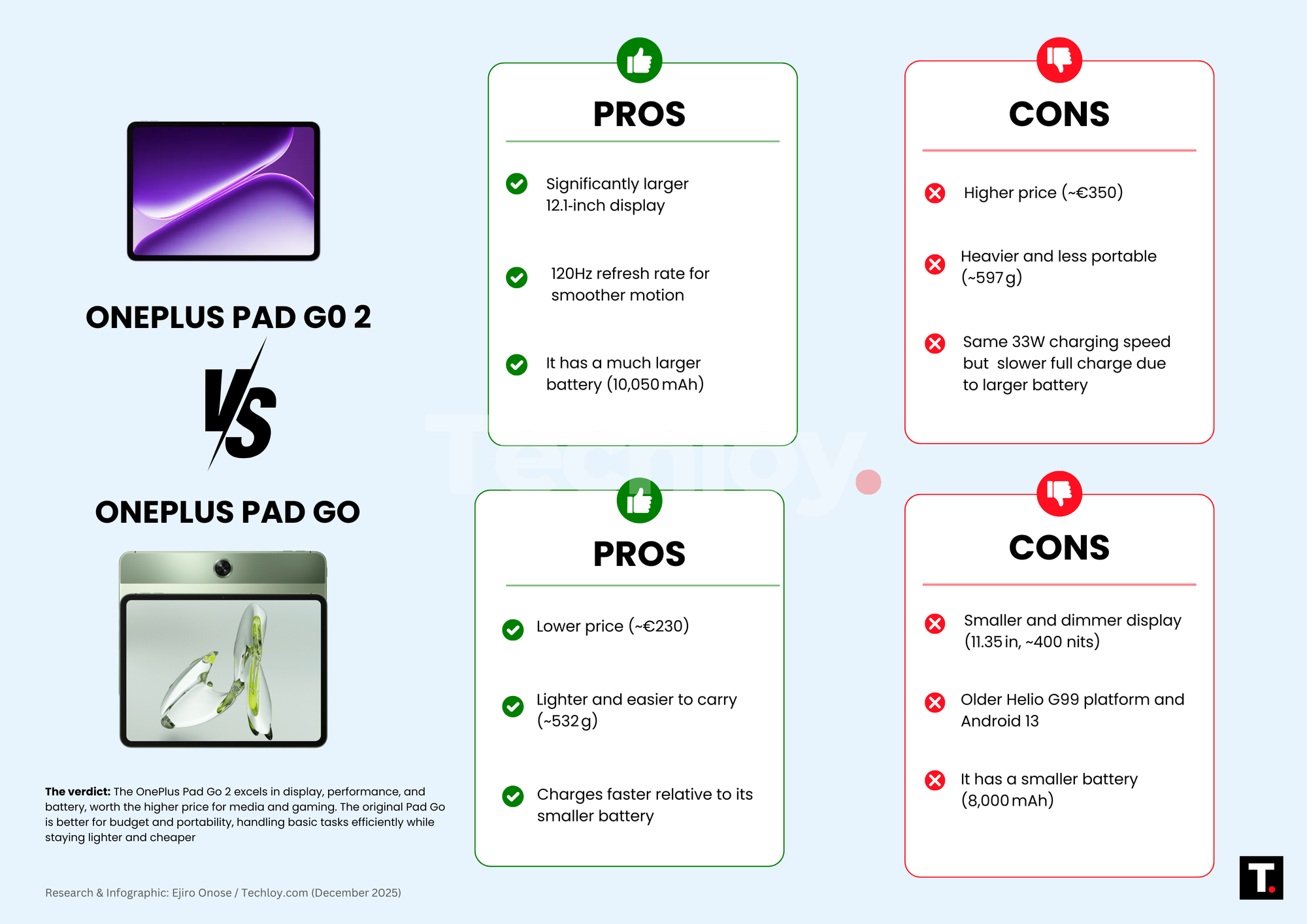
If your priority is content consumption, the upgrade is non-negotiable. The 900-nit brightness, 120Hz refresh rate, and massive battery create a superior viewing experience.
The original remains the better option for pure portability and value. It is lighter, charges faster relative to its capacity, and saves you over €100 while still handling basic video duties.
 Oyinebiladou Omemu