Spotify just made a move that will excite music nerds, hip-hop purists, Afrobeats historians, producers, and anyone who’s ever paused a track thinking, “I’ve heard this sample before.” The streaming giant has quietly acquired WhoSampled the community-run music database famous for tracing the DNA of songs.
There’s no price tag disclosed, but the deal covers both the team and the massive archive they’ve built since 2008. That archive currently documents over 1.2 million songs and more than 600,000 samples, along with covers, remixes and other connections that most listeners would never pick up on without digging.
If you’ve ever wondered where Burna Boy lifted a melody from, which Fela track keeps reappearing in new productions, or what 1980s soul record sparked a modern hit, WhoSampled is the rabbit hole people fall into.
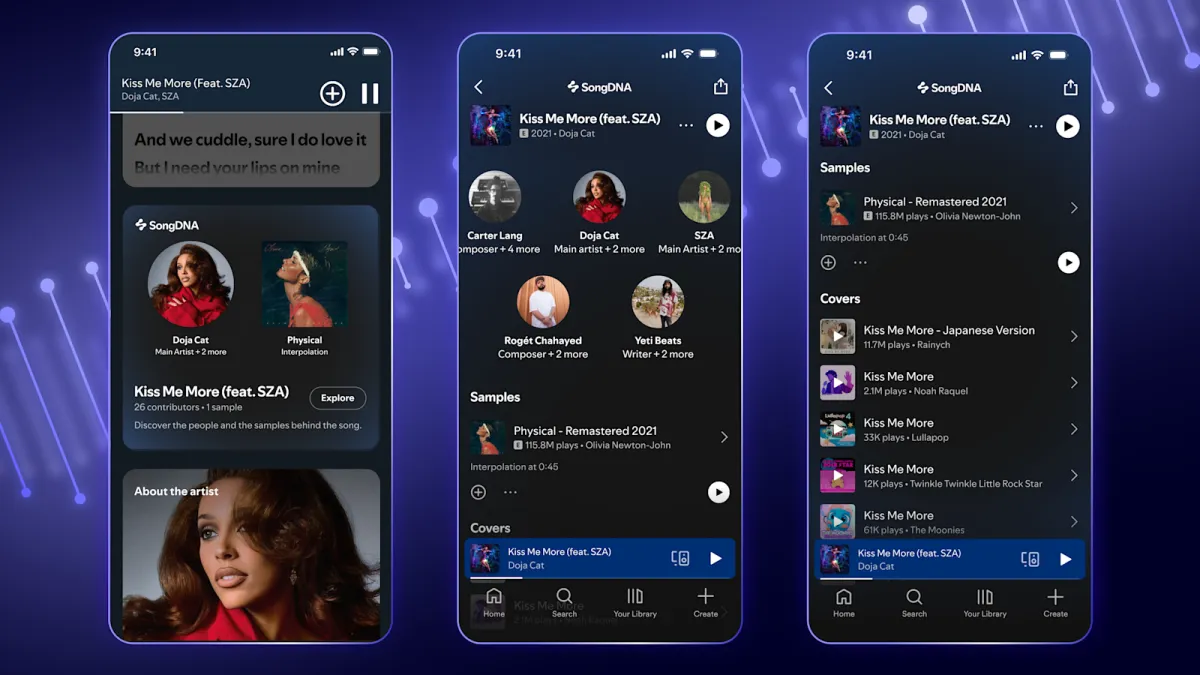
Spotify and WhoSampled aren’t strangers either. They began working together back in 2016 to let users explore sample histories inside their playlists. Now, that collaboration is leveling up.
WhoSampled’s data is already powering Spotify’s new SongDNA tool, a feature designed to help listeners discover the deeper stories behind tracks, from composer credits to sample origins. Today’s acquisition simply locks in a relationship that was already shaping how we understand music on streaming platforms.
The decision comes at a time when the industry is wrestling with how to protect creative work in the age of AI-generated music. With millions of tracks dropping every year many using borrowed melodies, replicable vocals, and obscure references verifying who created what is becoming harder. By bringing WhoSampled into its ecosystem, Spotify isn’t just investing in music discovery; it’s investing in music proof.
 Emmanuel Umahi
That’s especially important in regions like Africa, where oral history has long dominated music documentation. Producers, session players, and older songwriters are often left uncredited, despite inspiring entire genres. Think about the number of Afrobeats and hip-hop hits built off Highlife horns, Fuji drums, or Fela’s influence. Many of those stories are still undocumented, meaning revenue gets lost, history gets blurry, and pioneers never get their flowers or their royalties.
Spotify now has the tools to help solve that, if it chooses to. The WhoSampled acquisition could give creators far more visibility when their work is sampled globally, and it could help preserve artistic history that has traditionally lived offline, passed down by ear rather than documentation.
The takeaway
Spotify isn’t just buying a database it’s buying context, culture, and credibility at a time when ownership in music is getting more complicated. WhoSampled helps Spotify build deeper discovery tools for listeners, better protection for artists, and stronger data to navigate the coming wave of AI-made music. Producers, music fans, and historians get more transparency. Listeners get more meaning. And Spotify gets an edge in the streaming wars through something simple but powerful: knowing where the music comes from.
 Louis Eriakha