Spotify has a new trick that could finally convince holdouts to switch teams. The company just rolled out a built-in playlist transfer tool powered by TuneMyMusic, letting you copy your songs and playlists from other music services directly into Spotify without juggling external apps or running into paywalls.
If you’ve ever thought about leaving Apple Music, YouTube Music, Tidal, or even Pandora for Spotify, this is basically Spotify saying: “Don’t worry, you can bring your stuff.”
The feature lives inside your “Your Library” tab on the mobile app. Scroll to the bottom of your library and you’ll see “Import your music.” Tap it, choose the platform you’re switching from, and Spotify handles the rest. Nothing gets deleted on the original app, it just gets duplicated into Spotify. At launch, it supports most major platforms including, Apple Music, Amazon Music, Deezer, Pandora, Tidal, YouTube Music, SoundCloud, and others.
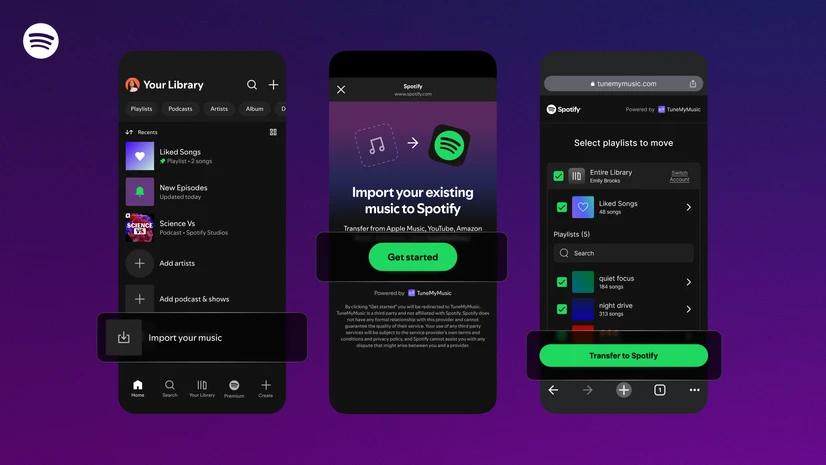
Why does this Spotify transfer tool matter?
Switching between streaming platforms has always been more painful than it should be. Even though tools like TuneMyMusic already existed, they forced users to leave their music apps and sometimes pay extra. TuneMyMusic’s free plan caps transfers at 500 songs anything more requires a subscription.
By bringing the feature inside Spotify, the company removes friction and the extra cost. That could nudge undecided users to finally make the move, especially as Spotify continues doubling down on discovery, social features, and podcasts.
Spotify isn’t the first to do this, though, as Apple Music already lets iPhone and iPad users import playlists natively through iOS settings (and on Android through its app). YouTube Music Premium also supports imports, including from Spotify itself.
But Apple’s solution sits inside its ecosystem. Spotify’s sits inside the app and is cross-platform, consistent, and built on a service with deeper playlist-level tools. In other words, this isn’t about copying your old playlists it’s about making sure they can evolve once they get to Spotify.
The takeaway
Spotify isn’t just fighting for users with exclusive podcasts or algorithm-powered playlists anymore. It’s competing on data portability making it painless to leave another platform without losing years of playlists. The simpler it becomes to migrate, the harder it becomes for rivals to keep users locked in. And in the streaming wars, that might be the most strategic play yet.
 Emmanuel Umahi