


For the last fifty years, Apple has been a leader in tech, producing some of the most coveted products, from the iPhone to the MacBook. In so many ways, the arrival of Apple on the scene has been a game-changer for the global tech industry.
At a time when advertising had become so deceitful that it didn’t even matter what was written on the label of the product or what the company said in their marketing, Apple broke against the curve, offering effective products that, at least for a while, delivered on their promise. It was why many flocked to it in the first place; the iPhone was effective and practical.
Over time, the world has become split into two: lovers and haters of Apple products. But this has not derailed the ascendance of the company into a tech giant. “Through every breakthrough, one idea has guided us — that the world is moved forward by people who think different,” CEO Tim Cook said.
As Apple celebrates its 50th anniversary this month, we look back at some of its most innovative products over the years, from hardware to software.
Here are the 50 most innovative Apple products, ranked:
 Louis Eriakha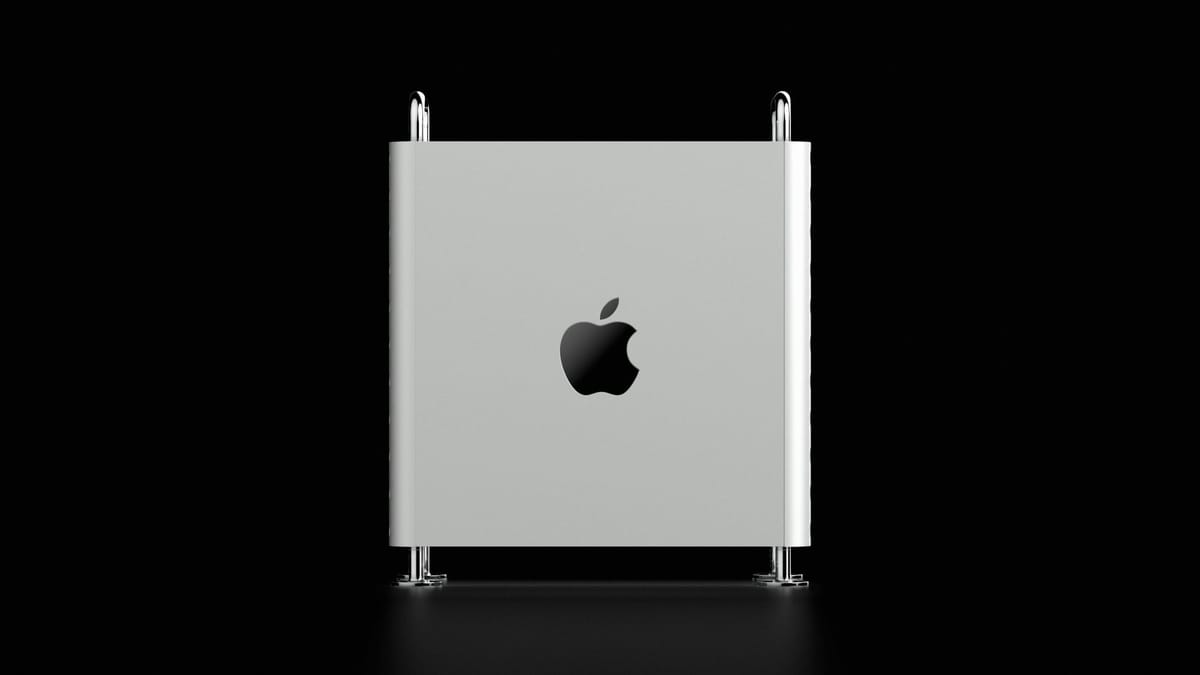
50. Apple AirPower (Cancelled 2019)
Apple announced a charging mat in 2017 where you could drop your phone, watch, and AirPods case anywhere on the surface, and all three would charge at once. It never shipped. The overlapping charging coils produced more heat than the mat could handle, and Apple cancelled it in 2019. It remains the most talked-about product Apple never actually finished.
49. Apple News+ (2019)
Reading journalism online in 2019 meant hitting one paywall on one site, then a different paywall on the next, with tracking cookies following you across all of it. Apple News+ bundled hundreds of magazines and newspapers into one app for a flat monthly fee, without the ad tracking that came with the open web. It simplified something that had become genuinely fragmented and annoying.
48. Apple Fitness+ (2020)
Fitness streaming existed before Fitness+. What was different was the hardware connection. The service pulled live heart rate and calorie data directly from the Apple Watch and put it on screen while the workout played. Nobody else was doing that at scale. The workout and the wearable worked as a single system rather than two separate things running alongside each other.
47. Apple Arcade (2019)
Mobile games in 2019 were largely funded by ads and in-app purchases that charged money to keep playing. Apple Arcade launched with a flat monthly fee and removed all of that from every game in the catalogue.
No ads, no timers, no extra charges. Just games. It proved the model could work and gave developers a different path to build quality titles without chasing engagement mechanics.
46. iPhone Air (2025)
The iPhone Air represented Apple’s obsession with thinness taken to a new extreme. By dramatically reducing the device’s profile without sacrificing core performance, it showed how far Apple was willing to push materials engineering and internal design to make the smartphone feel almost impossibly light and sleek in the hand.
45. Apple Watch Ultra (2022)
The first Apple Watch Ultra marked the moment Apple stopped treating the watch as just a lifestyle wearable and started positioning it as serious outdoor and sports equipment. With a rugged titanium build, dual-frequency GPS, and extended battery life, it expanded what people expected a smartwatch to survive and accomplish.
44. Apple LaserWriter (1985)
The Apple LaserWriter didn’t just print documents; it helped launch the desktop publishing revolution. Paired with the Macintosh and software like PageMaker, it gave small businesses and individuals the power to produce professional-quality layouts that previously required specialized print shops.
43. Magic Mouse (2009)
The mechanical scroll wheel had been the standard for desktop mice for over a decade. Apple replaced it entirely, applying the same multi-touch layer from its laptop trackpads to the top of the mouse. Scrolling, swiping, and navigating all happened through finger gestures on a continuous surface with no moving parts underneath.
42. MagSafe (2006, 2020)
Anyone who has ever tripped over a laptop cable and watched the machine pull toward the floor understands why MagSafe existed. The connector was magnetic, so a yanked cable simply broke free without dragging anything with it.
Apple brought the idea back in 2020 for iPhone, this time as a ring of magnets that snapped chargers and accessories precisely onto the back of the phone. A simple idea that kept getting more useful.
41. Magic Keyboard (2015)
For years, wireless keyboards ran on AA batteries you had to remember to replace. The Magic Keyboard moved to a slim rechargeable design with a new key mechanism that felt more precise and consistent underhand. It was a quiet but complete rethink of what a desktop keyboard should feel like, and the same approach eventually shaped every keyboard Apple makes.
40. AirDrop (2011)
Sending a large file to someone standing next to you in 2011 meant a USB drive, a cloud upload, or an email that bounced back for being too big. AirDrop used Bluetooth to connect devices and peer-to-peer Wi-Fi to handle the actual transfer, no internet required. The file arrived in seconds, and nothing needed to be set up. It still has no real equivalent on other platforms.
39. iMessage (2011)
SMS in 2011 carried per-message fees on many carrier plans and could barely handle a photo attachment. iMessage sent messages between Apple devices over the internet instead, removing those fees and allowing real media sharing with end-to-end encryption on by default. It also came to Mac, meaning your conversations were no longer trapped on your phone.
38. Newton MessagePad (1993)
The Newton MessagePad was far ahead of its time, attempting to create a handheld digital assistant years before smartphones existed. Its ambitious handwriting recognition and portable computing vision didn’t fully succeed, but the ideas behind it would later resurface in the iPhone and iPad.
37. HomePod (2018, 2023)
Smart speakers in 2018 were mostly optimised around how well the assistant could hear you across a room. The HomePod was primarily about sound. It used microphones to read the room's acoustics and adjusted playback in real time based on what it found, tuning itself to wherever it happened to be sitting.
Apple discontinued the first-generation model in 2023 and came back with a second version that added temperature and humidity sensing to the room-reading it already did.
36. Apple Pencil (2015)
Most tablet styluses before the Pencil were clunky rubber-tipped things with no real precision. The Pencil tracked the angle of your hand and responded to how hard you pressed, with almost no lag between hand and screen.
Artists and designers who had been forcing professional work out of consumer tablets finally had hardware that matched what they were trying to do.
35. Mac Pro (2013)
The 2013 Mac Pro also known as the trashcan, was a radical redesign built around a compact cylindrical form and a unified thermal core. While controversial and ultimately limiting for pro users, it represented Apple’s willingness to rethink workstation design from the ground up instead of following traditional PC tower conventions.
34. ProRes and ProRes RAW (2007, 2018)
Professional video editors had a long-standing tradeoff between file sizes and image quality. Uncompressed video looked great but was enormous and slow to work with. Compressed video was manageable but degraded the image.
ProRes landed in the middle, storing enough of the original image data to maintain quality while remaining fast enough to edit smoothly. When the iPhone 13 Pro added native ProRes recording in 2021, a broadcast-grade format arrived in a device that fits in a jacket pocket.
33. Thunderbolt (2011)
High-end workstations in 2010 needed a different port for almost everything, external displays on one cable, fast storage on another, data transfer on a third. Thunderbolt collapsed all of that into a single connector that handled video, storage, and data simultaneously. Apple shipped it first, before any Windows PC had it, in the 2011 MacBook Pro.
32. iMac G3 (1998)
The iMac G3 rescued Apple at a critical time by making computers feel friendly, colorful, and approachable again. Its translucent all-in-one design stood in sharp contrast to the beige boxes of the era and reintroduced the idea that a computer could have personality.
31. iOS (2007)
iOS defined how modern touch-based operating systems should work. Its focus on fluid gestures, sandboxed apps, and a tightly controlled App Store created a secure, developer-friendly ecosystem that became the blueprint for smartphone software across the industry.
30. MacOS (2001)
macOS carried forward a Unix-based foundation with a consumer-friendly interface, blending stability with usability. It helped make advanced computing approachable and, over time, became tightly integrated with Apple’s hardware and software ecosystem in a way few desktop platforms have matched.
29. TvOS (2015)
tvOS turned the Apple TV from a simple streaming box into an app platform for the living room. By bringing the App Store model to televisions, Apple expanded its ecosystem to yet another screen in the home.
28. Siri (2011)
In 2011, using a phone meant tapping a screen. Apple bought a startup called Siri Inc. in 2010 and shipped the voice technology inside the iPhone 4S a year later.
For the first time on a mainstream smartphone, you could just speak to your phone in plain language and it would respond. Voice recognition had existed in labs for years. That was the first time ordinary people actually used it every day.
27. Apple Music (2015)
Apple had built its music business on selling individual songs for 99 cents each, and it worked brilliantly for years. By 2015 that model was giving way to streaming, and Apple knew it.
After buying Beats in 2014, they rebuilt the service and launched Apple Music with a full streaming catalog for a monthly fee. It was a full pivot away from the store that had defined Apple's relationship with music for over a decade.
26. Apple Graphics Tablet (1979)
Seven years before the Macintosh, Apple was already selling a drawing peripheral for the Apple II. It worked with a wired stylus, cost $650 in 1979, and offered a precise input surface at a time when interacting with a computer meant typing commands at a keyboard.
The FCC eventually pulled it over radio interference concerns. An early experiment, but the instinct behind it ran all the way forward to the Pencil.
25. Mac mini (2005)
The Mac mini proved that a full desktop computer didn’t need a tower. Its compact, affordable design lowered the entry barrier to macOS and became a popular choice for developers, home servers, and switchers bringing their own displays and peripherals.
24. iMac
The iMac reimagined the desktop computer as a single, approachable object instead of a tangle of parts and cables. Its all-in-one design and bold aesthetics helped redefine what a home computer could look like and made technology feel less intimidating to everyday users.
23. HomePod mini (2020)
The HomePod mini brought Apple’s smart home ambitions into a smaller, more affordable form. With strong audio quality and deep integration with Siri and HomeKit, it made Apple’s ecosystem more present in everyday household spaces.
22. iPad (Original, 2010)
When Jobs held up the original iPad on stage, a lot of people called it a large iPod touch and wondered who needed it. Turns out, a lot of people did. Reading, browsing, and watching video on a device you could hold with one hand on a sofa turned out to be exactly what millions of people wanted. No laptop, no desk, no effort. It created a whole product category that nobody had managed to make work before.
21. iPad mini (2012)
A full-size iPad is comfortable at a desk but gets heavy when you hold it one-handed on a commute. The mini brought the same software and ecosystem into a size closer to a paperback book, light enough for extended reading without your arm giving out. It opened the iPad to the kind of everyday, casual use the larger model was too bulky to serve.
20. iPod (2001)
Carrying digital music before the iPod meant either a CD binder or a flash player that held maybe a dozen songs. The iPod carried a hard drive and a scroll wheel that made navigating a thousand songs feel natural rather than like a chore.
The scroll wheel was the real invention. Without it, the storage would have been useless. Apple used the revenue the iPod generated to fund what eventually became the iPhone.
19. iCloud (2011)
Before iCloud, backing up an iPhone meant plugging a cable into a computer and running iTunes. Most people did not do it, which meant most people had no backup at all. iCloud made it happen automatically, in the background, over Wi-Fi, without anyone having to think about it. For a lot of people, it was the first time their phone data was actually protected.
18. Vision Pro (2024)
Most VR headsets came with hand controllers. Vision Pro had none. It tracked where your eyes were looking and responded when you pinched your fingers, no physical controller required.
The display resolution across both eyes was extraordinary for a wearable device. It went on sale in February 2024 at $3,499 and represented the clearest statement Apple had made about what it thinks computing looks like next.
17. Final Cut Pro (1999)
Final Cut Pro helped turn the Mac into a serious tool for professional video editing. Its magnetic timeline and optimised performance made non-linear editing faster and more intuitive, and it played a major role in positioning Apple computers as the default choice for many filmmakers and editors.
16. Apple Pay (2014)
Digital wallets had been promised for years and nobody had made them stick. Apple embedded an NFC chip in the iPhone 6, added a fingerprint sensor to authorise payments, and kept the actual card number off the transaction entirely. Holding your phone near a payment terminal and buying something with your thumb felt unremarkable the first time you did it. That ease was the whole point.
15. Face ID (2017)
Removing the home button from the iPhone X meant removing Touch ID with it. What replaced it was a camera system that projected 30,000 infrared dots across your face to build a 3D map, then used that map to verify who you were. It happened fast enough that unlocking the phone felt passive. You picked it up and it was already open.
14. Apple Intelligence (2024)
Most AI tools in 2024 worked by sending your input to a remote server and getting an answer back. Apple built a language model designed to run on the device itself, without that server round trip, using the Neural Engine already inside the chip.
For heavier tasks, it routed requests through cloud infrastructure Apple says it cannot access. It was an attempt to bring AI into everyday use without giving up the privacy expectation Apple's users had come to rely on.
13) The Macintosh II (1987)
Regarded as the spiritual ancestor to the Mac Pros and pretty much every desktop computer Apple has made, the Macintosh II was Apple's first shift into more modular computer designs. It was a 16 MHz Motorola 68020-powered computer with support for multiple monitors and was the first Macintosh computer to support colour graphics.
12) The Apple Watch (2015)
The first Apple Watch had a simple job: to fix some of the problems that plagued the smartwatch market and keep people coming to Apple. It introduced the digital crown, allowing users to interact with the interface without needing to obscure the screen, acted as a health device, and, most importantly, as a companion device for the iPhone.
11) MacBook Neo (2026)
One of Apple's latest offerings and a threat to ChromeBooks everywhere, the MacBook Neo is Apple's first attempt to grab a share of the budget market. It's powered by Apple's A18 Pro chip and still managed to maintain the premium feel of Apple's high-end PCs while being as cheap.
You could also argue this wasn't the most technologically innovative, but it has definitely made a statement in the industry for what's possible at the budget range.
10) Mac Studio (2022)
In 2022, if you were a creative professional looking to get a high-performance compact desktop designed by Apple but not as pocket draining as the $7000 Mac Pro, the Mac Studio definitely crossed your mind. We're keeping it this high on our rankings for a few reasons.
One, it was M1-powered, meaning it was powerful enough to handle most tasks you throw at it, and two, it was about $2000 at launch, making it relatively cheap for the specs it offered, and lastly, it was quite compact, capturing all that power in a 3.7-inch-tall aluminium chassis.
9) MacBook Pro (2006)
Introduced a few years before the MacBook Air, the MacBook Pro was also Apple's approach to a market that already had a number of bulky, heavy-hitter power stations. It was arguably the spiritual successor to the PowerBook G4 series and marked the 'intel transition' for Apple. A time when Apple decided to make the switch from PowerPC chips to Intel chips.
8) MacBook Air (2008)
The MacBook Air marked a shift in ultra-thin laptops and came at a time when the competition was packed with compact, dense laptops like the PowerBook G4. The Air was pitched as a new light, sleek device that you could easily carry around and work with, and for the most part, it delivered on that promise.
Except for some of the more technical issues it had, like it constantly overheating and slow hard drives, and its high price tag of $1700 at the time, the unibody aluminium design became iconic and has grown into the device we know it to be today.
7) AirPods Pro (2019)
Similar to many of the other things on this list, the AirPods were also not the first of their kind, but they were easily one of the first to popularise the true wireless Bluetooth earbuds category as a whole.
Released back in 2016 with Apple's custom-made W1 chip, the AirPods were one of the first earbuds that made switching from wired to wireless a bit more justified. The battery lasted longer, the device stayed connected, and it paired easily.
6) iPhone 17 Pro (2025)
Now, this might be recency bias talking. There are a number of reasons many have praised the iPhone 17 lineup, calling it one of the more reasonably priced phones from recent times, with the increase in base storage, screen resolution and other upgrades that Android users would roll their eyes at.
But the reason it's on our list isn't because of its price, but because of Genlock, a feature available to just the iPhone 17 Pro and Pro Max. While many would probably never use it, the option of being able to hard-sync footage across phones at a professional broadcast level unlocks a layer of possibilities for ambitious filmmakers who can't afford a hardcore camera.
5) iPhone 11 (2019)
This phone was also not a technological breakthrough, but it marked a milestone for the company. The iPhone 11 was when the company first introduced the 'Pro' and 'Pro Max' part of its lineup, and of course, the triple camera setup that is almost synonymous with the iPhone today.
4) iPhone 6 (2014)
You could argue this wasn't exactly a technological breakthrough, and we won't get mad. It was the first iPhone to get 'big' (by the standard of the time), with the phone introducing popular 4.7-inch and 5.5-inch screens.
A trend that was already very common in the Android world. But what can't be argued, though, is the commercial success of this thing with over 220 million units sold. It still holds the title of the most sold iPhone.
3) iTunes Music Store (2003)
Piracy is a problem that has been as old as time, especially in the music industry. The iTunes Music Store was one of the first to try to cut down on that, allowing users to purchase and download songs for 99 cents each. This was at a time when you could either drop $20 or more for an album or try downloading it for free from sketchy websites. iTunes was an ideal middle ground for many.
2) iPhone (2007)
We all remember the iconic quote from the first time Steve Jobs hopped on stage to talk about Apple's new landmark device back in 2007, "An iPod, a phone, and an Internet communicator. An iPod, a phone... are you getting it? These are not three separate devices. This is one device, and we are calling it iPhone."
And the crowd went wild. It wasn't the first touchscreen phone or media device in the world, but many consider it the first to successfully combine a fully usable web browser, multi-touch interface, and consumer-focused design, effectively launching the modern smartphone era.
1) Apple M series (2020)
Love or hate them, you can't talk about the powerful laptops or computers available in the wild without talking about Apple's M series. The M1, launched in 2020, was the beginning of what many consider a huge leap in vertical integration as the chip brought about new standards in the PC world with it's high efficiency and raw power.


