



The financial landscape is undergoing a profound transformation, with access to significant trading capital no longer limited to the hallowed halls of institutional finance. A new era has emerged, empowering a wider range of skilled individuals to participate in the markets. This revolution is spearheaded by a new class of firms that have redefined the concept of proprietary trading. While often broadly referred to as "prop firms," these entities operate on a distinctly modern model, more accurately described as "funded trader programs."
The core of this modern movement lies in a mutually beneficial arrangement where firms identify talented traders through a structured process, provide them with the necessary capital and infrastructure, and share in the profits they generate. The industry's evolution reflects a broader trend toward transparency and accessibility, driven by technological advancements and a growing demand from retail traders seeking alternatives to traditional, capital-intensive trading.
Understanding the Fundamentals: What is Proprietary Trading?
To fully appreciate the modern landscape, it is essential to first understand the historical context of proprietary trading. The term itself has a rich and complex history that is distinct from its modern application.
The Modern-Day Prop Firm vs. The Funded Trader Program
The term "prop firm" has become a widespread, but often misleading, umbrella term for the modern trading model. While the traditional model involved salaried employees and the firm's own balance sheet, the modern incarnation is fundamentally a "funded trader program".
Prop Firm vs. Broker vs. Personal Account: A Critical Comparison
To truly grasp the value proposition of modern prop trading, it is helpful to compare it to the more traditional options available to retail traders.
- Personal Account: A trader using a personal account is trading with their own money. This means the trader accepts 100% of the financial risk and is solely responsible for any losses incurred.
- Broker: A broker acts as an intermediary, providing a platform for traders to execute their own trades. The broker's revenue is primarily based on commissions or fees for processing transactions.
- Prop Firm (Funded Program): This model offers a compelling alternative. A trader's personal financial risk is limited to a small, upfront evaluation fee. The firm provides the trading capital, and in return, it absorbs any losses while retaining a portion of the profits.
The distinctions between these models are crucial for understanding why modern prop firms have gained such traction. They represent a significant shift from an institutional-only practice to an accessible, performance-driven partnership.
The Modern-Day Trader: How Funded Trader Programs Work
The mechanism of a funded trader program is designed to create a pipeline for identifying and empowering skilled individuals. It is a structured process that aligns the interests of both the firm and the trader.
The Evaluation Process: The Trader's Proving Ground
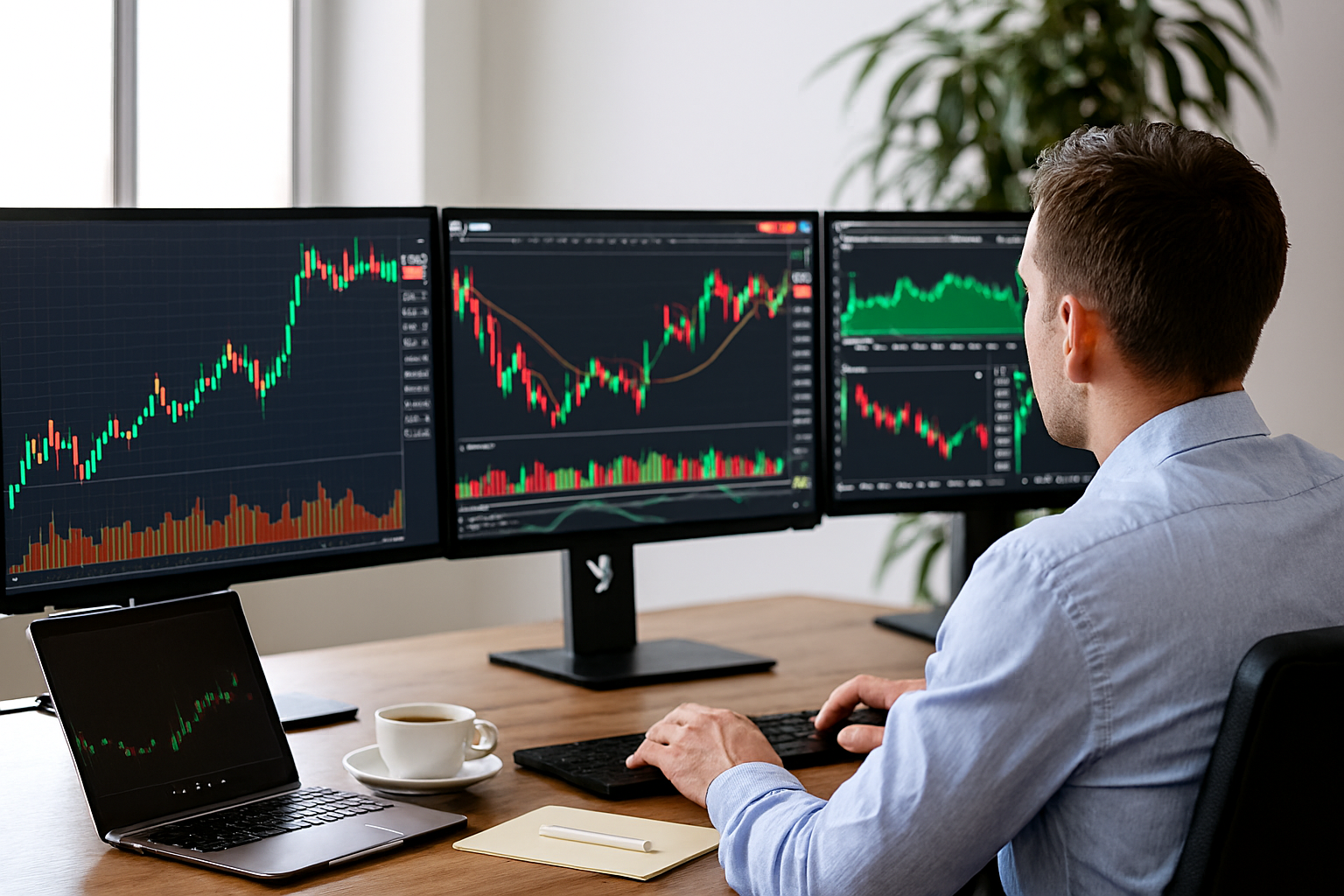
The standard path to becoming a funded trader involves a rigorous evaluation or challenge phase. This process is not a shortcut; it is a proving ground designed to assess a trader’s capabilities, discipline, and, most importantly, their ability to manage risk consistently. The firm, in essence, puts a trader's skills to the test in a controlled, risk-free environment before providing them with actual capital.
During this phase, traders typically operate in a simulated trading environment. They must adhere to a set of predefined rules and objectives to demonstrate that they can generate profits while staying within the firm’s strict risk parameters. Common rules include:
- Profit Targets: Specific percentage goals that a trader must reach to pass a phase (e.g., a target of 8% in the first phase and 5% in a subsequent phase).
- Maximum Daily Loss: A limit on how much capital can be lost in a single day (e.g., a 5% limit based on the starting balance).
- Maximum Total Drawdown: An overall cap on cumulative losses over the entire evaluation period.
The fees charged for these evaluation programs are a significant and often primary source of revenue for prop firms. The vast majority of participants fail to meet the rigorous criteria, which means the firm collects many fees without ever having to provide live capital.
The Profit Split Model: Aligning Incentives
Upon successful completion of the evaluation phase, traders are granted access to a funded account and enter into a profit-sharing arrangement with the firm. This model is a core tenet of the modern prop firm structure and serves to align the interests of both parties. The trader receives a substantial percentage of the profits they generate, with some firms offering splits as high as 90%.
A New Frontier: The Instant Funding Prop Firm Model
In response to the growing demand for faster, more direct access to capital, a new and highly innovative model has emerged: the instant funding prop firm. This model represents a significant evolution in the industry, catering to a specific segment of the trading community.
Defining Instant Funding: Bypassing the Challenge
The primary characteristic that defines the instant funding model is the immediate provision of capital without a multi-stage challenge or evaluation. This is a direct departure from the traditional evaluation-based approach, which can be time-consuming and often requires traders to "jump through too many hoops".
Immediate Access, Immediate Opportunity
The most compelling benefit of an instant funding prop firm is the ability to begin trading right away and start generating a profit split from the very first day. This rapid access allows traders to seize fast-moving market opportunities without the delay of a lengthy assessment process. It's a system built on the premise that a trader's immediate track record and adherence to risk management protocols are a sufficient demonstration of their ability.
Key Features and Rules: Understanding the Trade-Offs
While the instant funding model offers unparalleled speed and access, it is not without its trade-offs. To protect the firm's capital, these programs often come with immediate and stringent risk management rules. For example, a firm might impose a maximum daily loss limit of 6% and a maximum total loss of 6% right from the start of trading.
Navigating the Landscape: Legitimacy, Risks, and Red Flags
The rapid growth of the prop trading industry has inevitably led to questions about its legitimacy. While the market contains both credible opportunities and potential pitfalls, it is possible to differentiate between them through careful due diligence.
The Reality of Simulated Accounts
A common point of skepticism in the industry revolves around the use of simulated or demo accounts. It is a fact that many prop firms operate primarily in a simulated trading environment. However, this is not necessarily a sign of a scam. The use of these accounts is a strategic business decision that allows firms to manage risk and protect their capital. Rather than placing a firm's live capital at risk on every trader who joins, the firm can use the revenue from evaluation fees and profit splits from successful traders to manage its business model.
Regulation and Trust: How to Spot a Credible Firm
A credible prop firm will have transparent rules, clear payout policies, and a proven track record. They should provide a clear fee structure, publicly accessible terms and conditions, and a logical progression for traders. A firm’s willingness to operate with such openness is a strong indicator of its trustworthiness. To ensure a comprehensive understanding of the financial landscape, it is helpful to consult the work of international bodies such as the Financial Action Task Force (FATF), a global watchdog that sets international standards to combat money laundering and terrorist financing. Understanding these broader frameworks helps contextualize the challenges and responsibilities of financial service providers.
Common Dangers and Red Flags to Avoid
While the industry offers significant opportunities, a trader must be vigilant and aware of the potential dangers. Here are some red flags to watch for:
- Unclear Terms and Conditions: Avoid firms with vague or ambiguous rules, especially concerning profit targets, drawdowns, and payouts. Legitimate firms make their expectations clear from the start.
- Excessive Psychological Pressure: The high-stakes environment can be psychologically demanding. Some firms may create a high-pressure environment that can lead to stress and emotional strain, negatively impacting a trader’s well-being and performance.
- Prohibited Trading Strategies: A legitimate firm will have specific rules against "gambling behaviour," which includes overleveraging or taking high-risk, "all-in" trades. Firms may also restrict certain "quick strike" methods, which are high-frequency strategies that can manipulate market prices and create an unfair advantage.
Conclusion: Your Path to Becoming a Funding Trader
The funded trader revolution has democratized access to trading capital, offering a viable and compelling alternative to traditional, capital-intensive methods. For a comprehensive overview of the fundamental concepts, readers can explore external resources such as the Investopedia guide on proprietary trading. With the right approach and a clear understanding of the industry's mechanics, the path to becoming a successful funding trader has never been more accessible.


