


We've all been there. You just detailed your car's interior, only for a sudden downpour or a muddy hike to trash the pristine carpets. That generic floor mat you bought shifts awkwardly, threatening to interfere with the pedals. Most drivers view floor mats as a simple accessory, an afterthought. This common oversight, however, impacts three critical areas: your safety, your health, and your vehicle's resale value.
The Knowledge Gap: Common Pitfalls in Floor Mat Selection
Choosing the wrong mat isn't just an inconvenience; it's a liability. Let's break down the three major misconceptions.
Mistake #1: Prioritizing Looks Over Safety
The most dangerous error is ignoring fitment. Ill-fitting, universal mats are a known hazard. They can slide forward and jam under the accelerator or brake pedal, potentially causing a catastrophic failure to decelerate. A mat that doesn't have precise anchor points or isn't molded exactly for your vehicle's footwell is a risk you shouldn't take.
The Right Standard: "Vehicle-specific" or "Custom-fit" should be your non-negotiable baseline. These mats are engineered using 3D digital scans of your specific vehicle model, ensuring perfect contouring around pedals, center consoles, and seat rails, eliminating slip and slide.
Mistake #2: Choosing Cheap Materials, Compromising Health
That strong "new car smell" from a cheap set of mats is often off-gassing Volatile Organic Compounds (VOCs) like phthalates and other toxic chemicals. In the confined space of your car's cabin, especially under the sun's heat, these compounds are inhaled by you and your passengers, creating a "mobile pollution chamber."
The Right Standard: Understand the material hierarchy:
- TPE (Thermoplastic Elastomer): A premium, eco-friendly material. It's renowned for being odorless, flexible even in cold weather, and 100% recyclable. It offers a superb balance of durability and environmental responsibility.
- Rubber: Traditionally durable and excellent for all-weather protection. However, quality varies, and some synthetic rubber blends can retain a noticeable odor.
- Carpet Mats: Often OE (Original Equipment). They look great but offer minimal protection against liquids and ground-in dirt. They are best used as a top layer over a more protective liner.
Mistake #3: Overlooking Functional Design, Creating More Work
A flat mat does little more than act as a temporary doormat. Sand, slush, and spilled coffee easily slide off its edges onto your pristine factory carpet. The goal is containment, not just coverage.
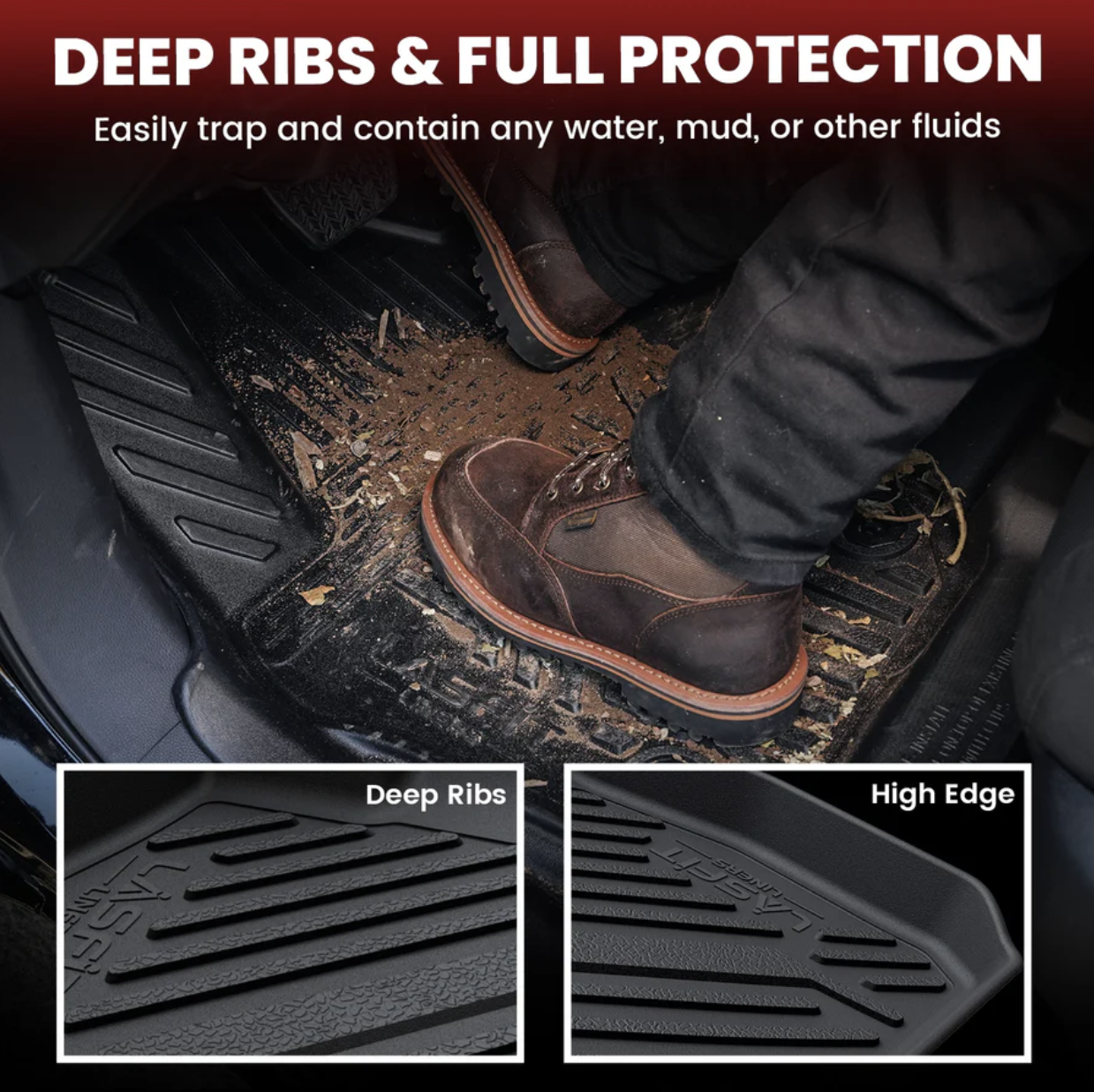
The Right Standard: Look for "high-walled" or "tray-like" design. Deep, multi-dimensional channels and raised edges act as a basin, trapping and containing every drop of liquid and every grain of sand. This design makes cleaning as simple as pulling out the mat and hosing it off.
The Solution: A 3-Step Process to the Perfect Fit
Now that we know the pitfalls, here is a simple, actionable process to make the right choice.
Step 1: Confirm Your Exact Vehicle Model and Year
This is the most critical step. A mat for a 2016 Ford F-150 may not fit a 2017 model due to subtle interior changes. Double-check your make, model, year, and specific trim or cab configuration (e.g., crew cab vs. super cab) before anything else.
Step 2: Match Material and Type to Your Primary Need
Your lifestyle should dictate the material. Use this simple guide:
- Maximum Protection & Easy Cleaning: Go for All-Weather Floor Liners (not just mats). These are the heavy-duty, high-walled options made from TPE or rubber, ideal for families, outdoor enthusiasts, or work vehicles.
- Eco-Conscious & Odor-Free: TPE is your best bet. It provides superior protection without the "new plastic" smell.
- Rugged, All-Weather Durability: High-quality rubber is a proven, robust choice, especially for commercial or off-road use.
Step 3: Scrutinize the Details and Brand Reputation
Examine product photos for:
- Anti-Slip Underside: Does it have grippy nibs or cleats to prevent movement?
- Factory Anchor Retention: Does it use the existing factory clip holes for a secure, OEM-like install?
- Real User Reviews: Look for long-term reviews with customer photos showing the mat after months of use. This is the true test of fit and durability.
Case Study: The Ford F-150 Floor Mats
To illustrate the importance of choosing the right floor mats, let’s take the Ford F-150 as an example. This popular truck is often used for heavy-duty work, off-road trips, and daily commuting, which exposes its interior to a wide range of messes—from muddy boots to spilled coffee and snow slush. Many F-150 owners initially relied on generic mats or the stock carpet mats that came with the truck. The results were predictable: mats shifting underfoot, dirt accumulating in the corners, and spills seeping onto the factory carpet.
By switching to custom-fit, all-weather floor liners from Lasfit, these issues were dramatically reduced.
- Safety: Each mat is laser-measured for a precise fit, ensuring it sits securely in the F-150’s footwell without interfering with the accelerator, brake, or pedals. This eliminates the risk of accidental slippage during driving.
- Health & Environment: Made from odorless, premium TPE material, the mats keep cabin air fresh and free from harmful emissions, protecting drivers and passengers alike.
- Ultimate Protection: Deep channels and raised edges function, trapping mud, water, sand, and debris. Cleanup is simple—just remove the mat and rinse it off, keeping the vehicle interior pristine.
For readers interested in detailed specifications and customer photos, you can view the official f150 floor mats product page.
Conclusion: An Investment, Not an Expense
Your car's floor mats are not merely an accessory; they are a fundamental investment in your safety, your family's health, and the long-term value of your vehicle. By moving beyond price and appearance to prioritize precise fit, healthy materials, and intelligent design, you can make a choice you won't regret. Use this guide as your roadmap to a cleaner, safer, and more protected driving experience.


