In a world where AI-generated content has flooded pretty much every social media platform, companies are running out of options. They could try to wipe it out completely (none of them are doing that), they could lean into it so hard that it becomes their whole personality—looking at you, Sora—or they could attempt a middle ground by giving users the freedom to either indulge in it or run away from it entirely.
And that last option is exactly the path TikTok is taking as it rolls out a new way for users to control how much AI-generated content they see.
 Louis Eriakha
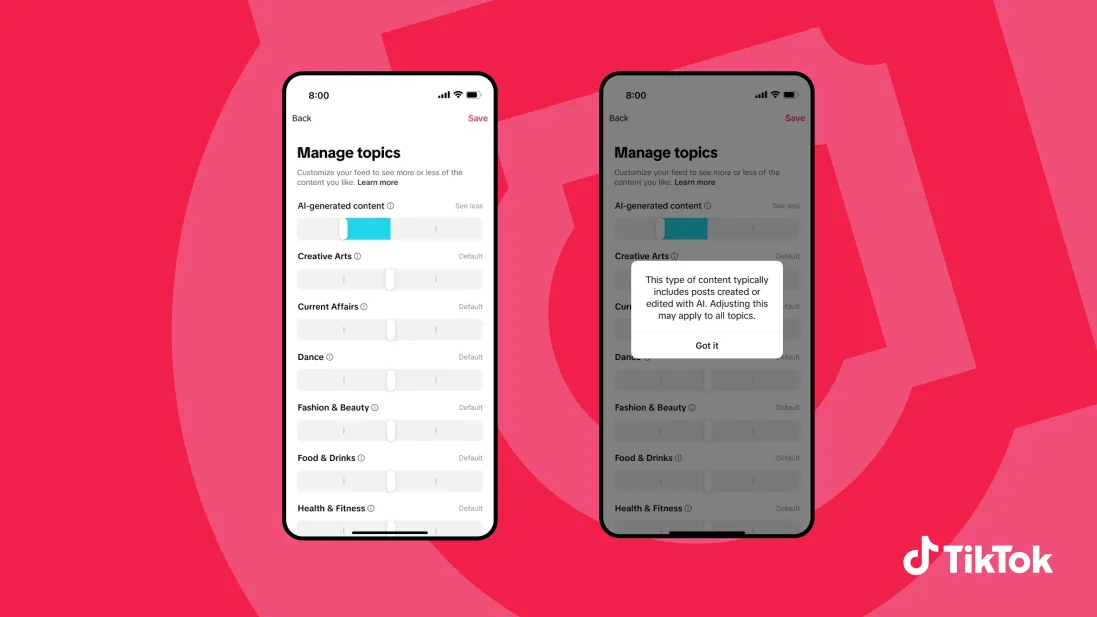
The feature lives inside the app’s existing Manage Topics settings, the same place where users already adjust how often they see themes like Fashion, Dance, or Sports in their For You feed. Now, TikTok is adding AI-generated content as its own adjustable topic.
It's essentially a slider for “AI slop,” letting users dial down the synthetic stuff if it feels overwhelming, or turn it all the way up if AI art, AI explainers, and AI-generated fictional celebrity stories happen to be your thing. TikTok says more than 1.3 billion videos on the platform are now tagged as AI-generated, so the need for control is definitely there.
But to control something, TikTok first has to identify it. And that’s where the company’s updated labelling system comes in. TikTok already uses C2PA’s Content Credentials to detect embedded metadata from AI-generated media, but metadata can be stripped when videos are re-uploaded or edited elsewhere. So TikTok is now testing invisible watermarking, a new behind-the-scenes marker only the platform can read. This means AI-generated videos, from TikTok’s own tools or external ones, will be much harder to mislabel or sneak past moderation.
In addition to all this, TikTok is also on the push to reduce mindless doomscrolling. The platform says it’s trying to strike a balance between giving users creativity tools, keeping their feeds transparent, and discouraging endless, passive scrolling driven by algorithmic novelty, AI or otherwise. It’s the same tension other platforms are facing: Pinterest launched a full AI-content filter last month, while YouTube has seen an explosion of AI-only channels pumping out low-quality “AI slop.” TikTok’s approach feels less drastic and more like a customizable safety valve.
And with the company also launching a $2 million AI literacy fund, it’s clear TikTok isn’t running away from AI; it’s just giving users the freedom to decide how much of it they actually want to live with.
 Ogbonda Chivumnovu