For years, I kept hearing the same sentence: If you care about privacy, use Signal, the open-source, encrypted messaging app. Developers recommend it. Journalists rely on it. Security experts treat it like the safest place to have conversations online. In tech circles, it carries a kind of moral weight; like choosing it signals your seriousness about protecting your data.
So, at the tail end of January, I began the process of joining Signal. Not just download it, but use it as a primary means of communication and discover for myself why, in an age where many tech companies have been so careless with private data, selling it to advertisers and now feeding it to AI, everyone would not choose Signal.
Signing up almost stopped me before I could answer that question.
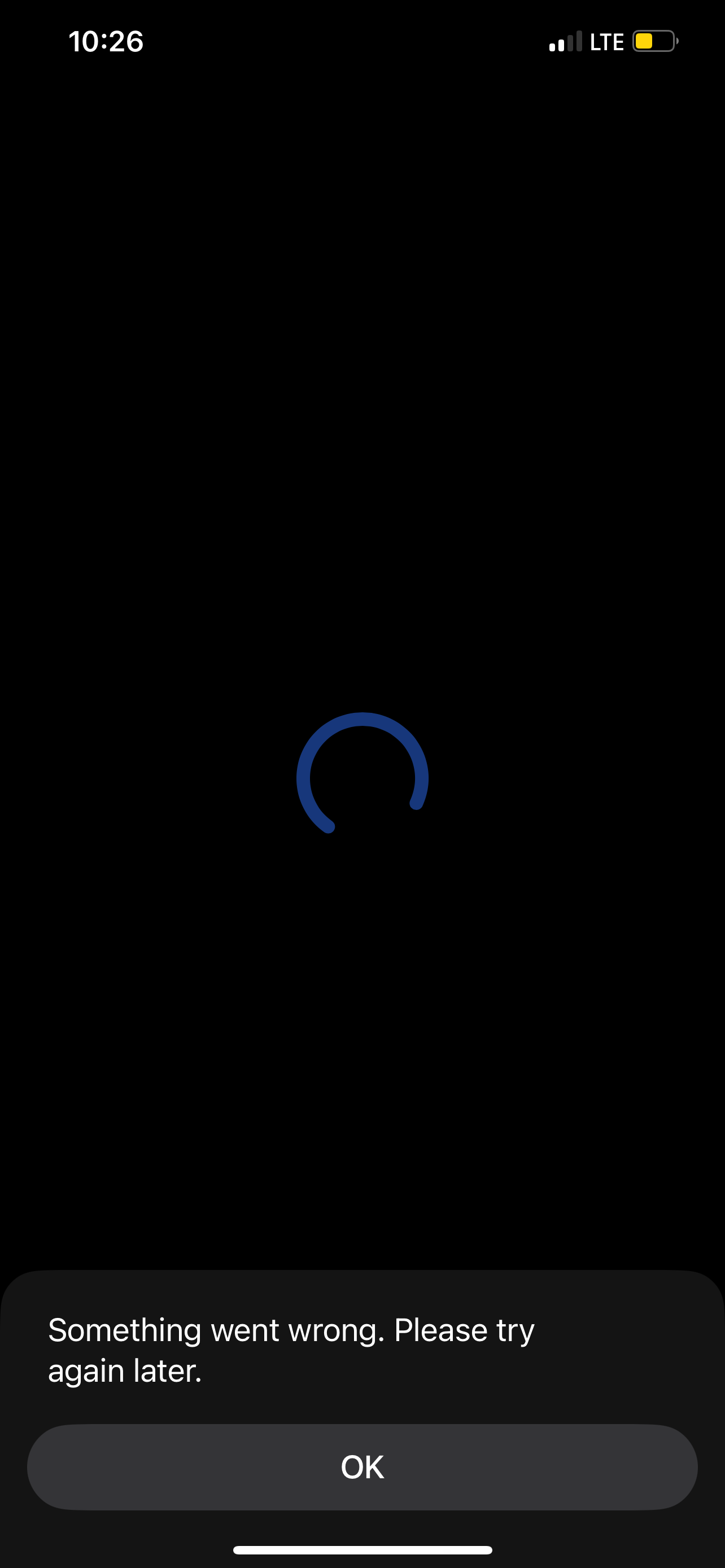
I started with my Nigerian number. The verification codes never came in. Every time I requested one, I had to complete a captcha. I’d solve it, hit continue, and then the screen would just load… and load… until an error message appeared: “Something went wrong. Please try again later.” No code. No explanation. Just a loop. After several attempts, I switched to a UK number and turned on a VPN. It worked, but with a catch: I needed my VPN turned on anytime I used the app.
Privacy tools are supposed to empower users. But if access itself becomes complicated, who are they really built for?
Once signed in, the app felt eerily silent. Minimal. Almost quiet. No trending tabs. No suggested channels. No ads. No subtle prompts nudging you toward business accounts or communities.
Compared to WhatsApp, which lives inside Meta’s massive data ecosystem, or Telegram, with its public channels and broadcast culture, Signal feels stripped down to its core function: private conversation.
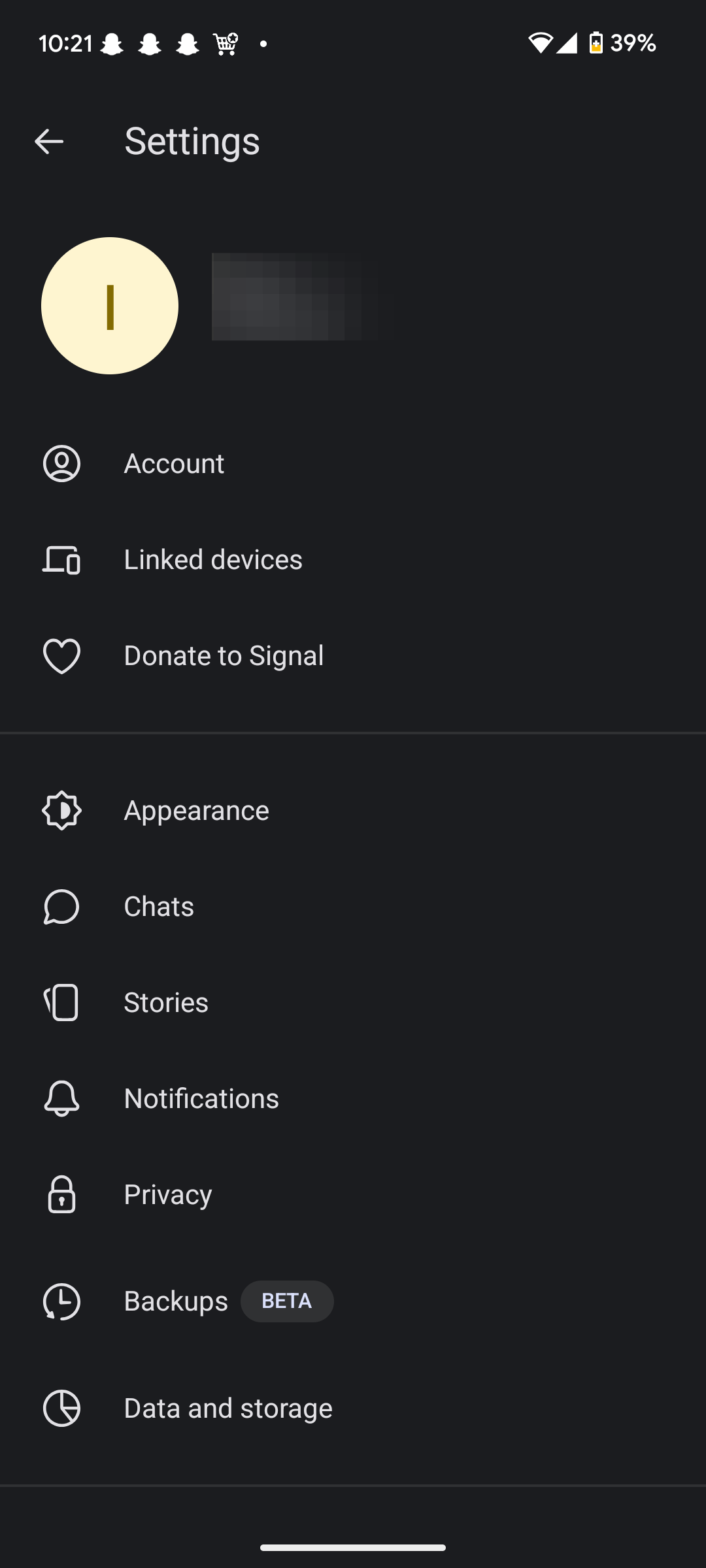
Signal encrypts every correspondence by default: messages, calls, group chats, and files. Not as an optional “secret chat" or a feature toggle. Encryption is in its very foundation. It also limits metadata collection aggressively. Features like sealed sender, disappearing messages, screen security, registration lock, and view-once media aren’t cosmetic. They’re defensive layers.
For every one of the users for whom Signal has become second nature, the threat model is different. A journalist protecting a source isn’t just worried about someone reading their messages. They’re worried about someone seeing who they’re talking to and when. An activist organising in a tense political climate cares about exposure patterns. A lawyer handling sensitive documents wants minimal digital footprints.
For me, a paranoid creature of the internet looking to protect my data and correspondence, it felt like where my placenta was buried.
The philosophy of Signal is simple: reduce stored information as much as possible so there’s less to leak, subpoena, hack, or exploit. Now compare that to WhatsApp. Yes, WhatsApp uses end-to-end encryption for messages. But it operates inside a broader advertising and data-driven company. Even if message content is encrypted, metadata and integration with other Meta services raise different privacy questions. Telegram, meanwhile, doesn’t enable end-to-end encryption for all chats by default and stores more data in the cloud.
So, is Signal the most encrypted mainstream messaging app?
Very few of my contacts were on Signal. Messaging platforms run on network effects. If your friends, family, colleagues, and communities aren’t signed up, the app will be quiet. I could scroll through my contacts and count active users on one hand.
Joining groups on Signal required approval. I had found links to Signal groups on Reddit, so I sent requests to join them.
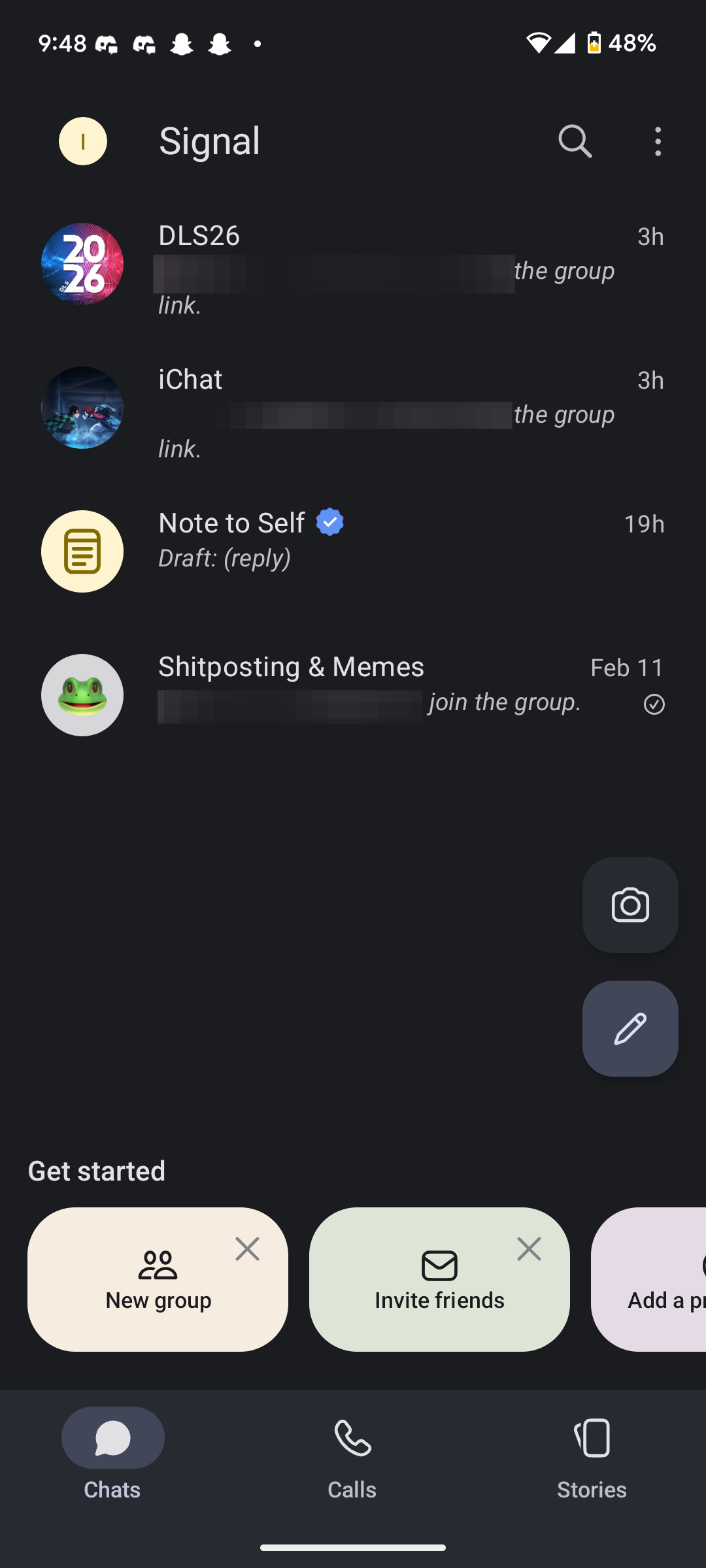
Instead of instantly dropping into conversations, I had to wait to be accepted in. That delay made the experience feel isolating. Privacy was high. Energy was low.
Later a gaming group accepted me. Then a group about memes let me in. And finally, I joined iChat, a group for people looking to make friends and get the best out of Signal. The meme and gaming groups were graveyards. No user said anything. Occasionally someone would text "hi," but no one responded. In the meme group, memes were not even being posted. The notifications I got from Signal were of people leaving groups. And the more they left, the more new people joined the group, some of them, like me, looking for a place to protect their messages.
On iChat, it was no different. One person asked if anyone in the group played the mobile game about locations, GeoGuessr. No one responded. Later they asked if anyone would like to play sometime. No one responded. More people joined the group, and more people left the group.
When someone asked if there were any groups on Signal for politics or tech, a user answered there are groups on Telegram and Discord for that. His tone was curt.
It was at this point I began to ask myself if I needed this kind of encryption. If anybody needed this kind of encryption, what type of person would want to be so protected they would be looking for friends on Signal?
The average person on the internet's risk profile is different from that of a journalist or activist or military official. For many people, WhatsApp’s encryption is “good enough,” especially when convenience and reach matter more.
But privacy isn’t only about what you’re hiding. It’s about who controls your data, how long it’s stored, and what incentives shape the platform. Signal’s nonprofit structure removes advertising pressure. It doesn’t monetise attention. That changes the priorities of the platform, allowing it to be all of these things.
My onboarding struggle shaped how I see this trade-off. The friction I experienced, the verification loops, and needing a VPN all contributed to my experience of the platform.
After a week, here’s where I land. Signal is not trying to win the messaging popularity contest. It’s trying to minimise exposure. It assumes you might one day need protection you didn’t anticipate. For some users, that assumption feels essential.
Being in those groups on Signal, where no one seemed to want to say anything to each other, could speak to the paranoia that drove us to the platform in the first place. We joined Signal to hide from big tech and big government. And the people who didn't want to talk about politics in a social group might be doing what they thought was essential to protect themselves even within the group. I worry about big tech and the government. But I am not sure I worry as much as the people that love Signal so much.
Ultimately, I found that by choosing Signal, I was protecting myself from the world itself. For now, I still want to be a part of it.
 Ogbonda Chivumnovu