One question you may have asked or are probably asking yourself as a business owner or an aspiring one now is: why do some companies seem to grow effortlessly while others stall, even with the same resources? The answer to this question often lies in how a business retains and leverages its customers.
For successful companies like Amazon, Nvidia, etc, what makes them successful is how they turn every satisfied customer into momentum that drives even more growth, which creates a self-reinforcing loop known as the flywheel.
 David Adubiina
What is Flywheel?

The flywheel model, or concept, however you want to name it, is the momentum you gain when you align your entire organization around delivering a remarkable customer experience.
Say you delight a customer with a product or service that truly exceeds their expectations. That customer tells a friend, leaves a great review, or comes back for more. Each of these small actions adds energy to your business, making it easier to attract the next customer and grow faster.
It’s a remarkable business strategy because it doesn’t rely on one-off campaigns or luck. Instead, it turns every positive interaction into fuel, creating a self-reinforcing loop that keeps your business spinning faster and growing sustainably.
How does the Flywheel Model work?
Growth matters for every business, but how that growth happens is what determines whether it lasts. Some businesses push hard for short-term wins—quick sales, heavy promotions, constant chasing. It works for a while, but it eventually burns out.
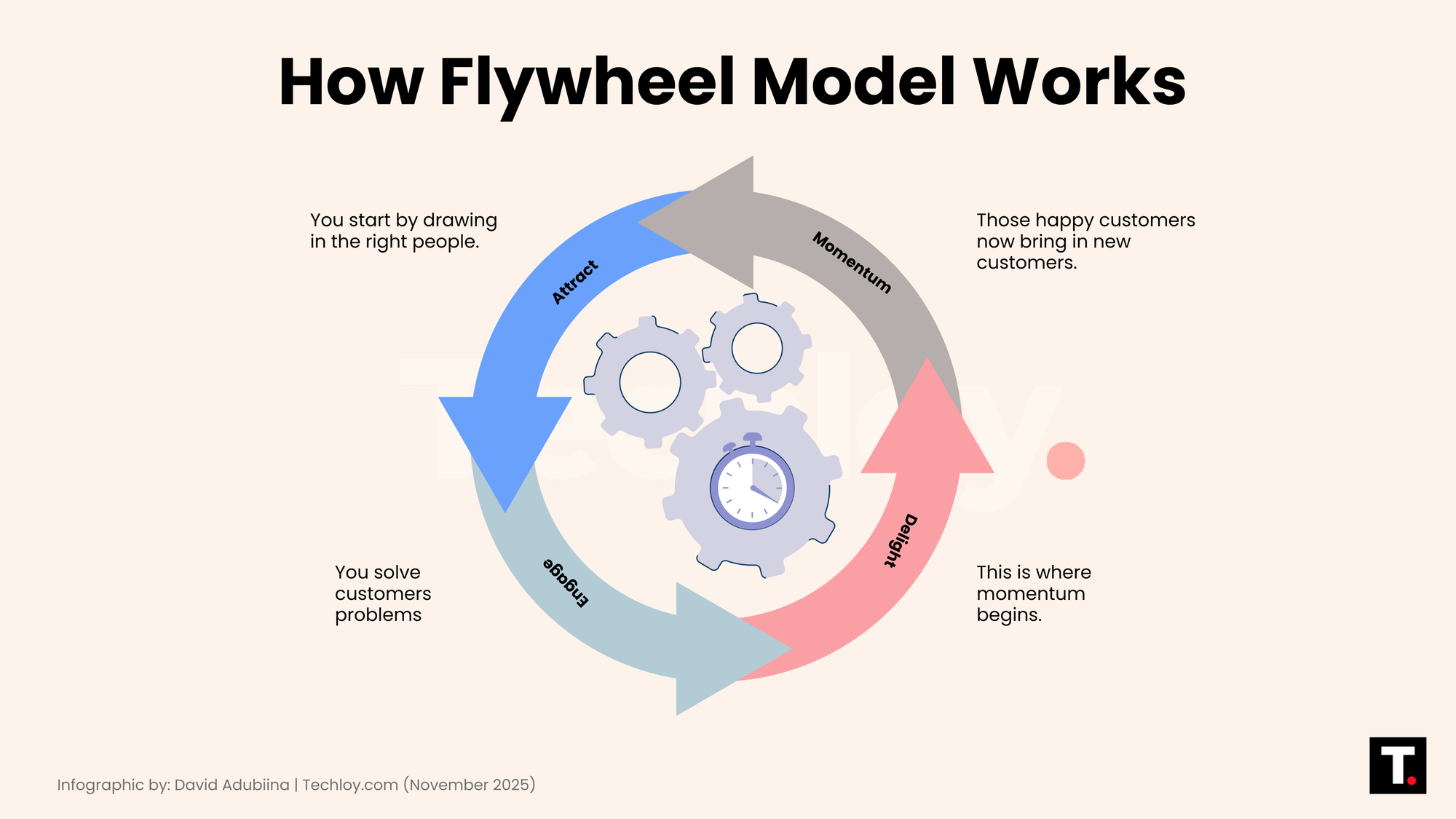
The flywheel model, on the other hand, takes the long-term approach. Rather than selling, it focuses on building momentum that keeps growth going even when you’re not pushing as hard. The idea is simple: create such a good experience that your customers become the energy that drives your next customers.
Here’s how that looks in reality:
/1. Attract
You start by drawing in the right people. Not everyone. The right audience. You do this through useful content, genuine value, and making it easy for them to discover your business.
/2. Engage
Next, you actually help them. You give clear information, solve their problems, and make the buying process simple and human. This builds trust—not just interest.
/3. Delight
This is where momentum begins. When you deliver more than they expected, people remember. They return. They talk about you. They leave positive reviews. They recommend you without being asked.
/4. Momentum
Those happy customers now bring in new customers. They stick with you longer. They buy again. They tell others. And that cycle repeats—each round making the wheel spin faster with less effort from you.
Key differences between a Flywheel and a sales funnel

“Your best salespeople are your happiest customers.”
That line sums up the entire idea behind the flywheel. When someone genuinely loves the experience your business gives them, they don’t just buy and move on. They return and recommend you to others, and that referral effect becomes momentum that keeps your business growing.
Now compare that to a sales funnel where the main purpose of your business is to close a deal with clients. You attract someone, convince them, make the sale… and that’s where it stops. The process ends with the customer. So to grow, you have to start all over again, like resetting the clock every month.
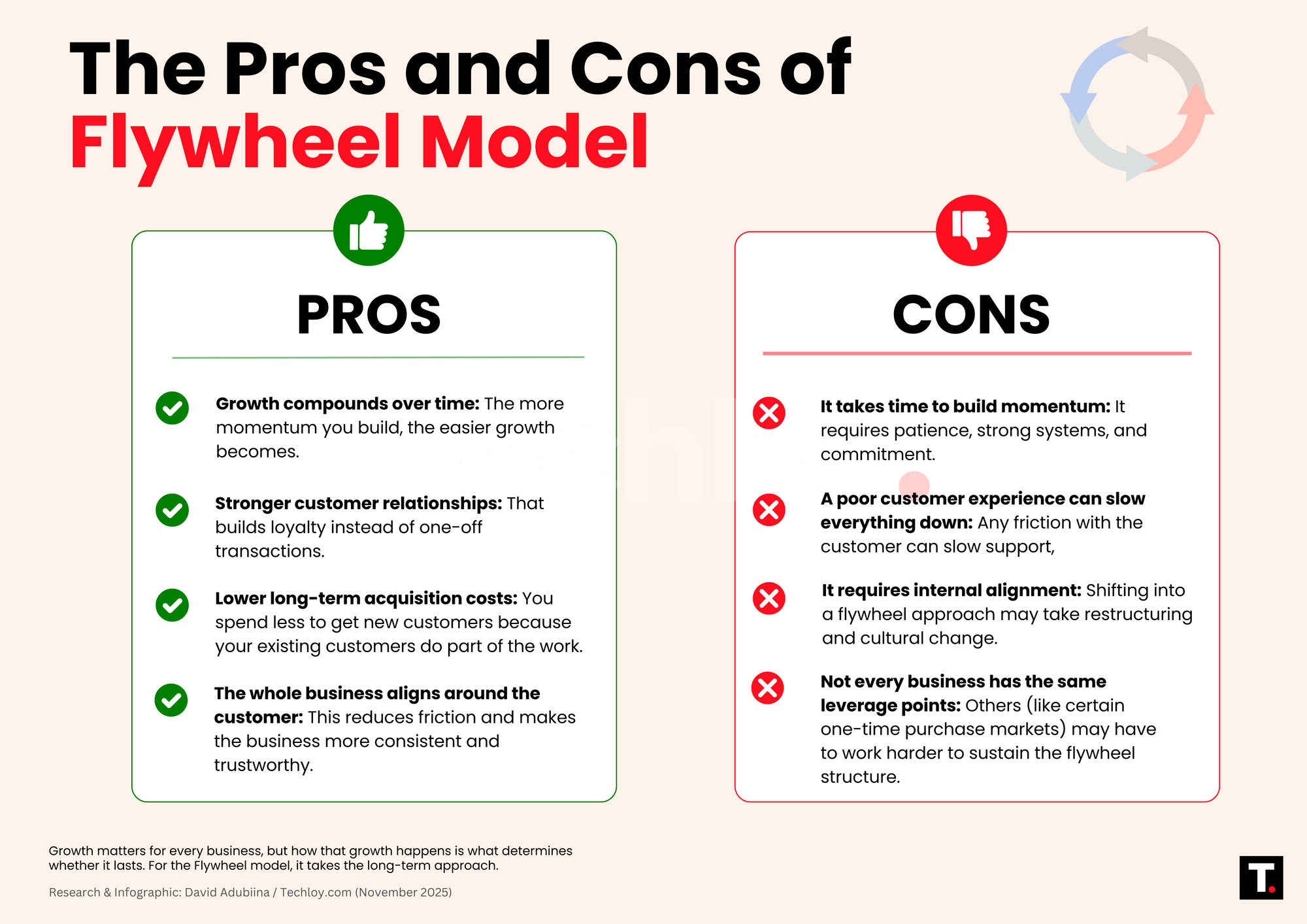
Pros and Cons of Flywheel
Conclusion
In a nutshell, the flywheel gives you a clearer and more complete view of how your business grows. It highlights where your momentum is strongest and where new opportunities lie. Rather than chasing quick wins, it’s about building steady, compounding growth fueled by the customers you already have.
That doesn’t mean the sales funnel becomes irrelevant. Funnels are still valuable for examining specific steps in the customer journey, understanding conversions, fixing weak points, and improving how leads are handled. But while the funnel helps you optimize individual processes, the flywheel shows you the bigger picture of how all those processes come together to drive lasting growth.
 David Adubiina