You’re halfway through lunch, casually checking your phone, when a WhatsApp notification flashes across your screen: “You’ve been added to a group.” You don’t recognise the group name.
None of the faces in the chat look familiar. And whoever added you isn’t saved in your contacts. You hesitate. Do you tap in, or just ignore it? It’s weird and a little too random to brush off. That gut feeling might just save you from being scammed.
Online scams aren’t what they used to be; they’re smarter, more coordinated, and often happen across multiple platforms. Even cautious users can get caught off guard, especially when scammers use apps we trust, like WhatsApp. According to IT support firm AAG, about 90% of phishing attacks on messaging platforms now come through WhatsApp, with the next platform, Telegram, at only 5.04%.
To tackle this, Meta is rolling out new security features to help users spot red flags early. One of the newest features is a safety alert that pops up when someone not in your contacts adds you to a group. It shows you who’s already in the group, whether you know any of them, and gives you the option to bail, without even opening the chat. Not fancy, but effective.
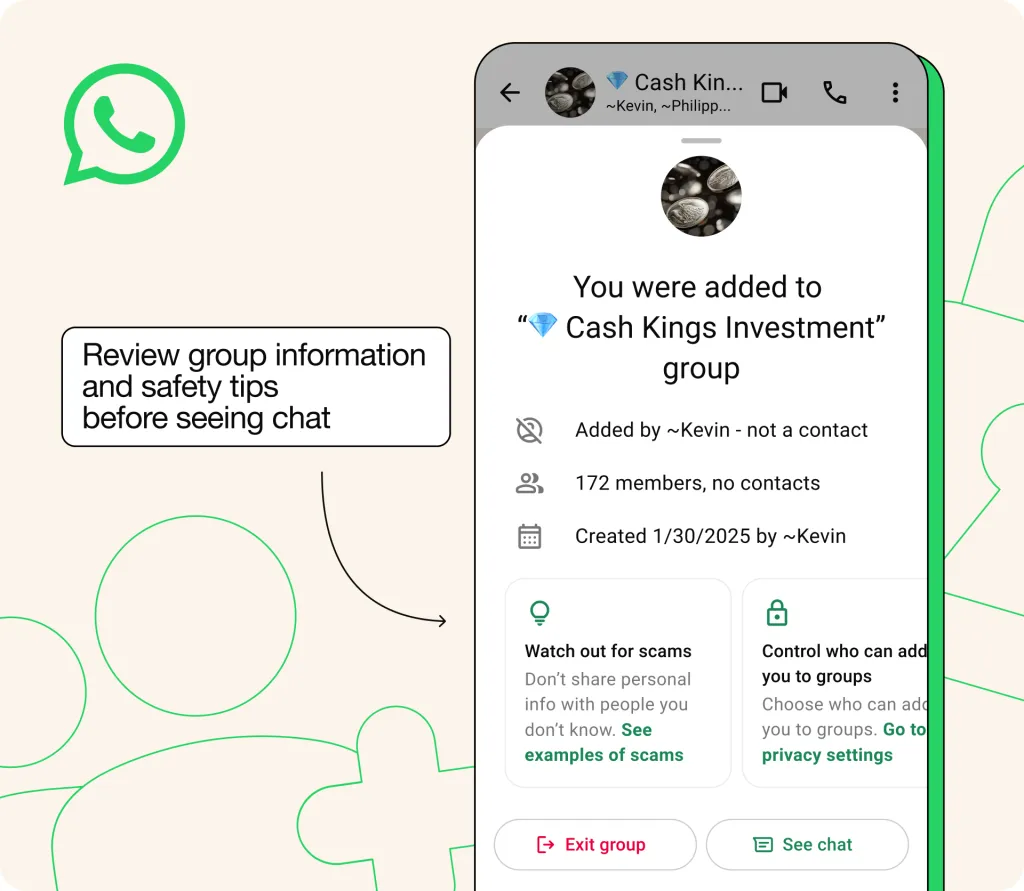
They’re also testing warnings when you start chatting with someone new. It’s the kind of small nudge that makes you stop and think, Do I know this person, or am I being reeled in?
This goes beyond random messages. In one recent case, Meta and OpenAI worked together to trace a massive scam operation run out of Cambodia. The group used ChatGPT to craft fake messages that lured people into crypto and pyramid schemes. Over 6.8 million scam-linked accounts were taken down in just the first half of 2025.
Other platforms like Telegram are dealing with the same problem, though with less friction. They give scammers more wiggle room with fewer built-in warnings. You can still block unknown ads and report shady activity, but only if you know where to look.
And that’s really the point. Scams today aren’t bold or obvious. They slip into the background, a group invite, a friendly job message, a casual DM, hoping you don’t notice. But a little friction in the right place can stop something big before it starts.
So the next time a strange group pops up or a new message feels off, take a second. Trust your instincts, because you may be right.
 Oyinebiladou Omemu