For the past few years, conversations around artificial intelligence have largely swung between extremes. 

On one side are predictions that AI will replace huge portions of the workforce, reshape civilization, and eventually make human labor optional altogether. On the other hand, there are fears that the technology could destroy careers, deepen inequality, flood the internet with misinformation, and even become a threat to humanity itself. 

Between those two positions, a growing number of workers, students, and businesses have been left trying to figure out what exactly they should believe. 

But recently, some of the most influential voices in technology have begun sounding noticeably more measured about AI’s impact, suggesting the industry may finally be moving toward a more realistic middle ground rather than the extremes we have come to know. 

Jensen Huang’s Carnegie Mellon AI Message Collides With a Wave of Tech Layoffs
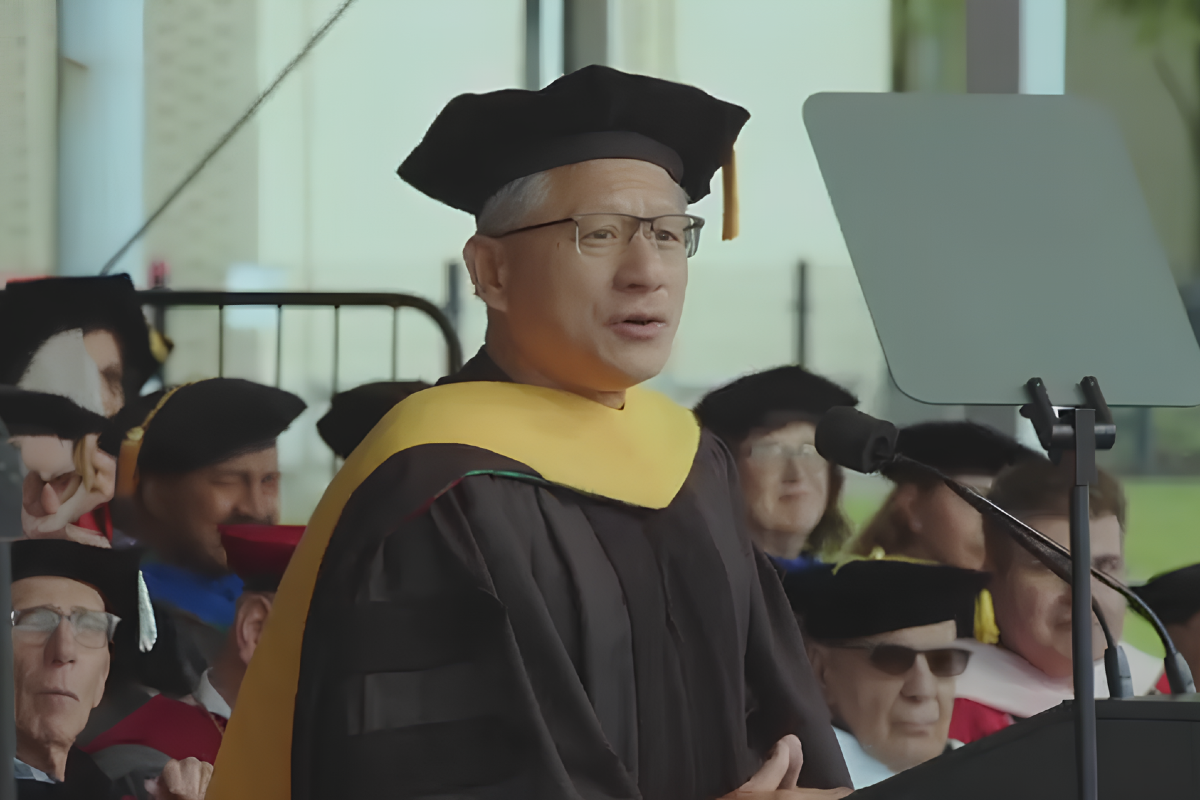
The billionaire CEO delivered Carnegie Mellon’s commencement address on Sunday but here’s what the numbers show about AI’s real impact on jobs.

This changes the already growing anxiety-driven narrative around AI, which many of the same executives who once fueled aggressive expectations about AI are now acknowledging that the technology’s real-world impact is unfolding more gradually and with more limitations than initially predicted. 

OpenAI CEO Sam Altman recently admitted that he was wrong about how quickly white-collar jobs would disappear. Speaking at an event hosted by a bank in Australia, Altman said he expected AI to have caused more widespread disruption to office work by now, but as it pans out, he was “delighted” to be wrong. 

"My scorecard, at the highest level, would be we've been roughly right on technological predictions and pretty wrong on the social and economic implications," he said in a summary of a conversation with Matt Comyn, the CEO of Commonwealth Bank of Australia. 

The comment is worth noting as only months earlier, fears of massive white-collar displacement had become one of the defining anxieties surrounding generative AI. Workers across industries ranging from media and software engineering to finance and customer service began questioning whether their skills would remain relevant in the years ahead. 

Students entering universities have faced similar concerns. Across social media and classrooms, many young people increasingly feel pressure to pursue AI-related degrees out of fear that traditional career paths may become obsolete. In one way or another, that anxiety is already becoming openly visible. Just last week, students reportedly booed former Eric Schmidt during a speech about the impact of artificial intelligence on the future of work, reflecting growing frustration among young people uncertain about what AI could mean for their careers. 

The AI industry is starting to pull back from its most extreme predictions

Yet NVIDIA CEO Jensen Huang has pushed back strongly against that idea. In a recent interview with Channel NewsAsia on Monday, Huang said parents should stop panicking about what their children study in college, arguing that students should pursue subjects they genuinely care about rather than rushing into AI purely out of fear. 

His remarks challenge one of the dominant narratives that has emerged during the AI boom, the belief that only technical or AI-focused careers will survive the future. 

Huang has also criticized companies that have been quick to blame AI for layoffs, arguing that the technology is still in its early stages and has not yet fundamentally replaced large portions of human labor. 

This especially stands out as AI adoption has increasingly become tied to corporate restructuring efforts. Across the tech industry, companies have announced layoffs while simultaneously highlighting investments in AI systems, creating the perception that workers are already being directly replaced by machines. 

Businesses are discovering that AI adoption is more complicated than the hype suggested

However, the reality inside many organizations appears more complicated. Even when AI tools have improved productivity in areas such as coding, research, customer support, and content generation, businesses are still struggling to fully integrate the technology into real operational workflows. Many companies remain in experimental phases, testing where AI genuinely adds value and where human oversight remains necessary. 

Even among companies aggressively adopting AI, executives are beginning to acknowledge that usage metrics alone do not automatically translate into meaningful business outcomes. A vivid example is Amazon, where some workers use AI to automate repetitive tasks, thereby increasing internal AI usage, particularly token consumption. 

Uber’s chief operating officer, Andrew Macdonald, recently questioned the growing obsession with measuring worker productivity through AI token usage, suggesting the returns from heavy AI adoption are still difficult to clearly justify. According to Macdonald, there is still no direct connection between higher AI usage and a measurable increase in useful product output. 

“That link is not there yet,” he told Business Insider. 

From a standpoint, these comments point to a broader shift taking place within the industry that the AI conversation is slowly moving away from the idea that artificial intelligence will instantly replace humans and toward a more grounded understanding of what the technology can realistically do today. 

Nevertheless, that does not mean concerns about AI are disappearing. The technology is already changing hiring practices, altering workflows, and reshaping expectations across multiple industries. Many repetitive tasks are becoming increasingly automated, and some jobs will inevitably be reduced or transformed as companies continue integrating AI into their operations. 

But the more measured tone emerging from major technology leaders suggests that the future may not be as immediate or as absolute as earlier predictions implied. 

Instead of replacing humans entirely, AI is being viewed as a productivity layer, one that still depends heavily on human judgment, creativity, supervision, and decision-making, as Huang declared in the interview with Channel NewsAsia 

That perspective may ultimately prove more useful for workers trying to navigate the uncertainty surrounding AI. For students, it suggests that adaptability and critical thinking could matter more than chasing whichever field appears most “AI-proof” at the moment. 

And as for businesses, it reinforces the idea that successful AI adoption is likely to involve collaboration between humans and machines rather than total automation. 

Meanwhile, for the broader economic community, it offers realism, something that has been missing from much of the AI debate. 

Even as the technology remains powerful and disruptive, the growing consensus among some of its biggest advocates is that AI may not completely rewrite human society overnight after all. 

Jensen Huang Thinks the AI Job Panic Is Missing the Point About Work
The NVIDIA CEO argues that AI will reward adaptability and human judgment far more than any single degree or technical specialization.