



When Brazil’s two fiercest rivals, iFood and Uber, suddenly became partners earlier this year in May, it wasn’t out of friendship. It was survival. Because when a company like Meituan shows up with $1 billion to spend, even sworn enemies start joining forces.
If you haven’t heard of Meituan, think of it as the Uber + DoorDash + Yelp of China, rolled into one superapp. In China, it handles everything from food delivery to hotel bookings. It has 770 million users. And now, it wants a slice of Brazil’s booming delivery economy.
Why Brazil, and why now?
Brazil isn’t just another international stop for Meituan; it’s the crown jewel of Latin America’s delivery market. By the end of 2025, Statista says revenue from the country's online food delivery market is expected to be worth $20.9 billion, with nearly 90 million users by 2030. That’s a massive pool of hungry, smartphone-wielding customers.
But there’s another layer here: politics. Back in May, Brazil’s president, Luiz Inácio Lula da Silva, traveled to China and signed several trade agreements, including a five-year $1B commercial deal with Meituan’s CEO, Wang Xing. The timing wasn’t at all coincidental. Brazil wants closer ties with China, and Meituan wants a gateway into Latin America.
Add to that the fact that Brazil’s delivery market is basically a monopoly right now as iFood controls over 80% of it, charges restaurants up to 27% per order, and leaves many small businesses feeling trapped. If you’re Meituan, that looks like an opportunity.
So how does Meituan plan to win?
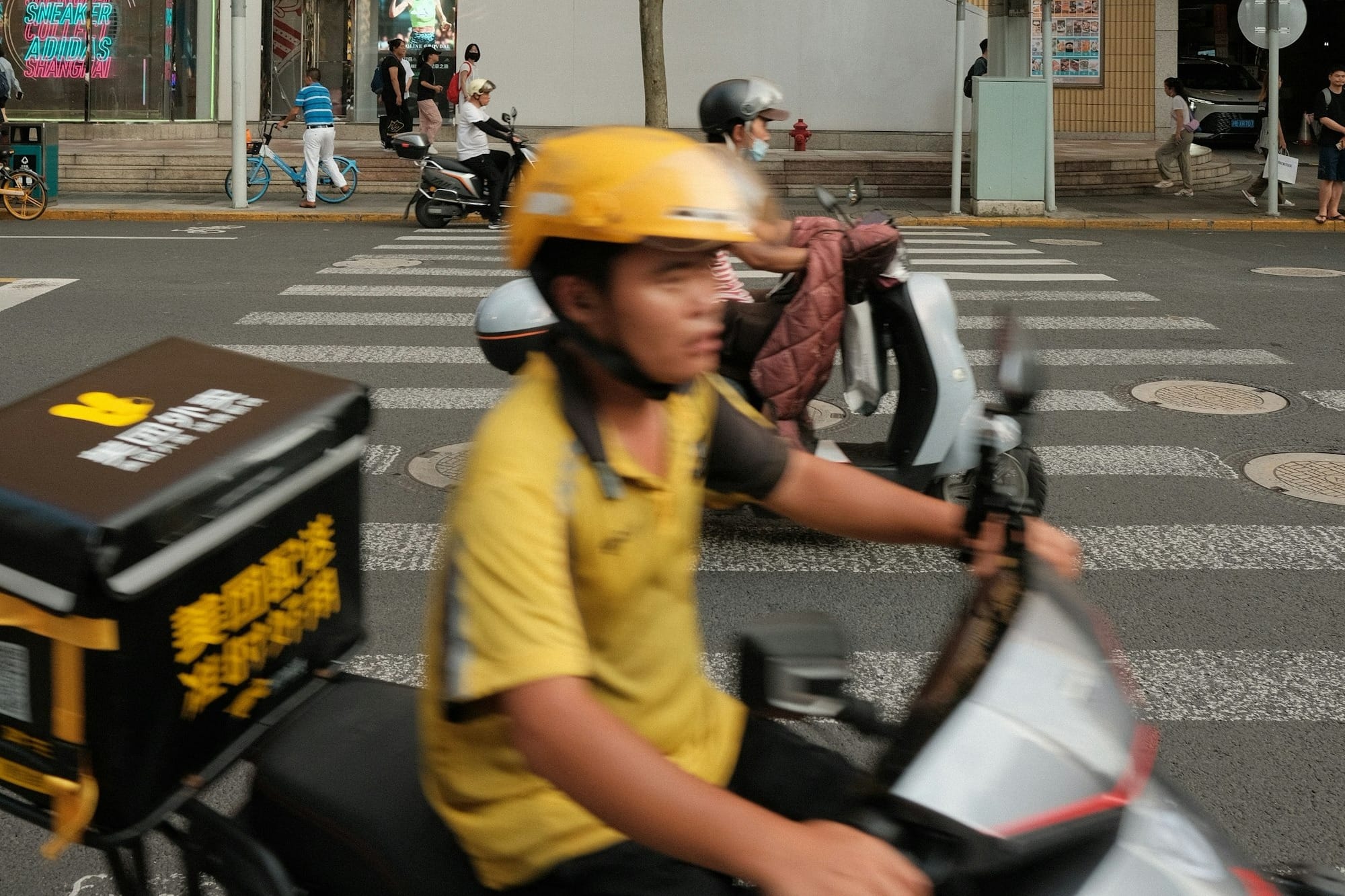
By doing exactly what it has done everywhere else. In new markets, it floods consumers with deep discounts, the kind where your first few meals are half-off until you’re hooked. It sweetens the deal for couriers with higher pay, at least in the beginning, and lures restaurants with lower commissions that are hard to refuse.
That mix of irresistible pricing, generous payouts, and relentless expansion has already worked in Hong Kong, where Meituan’s KeeTa app pushed Deliveroo aside in just months. It worked in Saudi Arabia too, where it cracked the top three delivery platforms in under half a year. And in China, of course, it became the undisputed king of on-demand everything.
The numbers also show it has the muscle to back the strategy. Meituan raked in $12 billion in revenue in the first quarter of 2025, up from $10.2 billion the year before. That kind of growth gives it both the war chest and the confidence to take on iFood head-on.
But Brazil isn’t an open road
Here’s where things get messy.
iFood isn’t backing down. Even before Meituan touched Brazilian soil, it struck a deal with Uber to combine ride-hailing, groceries, and pharmacy deliveries into one powerful ecosystem. Together, they can lock in users with sheer convenience.
Then there’s Didi. Through its 99 brand, the Chinese ride-hailing giant is relaunching 99Food in Brazil with $180 million to burn. That makes it not just Meituan versus iFood and Uber, but also Meituan versus a fellow Chinese heavyweight.
And the rivalry is already spilling into courtrooms. Just weeks after Meituan announced its arrival, 99 sued Keeta over logos and alleged unfair competition. Keeta hit back, accusing 99 of paying restaurants to sign exclusivity deals. In other words, they’re suing each other before they’ve even toppled the market leader [iFoods]. The battlefield is chaotic, and the alliances don’t look anything like you’d expect.
What Meituan entry means for restaurants, workers, and you
For restaurants, this war could feel like a blessing. Many Brazilian eateries rely on delivery apps for up to 35% of their sales, but iFood’s commissions eat painfully into margins. Now, Meituan and 99 are dangling lower fees, sometimes even zero for new partners, giving small businesses a little more breathing room.
For delivery workers, it’s more complicated. In the short term, competition usually means higher pay and better conditions as platforms fight for riders. But unions are already warning that once the dust settles, the squeeze will return. Long hours, risky conditions, and shrinking paychecks could become the norm again. As one delivery leader put it bluntly: “There will be no difference but who exploits us more.”
And for you, the consumer? You could win immediately. Prices will drop, promos will flood your app, and you’ll order more food for less money. But if you’ve seen this cycle in other markets, you know the discounts never last forever.
 Kelechi Edeh
When you step back, it’s clear this isn’t just about food delivery. Brazil is becoming the first major Latin American testing ground for Chinese tech giants. For example, Tencent has invested in Brazilian fintech companies like Nubank, ByteDance, the parent company of TikTok is exploring major data center projects in the country, and Chinese EV manufacturers BYD and Great Wall Motors are establishing local EV production facilities in Brazil.
Meituan and Didi aren’t just eyeing meals; they’re laying the groundwork for mobility services, digital wallets, and full-blown superapps. That puts Brazil at the center of something much bigger: the global tug-of-war between Chinese and American platforms for dominance in emerging markets. Food delivery is simply the entry point.
For now, though, it looks like a win-win: more affordable meals, lower fees, better pay. But we’ve seen enough delivery wars to know the honeymoon never lasts. So the question is, will Meituan’s $1B bet actually transform Brazil’s delivery market, or just swap one dominant giant for another?


