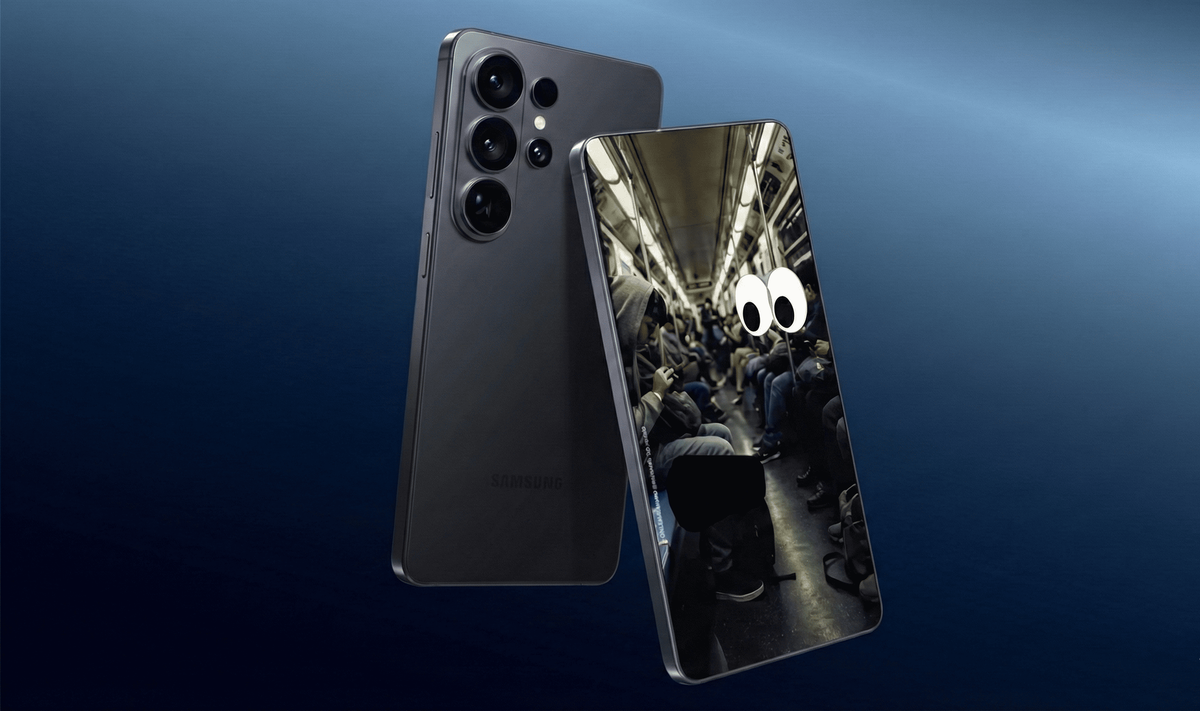
When Samsung introduced the privacy screen feature at the Galaxy Unpacked event in February, it raised a lot of eyebrows and interest; the basis of an in-built privacy screen seems like the solution to the worries that other people around you in public are snooping and trying to see your screen.
When the feature is turned on, the phone’s 6.9-inch display becomes difficult to read from the sides, above, or below. Anyone looking straight at the screen sees everything normally, but people sitting next to you will notice the display fading or appearing almost dark.
At first glance, the effect looks similar to what you get from a typical privacy screen protector. The difference is in how the technology works. Instead of placing a physical filter over the display, Samsung built the feature into the screen itself. The phone adjusts how its pixels spread light, allowing the display to remain clear when viewed head-on while limiting visibility from off angles.
This approach fixes one of the common problems with traditional privacy protectors. Many of them reduce brightness and slightly distort colors, which can make the screen harder to read even for the person holding the phone. Because Privacy Display works at the pixel level, the Samsung Galaxy S26 Ultra keeps its full display quality when the feature is turned off.
Samsung also lets users control when the privacy mode appears. It can stay enabled all the time, or it can automatically activate when certain apps open. That includes services where sensitive information is often visible, such as email apps like Gmail or workplace tools like Slack. Another option hides only notifications. The feature can also turn on when the phone asks for a password, pattern, or PIN.
In everyday situations, the feature makes practical sense. Phones now carry an enormous amount of personal information, from banking apps and work emails to identification documents and private conversations. Opening a message in a crowded train, airport lounge, or café often means someone nearby can easily glance at your screen.
The real question, though, is whether this feature alone is worth buying the Samsung Galaxy S26 Ultra.
Privacy screen protectors have been around for years and usually cost between $2 and $30, and they work with almost any phone, including older models. But Samsung is trying to offer something more refined with the Samsung Galaxy S26 Ultra. Because the privacy feature is built directly into the display hardware, it can control how light spreads from the pixels and adjust the effect through system settings. That means users can turn it on instantly, automate it for certain apps, or disable it without removing anything from the screen. The trade-off, of course, is price. The Ultra sits at the top of Samsung’s lineup and will likely cost more than $1,200 depending on the configuration.
 Ejiro Onose