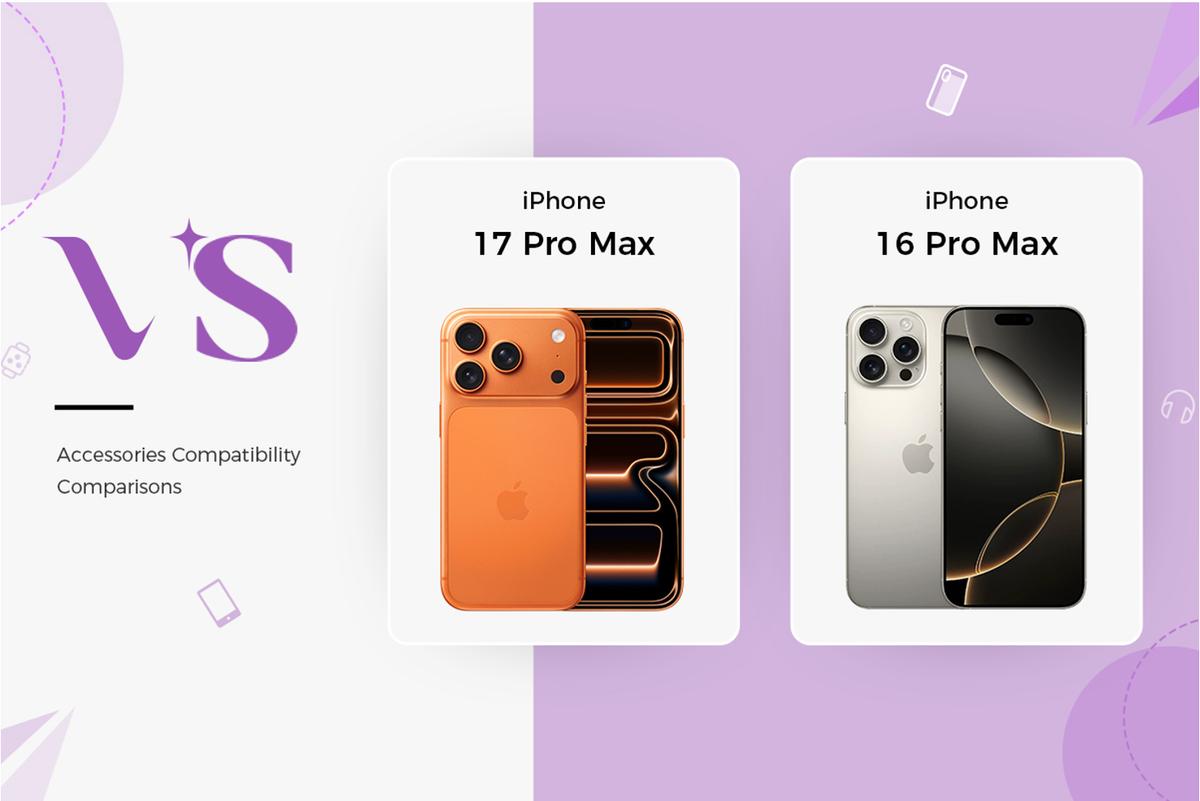
Xiaomi has made no secret of its ambition to stand shoulder to shoulder with Apple. From borrowing certain iOS-inspired design cues in HyperOS to refining its hardware philosophy around minimalism and premium materials, Xiaomi has been steadily closing the perception gap. But this year, the company took that rivalry to a whole new level.
Xiaomi has skipped the number 16 entirely and jumped straight to the “17” series, aligning itself directly with Apple’s iPhone 17 lineup. It’s a symbolic move, but also a strategic one: Xiaomi doesn’t just want to be seen as the affordable alternative anymore. It wants to be the peer competitor, the phone you’d actually consider over an iPhone, not because it’s cheaper, but because it’s genuinely good enough to make you think twice.
The Xiaomi 17 Pro Max is its boldest statement yet, a flagship built to go head-to-head with Apple’s iPhone 17 Pro Max on design, performance, and camera prowess. And while both brands now play in the same league, their philosophies couldn’t be more different, one rooted in ecosystem control and refinement, the other in raw innovation and speed of execution.
/1. Design and display
At first glance, both phones exude premium craftsmanship, but with very different philosophies.
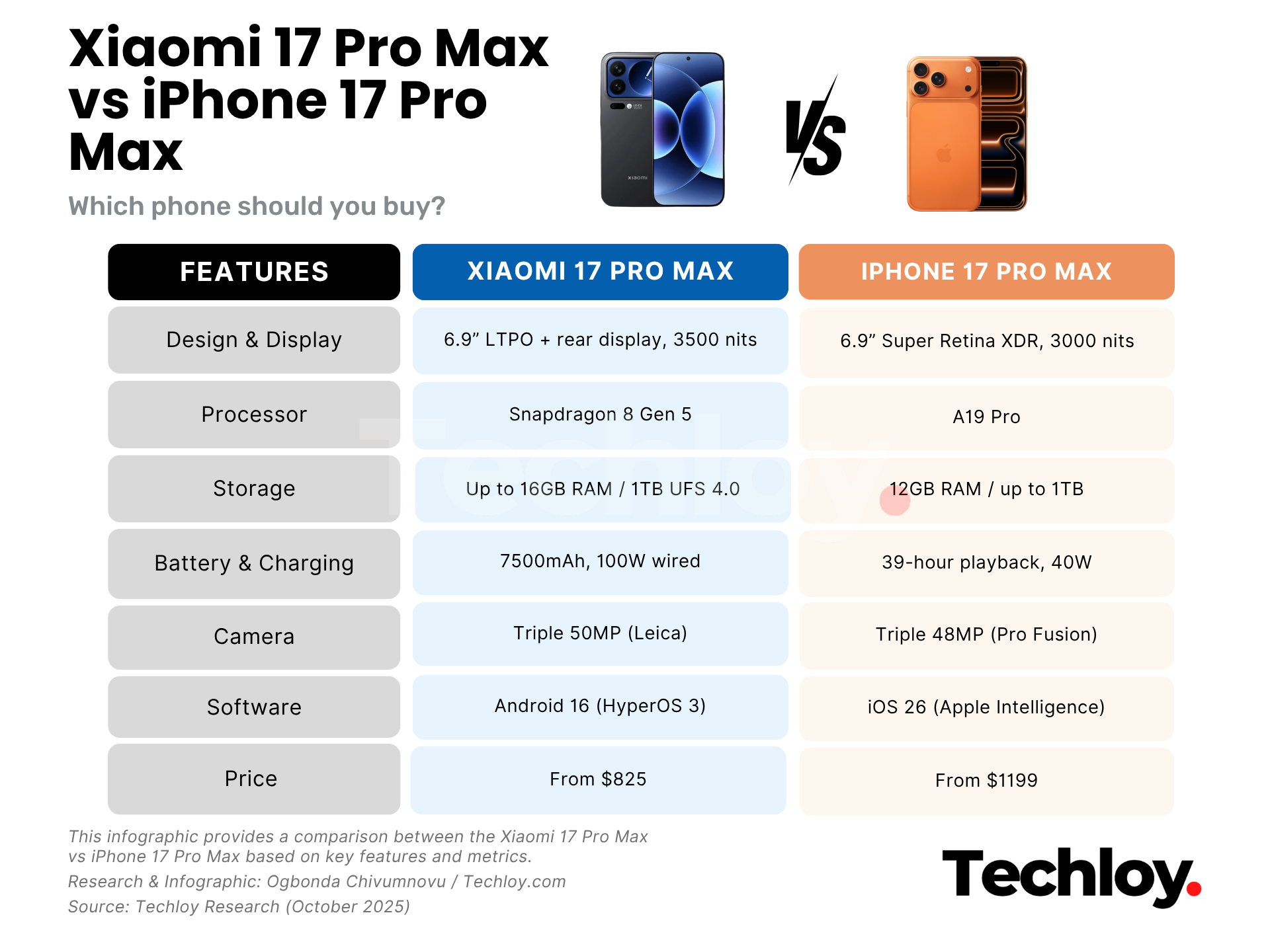
The Xiaomi 17 Pro Max sports an uncanny resemblance to the Apple iPhone design, engineered so precisely that the clear case included in its box fits perfectly on the iPhone 17 Pro Max. Though it mirrors the iPhone in proportions, it is noticeably lighter, thanks to its Aero-Grade Titanium Alloy chassis. Up front, a 6.9-inch LTPO AMOLED 2K display dominates, featuring 2160Hz PWM dimming for eye comfort and an astounding 3,500-nit peak brightness for outdoor clarity. Around back, a 2.9-inch Always-On Micro LED panel sits where the iPhone’s new camera plateau would be, serving notifications and high-resolution selfie previews. Overall, it looks "unapologetically iPhone 17-inspired."
Apple’s iPhone 17 Pro Max, although it retains its overall signature design made incremental but tangible refinements. Apple abandons the titanium/special frames of prior years and goes back to a lighter aluminum unibody, combining it with a Ceramic Shield glass front and back. The most striking change is the full-width camera plateau that now spans the entire width of the top portion of the rear, rather than isolated lens islands. This effectively reduces the contiguous back-glass footprint, because the plateau takes over significant rear real estate. In the front, it boasts a 6.9-inch Super Retina XDR display that offers ProMotion refresh rates and the Dynamic Island. Brightness peaks at ≈3,000 nits and offers exceptional color accuracy.
Both devices boast an IP68 dust and water resistance rating, but Xiaomi's dual-screen approach provides an undeniable fresh edge in utility and design experimentation.
/2. Performance and hardware
The Xiaomi 17 Pro Max runs on Snapdragon 8 Elite Gen 5, paired with up to 16GB RAM and UFS 4.1 storage, serious specs for multitasking and gaming.
Apple’s A19 Pro chip, meanwhile, packs a 6-core CPU, 6-core GPU, and 16-core Neural Engine. It’s more power-efficient and finely tuned for the Apple ecosystem, offering up to 2TB of internal storage.
With early benchmarks suggesting the Snapdragon 8 Elite Gen 5 may outperform the A19 Pro, particularly in multi-core performance, raw power may favour Xiaomi on paper, but Apple’s silicon integration between hardware and software remains unmatched.
/3. Camera systems
Xiaomi teams up with Leica again for a triple 50MP setup — wide, ultrawide, and periscope telephoto (5x optical zoom). It also records in 8K at 30fps and supports Dolby Vision HDR.
Apple’s new Pro Fusion camera system features three 48MP lenses and introduces an 8x optical-quality zoom (200mm) using a tetraprism design. It supports ProRAW, Smart HDR 5, and the Academy Color Encoding System for filmmakers.
Xiaomi impresses with raw power and colour accuracy, but Apple still leads in overall consistency and computational processing.
/4. Battery and charging
Here’s where Xiaomi dominates. The device features a 7500 mAh battery, dwarfing what Apple offers. This capacity is achieved using Silicon Carbon battery technology, while Silicon Carbide components enable its blistering charging speeds: 100W wired, 50W wireless, and 22.5W reverse wireless charging.
On the other hand, the 5,088 mAh battery on the iPhone offers up to 39 hours of video playback and 40W wired charging, with 25W MagSafe wireless charging. It’s good, but not groundbreaking.
/5. Software and special features
Xiaomi’s HyperOS 3 (Android 16) brings flexibility, customization, and openness. It aims to be an everything OS, integrating deep AI (via Google) and offering powerful tools for power users and different form factors (tablets, foldables, IoT). Its connectivity efforts are geared towards bridging ecosystems, even reaching into Apple's domain. HyperOS 3 features special hardware integrations like an infrared port, an ultrasonic under-display fingerprint sensor, and that clever secondary display.
Meanwhile, Apple’s iOS 26 focuses on refinement, cohesion, and privacy. The new "Liquid Glass" look is a systematic overhaul, and the AI features (Apple Intelligence) are tightly integrated with an emphasis on on-device processing. The core strength remains the seamless, consistent experience across its own ecosystem. Combined with features like Face ID and Emergency SOS via satellite/Crash Detection for safety, it’s smooth, polished, and cohesive.
/6. Price and availability
The Xiaomi 17 Pro Max launched first in China on September 25, 2025, and is expected to roll out to global markets, including Europe and parts of Asia, later this year. It starts at 5999 yuan (~$825) for the 12GB/512GB model, undercutting most flagships in its class.
The iPhone 17 Pro Max followed Apple’s traditional global fall release, becoming available in over 40 countries, including the US, UK, and major Asian markets. Pricing begins at $1,199 for the 256GB version and goes up to $1,999 for the new 2TB tier.
/7. Storage
The Xiaomi 17 Pro Max offers 12GB or 16GB LPDDR5X RAM with storage options up to 1TB (UFS 4.0), ideal for power users who multitask or game heavily.
The iPhone 17 Pro Max finally catches up with 12GB of RAM and storage tiers of 256GB, 512GB, and 1TB. The RAM boost supports new Apple Intelligence features.
Conclusion
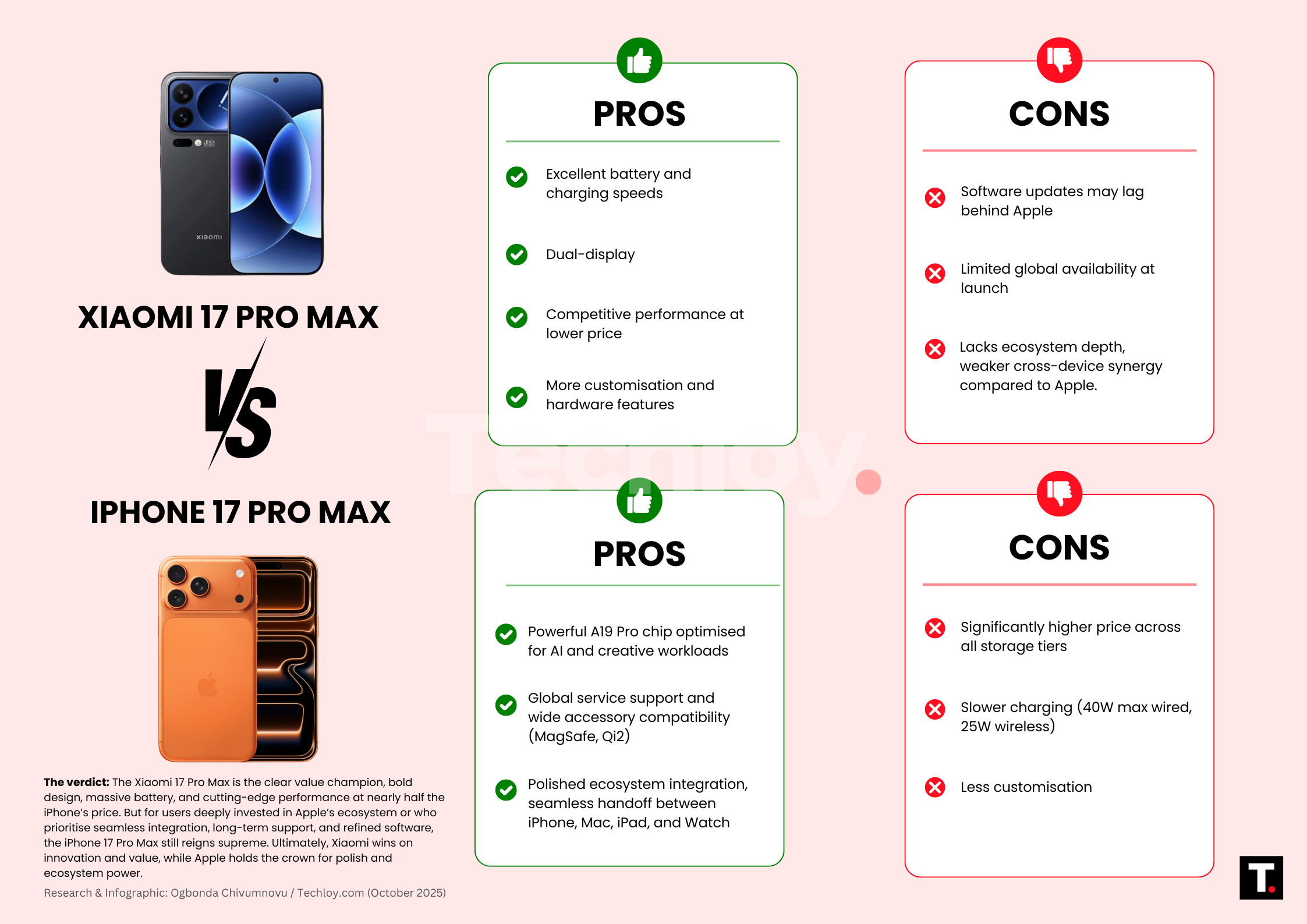
This face-off boils down to what you value more. The Xiaomi 17 Pro Max is the clear winner for battery, charging, display, and price. It’s bold, ambitious, and designed to impress on specs. The iPhone 17 Pro Max, however, remains unmatched in polish, performance harmony, and ecosystem depth.
If you want cutting-edge hardware at a reasonable price, Xiaomi takes the crown. But if you want refinement, reliability, and seamless integration, Apple’s flagship still holds the throne.
 Partner Content