



Xiaomi’s HyperOS 3.1 is rolling out on January 22, 2026, but the update comes with a clear line in the sand. According to early reports, it's limited to devices running Android 16, immediately splitting Xiaomi’s user base between those who can upgrade and those who cannot.
That decision is as important as any new feature. HyperOS 3.1 is designed to feel more animated, more interactive, and more visually ambitious than previous versions. By tying it strictly to Android 16, Xiaomi is prioritizing performance and polish over broad backward compatibility. The result is a smoother experience for newer devices, and a quiet push toward hardware upgrades for everyone else.
Here what’s coming, why it matters, and the calculated risk Xiaomi is taking with your hardware.
HyperIsland becomes a real command centre
The headline feature in HyperOS 3.1 is the maturation of HyperIsland, Xiaomi’s answer to Apple’s Dynamic Island. In this version, it moves beyond a passive notification pill and becomes a more fully interactive command centre.
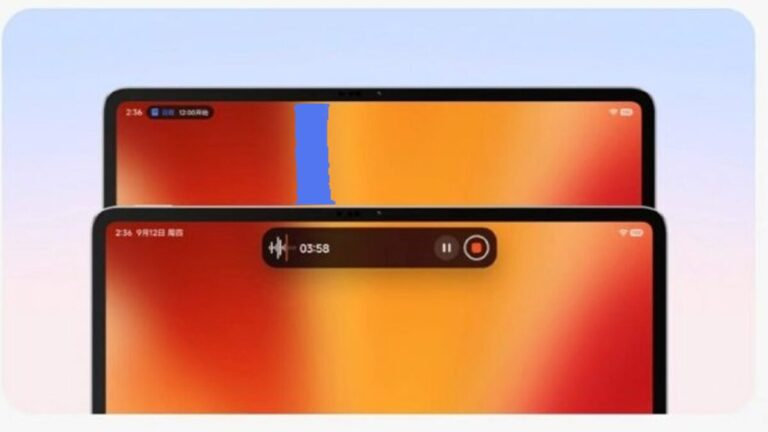
Users now get a dedicated settings page for what Xiaomi calls the “Super Island,” allowing granular control over which apps are permitted to use the feature. Instead of every supported app cluttering the status bar, users can decide exactly what appears. The update also introduces new lighting effects that sync with media playback. Rather than simply showing that music is playing, HyperIsland visually pulses along with the progress bar, turning it into a live status surface rather than a static indicator.
Perhaps most importantly, Xiaomi has rewritten the underlying animation logic. Earlier versions were criticized for stuttering when the island expanded or collapsed. In HyperOS 3.1, those transitions are designed to feel fluid and physics-based, aiming to eliminate the lag that made earlier builds feel more like a skin than a system-level feature.
A stacked approach to multitasking
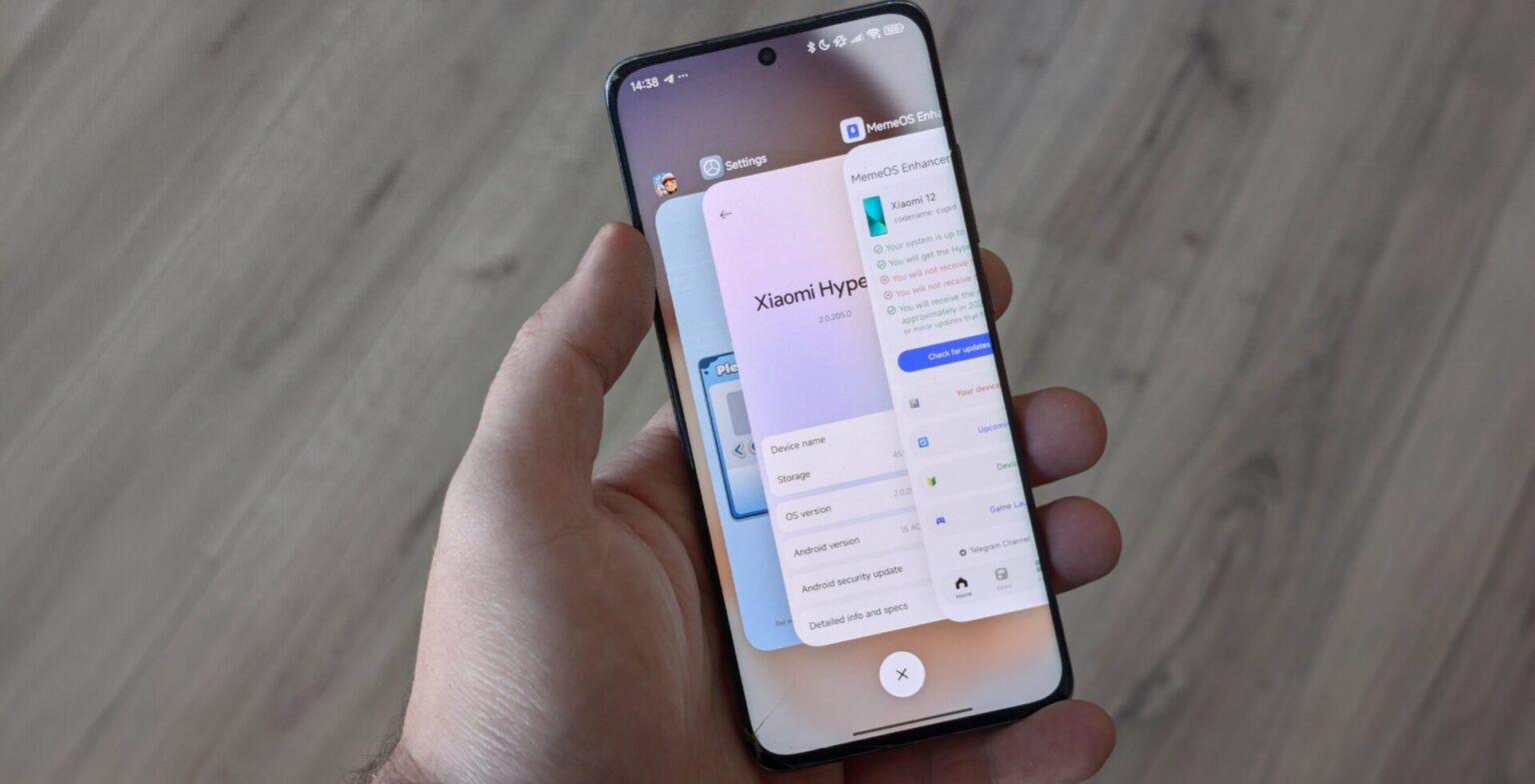
Xiaomi is also changing how users switch between apps. The traditional two-column grid of recent apps is being replaced with a horizontal stacked layout, borrowing directly from interaction patterns popularized on iOS and other flagship platforms.
The stacked view prioritizes larger app previews and natural thumb-swipe motion. Instead of scanning a dense grid, users move through a flowing stack of recent tasks. The intent is to reduce cognitive load and make multitasking feel more fluid, especially on larger displays.
 David Adubiina
Desktop-style home screen density
HyperOS 3.1 pushes the home screen toward a more desktop-like layout. Users can now resize folders via drag-and-drop, with support for 2×1 and 1×2 layouts. This makes it possible to create functional “zones,” such as vertical strips for productivity apps or horizontal bars for social tools, without wasting grid space.
A subtle but meaningful upgrade is page turning within folders. You can now pack significantly more apps into a single folder and swipe through pages inside it. The result is a cleaner primary home screen without sacrificing fast access to dozens of apps.
Lock screen as a visual layer
The lock screen is also being repositioned as a more expressive surface. HyperOS 3.1 adds a built-in photo editing suite directly into lock screen customization, along with deeper support for depth effects.
The depth feature allows wallpaper subjects to partially overlap the clock, while more precise widget placement turns the lock screen into something closer to a visual canvas rather than just a functional display.
System-level quality of life fixes
Under the hood, Xiaomi is targeting long-standing annoyances:
- Bluetooth Memory: The system now remembers the connection behavior of specific devices, reducing friction when reconnecting accessories.
- Unified Volume Hub: The multi-volume interface has been redesigned, allowing media, ringer, and alarm volumes to be managed from a single, cohesive panel.
 Emmanuel Umahi
Taken together, these changes paint a picture of a more animation-heavy, visually ambitious operating system. That context makes Xiaomi’s decision to tie HyperOS 3.1 strictly to Android 16 easier to understand.
By excluding older Android versions, Xiaomi is effectively forcing a hardware refresh cycle. Resource-intensive features like HyperIsland’s physics-based animations are designed to run only on newer silicon, reducing the risk of the “laggy skin” reputation that has followed heavy Android overlays in the past.
It’s a calculated trade-off. Performance consistency and polish improve for newer devices, while legacy users are left behind. The move prioritizes experience quality over broad compatibility, rewarding recent buyers while drawing a hard line under older hardware.
The Xiaomi Hyperos 3.1 rollout roadmap: Who gets it & when?
Xiaomi has already begun rolling out its enhanced beta in China. If you are an enthusiast willing to sideload or are in the China ROM ecosystem, here is the schedule:
Wave 1 (started Jan 22):
- Xiaomi 17 Series (Ultra, Pro, Standard)
- Redmi K90 Series
- Xiaomi Pad 8 Pro, Xiaomi Pad 8
Wave 2 (starts Jan 30):
- Xiaomi 15 Series (Ultra, Pro, Standard)
- Xiaomi 14 Series (Ultra, Pro, Titanium Edition)
- Xiaomi MIX Flip 2
- Redmi K80 Series
- Xiaomi Pad 7 Ultra
For global users in Europe, India, and Southeast Asia, stable OTA updates typically lag by four to six weeks. That puts wider availability in late February to March 2026. If a device isn’t on the list, it's likely to remain on HyperOS 3.0, as Xiaomi draws a clear line for its next generation of software support.


