If you’re shopping for a new mid-range phone in India, chances are the Samsung Galaxy A55 5G and Redmi Note 14 SE have popped up in your feed. On paper, they both tick the usual boxes: AMOLED display, decent chip, big battery, but they go about things very differently.
Samsung’s A55 5G, launched last year, feels like that clean-cut, reliable friend who may not be flashy but always shows up. It costs more (₹27,999 or ~$325), but it offers solid build quality, long software support, and a camera that won’t make you second-guess your shots.
Redmi’s Note 14 SE, on the other hand, is the street-smart upstart. It just dropped at ₹14,999 (~$173), and while it cuts corners here and there, it gives you enough performance and features to make you wonder if spending double is even worth it.
So, which one makes sense for your daily hustle?
 Louis Eriakha
/1. Design & Display
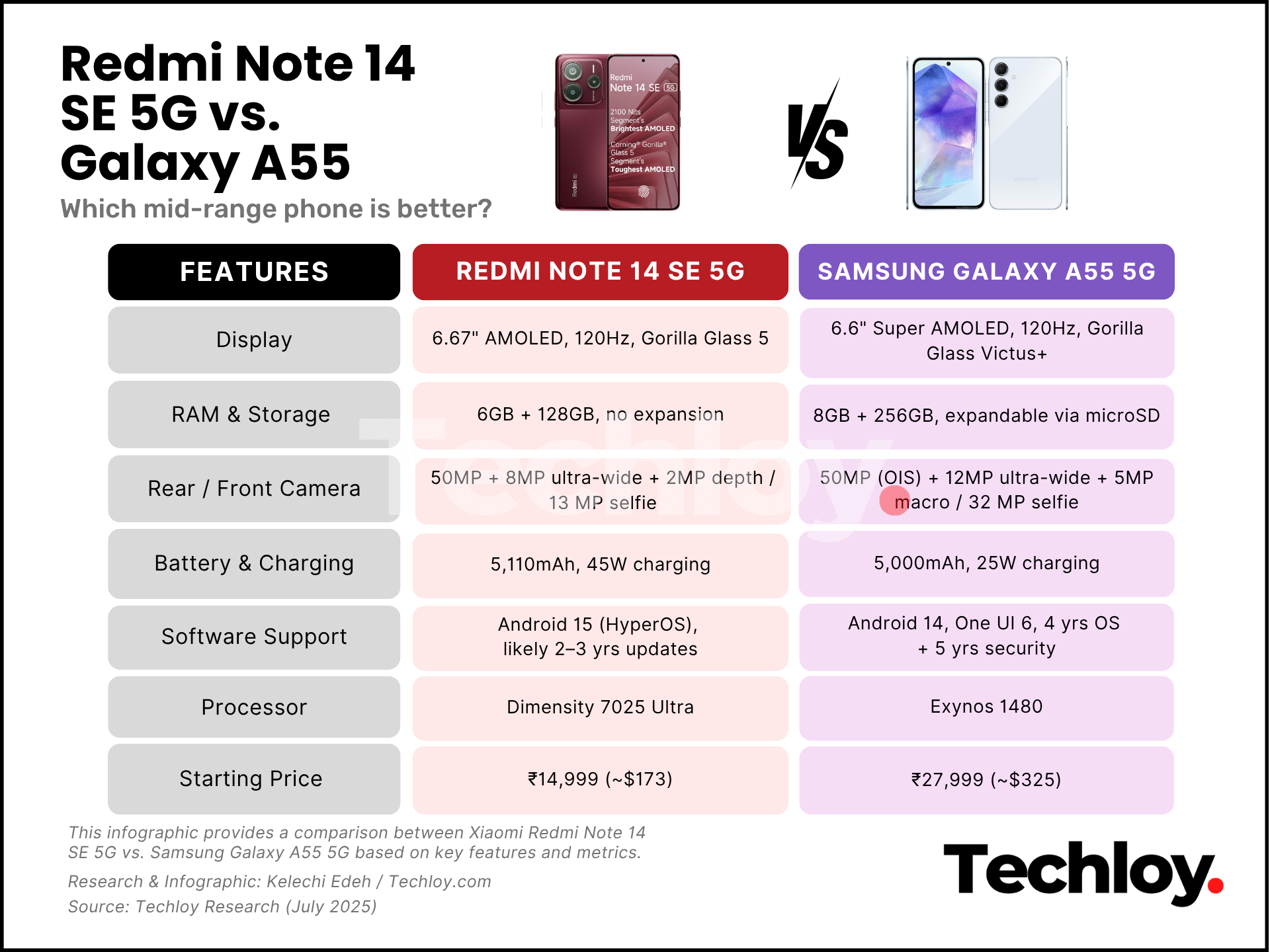
Samsung’s A55 is built like a vault — Gorilla Glass Victus+, a metal frame, and IP67 water resistance. It’s the kind of phone you don’t mind using without a case (unless you’re clumsy). The 6.6-inch Super AMOLED screen is sharp and buttery at 120Hz, perfect for late-night scrolling or streaming shows.
Redmi’s Note 14 SE, however, stretches slightly larger at 6.67 inches and gets brighter under sunlight, helpful if you’re often outdoors. But it’s made of cheaper materials, with Gorilla Glass 5 and only IP64 splash resistance. It’ll survive a drizzle, not a drop.
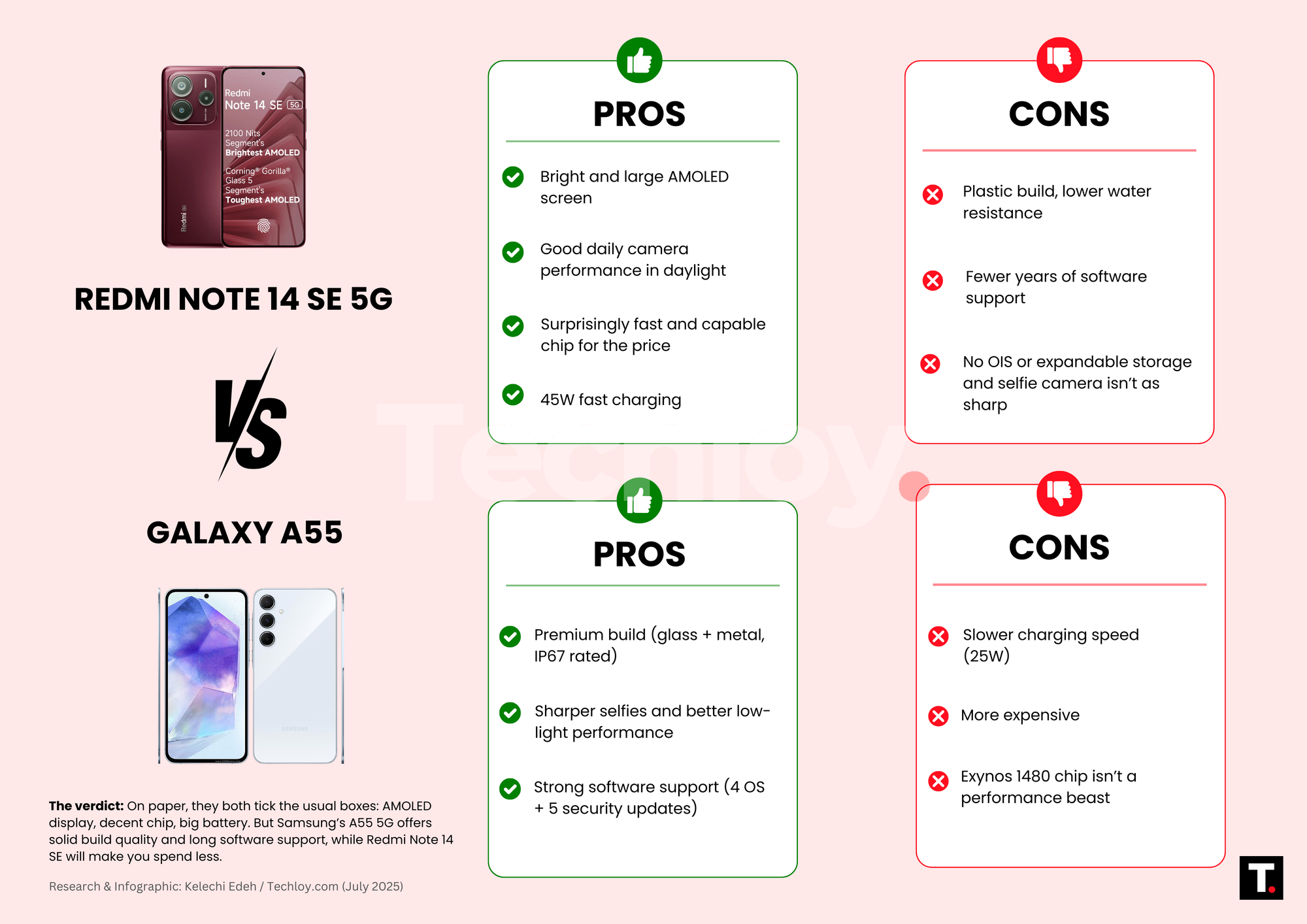
Verdict: Samsung wins for durability and build. Redmi wins for brightness and screen size.
/2. Performance
The A55 runs on Samsung’s Exynos 1480 chip, not a beast, but enough to handle everyday apps, multitasking, and even a bit of Genshin Impact. It also ships with One UI 6 and guarantees 4 years of Android updates + 5 years of security. That’s huge if you plan to keep your phone for a while.
Redmi’s Dimensity 7025 Ultra chip is surprisingly capable at this price. It runs smoothly with HyperOS (Android 15) and can handle gaming too, though it may warm up faster and age quicker software-wise. Expect 2–3 years of updates max.
Verdict: Samsung wins for long-term support and stability.
/3. Cameras
Here’s where the difference shows. The A55’s 50MP main camera with OIS captures balanced shots and decent low-light photos. The 32MP selfie cam is crisp, great for video calls or content creators on a budget. Yes, Samsung still overprocesses colors, but you get predictability.
Redmi’s 50MP sensor holds its own during the day, but struggles in dim lighting. The 13MP front cam is fine, not great. There’s no OIS, so shaky hands = blurry results.
Verdict: If your gallery is mostly memes and receipts, Redmi works. If you're documenting your travels or running a small biz from your phone, Samsung delivers more reliability.
/4. Battery & Charging
Redmi slightly edges ahead here with a 5,110mAh battery and 45W charging, which means a full top-up in under an hour. Perfect if you’re always in a rush.
Samsung’s 5,000mAh battery lasts just as long but charges more slowly at 25W. It’s like topping up your tank overnight instead of at the last minute.
Verdict: Both can survive a full day. But Redmi’s like fast food — quick, cheap, and satisfying.
/5. Storage & Extras
The A55 comes with 8GB RAM and 256GB storage, and even throws in a microSD slot (rare these days). You also get 5G, stereo speakers, and 5 years of security updates.
Redmi gives you 6GB + 128GB, which is fair at this price. But no expansion. It’s the “you get what you pay for” deal.
Verdict: Samsung offers more RAM, double the storage, and expandable memory — it wins here too.
Conclusion
If you’re on a tight budget and just need something that works, the Redmi Note 14 SE punches above its weight. It’s a fantastic pick for students, secondary users, or anyone who doesn’t care much about long-term updates or premium materials.
But if you want a phone that still feels solid in 2025, offers better camera stability, a sharper selfie cam, and fewer software headaches, the Samsung Galaxy A55 5G is worth the extra cash.
Winner for longevity and polish: Samsung Galaxy A55 5G
Best value for under ₹15K: Redmi Note 14 SE
 Louis Eriakha