TikTok has been quietly reshaping itself over the past year.
Beyond the endless feed of short videos it’s known for, the app has steadily rolled out features like group chats with up to 32 people, Creator Chat Rooms for community building, and even ways to connect during livestreams.
It’s a clear signal that TikTok doesn’t just want to be where you scroll; it wants to be where you talk, share, and stay. Now, the platform is doubling down on that ambition with fresh updates to its direct messages (DMs).
 Emmanuel Umahi
Users can record voice notes on TikTok
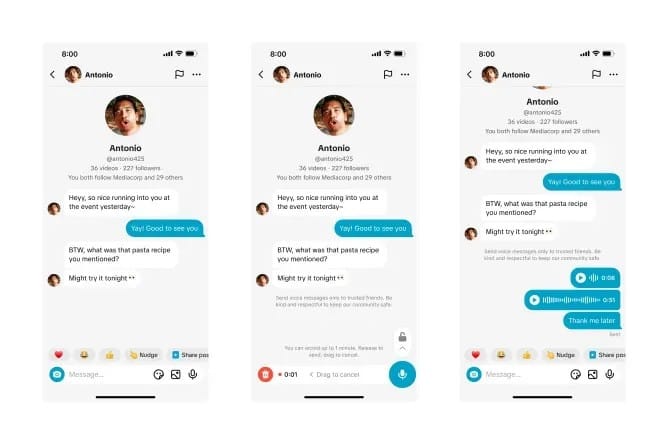
TikTok users can now send audio clips up to 60 seconds long, joining the likes of WhatsApp, Instagram, and iMessage, where the feature has long been popular. Users can send a voice note by pressing and holding the microphone icon in the chat. If this is your first time using the feature, TikTok will ask you for permission to use your microphone. You can send the message by letting go of the button, or you can lock the recording and keep going without holding it down. Then, press the send button. After sending a voice note, users have a short window of three minutes to delete it.
TikTok now features richer media sharing
Users can now send up to nine photos or videos in both one-on-one and group chats. You can take pictures and videos right in the chat or choose them from your camera roll, complete with editing options before hitting send. The feature makes it easier for people to share their thoughts and feelings with friends without having to post them publicly.
TikTok wants to protect your privacy
Of course, with more ways to share and with the recent push for it, especially in the world, comes the tricky question of safety. TikTok is putting some guardrails in place: users can’t send personal photos or videos in a first message request; they’re limited to TikTok content until there’s a connection.
The app will also nudge people with reminders about privacy risks before they send something personal. And for younger users, the rules are stricter: DMs are disabled entirely for those under 16, while ages 16 to 18 get automatic protection against explicit images, blocked before either side ever sees them. Adults can toggle that filter on or off.
These changes might seem small in isolation, but together they show where TikTok is headed. Messaging isn’t just an add-on anymore; it’s becoming core to the app’s identity.
Conclusion
With people increasingly shifting their conversations into private channels, something Meta has leaned into for years, TikTok clearly wants to be part of that daily routine. And with global rollout happening in the coming weeks, it won’t be long before your TikTok inbox starts to feel a lot more like your other social apps.
 Ogbonda Chivumnovu