



It’s starting to feel like a rerun. First, Netflix made waves with its hardline stance on password sharing in 2023, flipping the script from flexibility to a strict rule: if you weren’t under the same roof, you were locked out of its family plan.
The move stirred plenty of frustration from users, but it also set the stage for other streaming giants like Disney+ to follow with their own restrictions. Now, YouTube is the latest to jump on that train, tightening the rules around its Premium Family plan.
 Louis Eriakha
The change isn’t exactly brand new. Technically, YouTube’s family subscription, priced at $22.99 a month for up to five extra members, has always required everyone to live in the same household as the plan manager. The difference is, YouTube never really bothered to enforce that rule until now. Reports from multiple people have said that the platform has started flagging accounts where family members don’t actually share the same address. A handful of users have already received warning emails titled “Your YouTube Premium family membership will be paused,” giving them 14 days before Premium access is revoked.
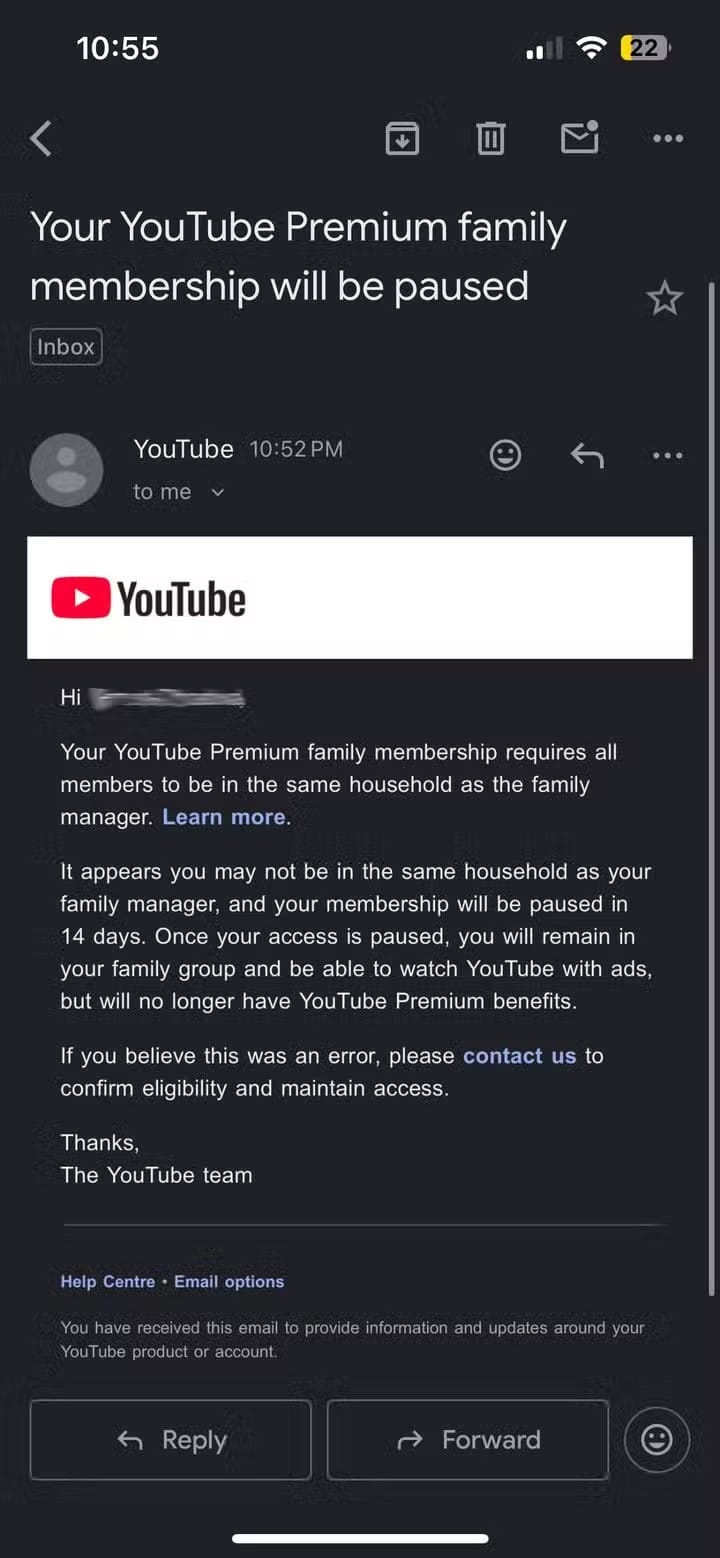
For those flagged, the outcome is pretty straightforward: you won’t lose your spot in the family group, but all your perks, like ad-free videos, background play, and YouTube Music, will disappear. YouTube runs what it calls an “electronic check-in” every 30 days to confirm everyone’s location, and while this used to be more of a formality, it’s now carrying real consequences. The timing is curious, though. Alphabet’s Q2 2025 earnings showed YouTube’s ad revenue hitting $9.8 billion, a 13% jump year-over-year and its biggest quarter yet. Clearly, the platform isn’t hurting for cash, which makes the sudden enforcement feel less about survival and more about control, or maybe just aligning with the wider industry trend.
Streaming companies have realized that shared accounts eat into potential subscribers, and YouTube seems to be betting that some people will just sign up individually rather than lose Premium access altogether.
 Louis Eriakha
For now, the crackdown doesn’t appear to be widespread. Only scattered users across different regions have reported being flagged, and it’s unclear how quickly YouTube will expand enforcement. But if the pattern from Netflix and Disney is anything to go by, it’s likely only a matter of time before this becomes the norm.
So, if you’re part of a “family” plan that stretches across multiple households, enjoy it while it lasts; your warning email might already be on its way.


