



When I first started thinking about working remotely from outside my home country, places like Bali, Lisbon, or Miami immediately came to mind. Africa? Not so much.
Like most people, I assumed the internet would be unreliable, visas complicated, and the cost of living unpredictable. But the more I dug into the continent’s digital nomad visas, the more I realized that Africa is quietly building something unique—work-friendly hubs that are affordable, scenic, and increasingly connected.
Globally, there are about 40-100 million digital nomads today, but Africa’s slice of that pie is still small. Yet it’s growing. I’ve spoken to freelancers and remote workers who moved to places like Mauritius, Cape Verde, or Namibia, and they all tell a similar story: you can live here on a reasonable budget, plug in your laptop, and actually get work done, without the stress and cost of some traditional nomad hubs.
 Oluwaseun Bamisile
How the Contenders Compare
When we look at digital nomad visas in Africa, a few countries stand out. Each offers something different for remote professionals, and your choice depends less on scenery and more on career practicality.
/1. Mauritius

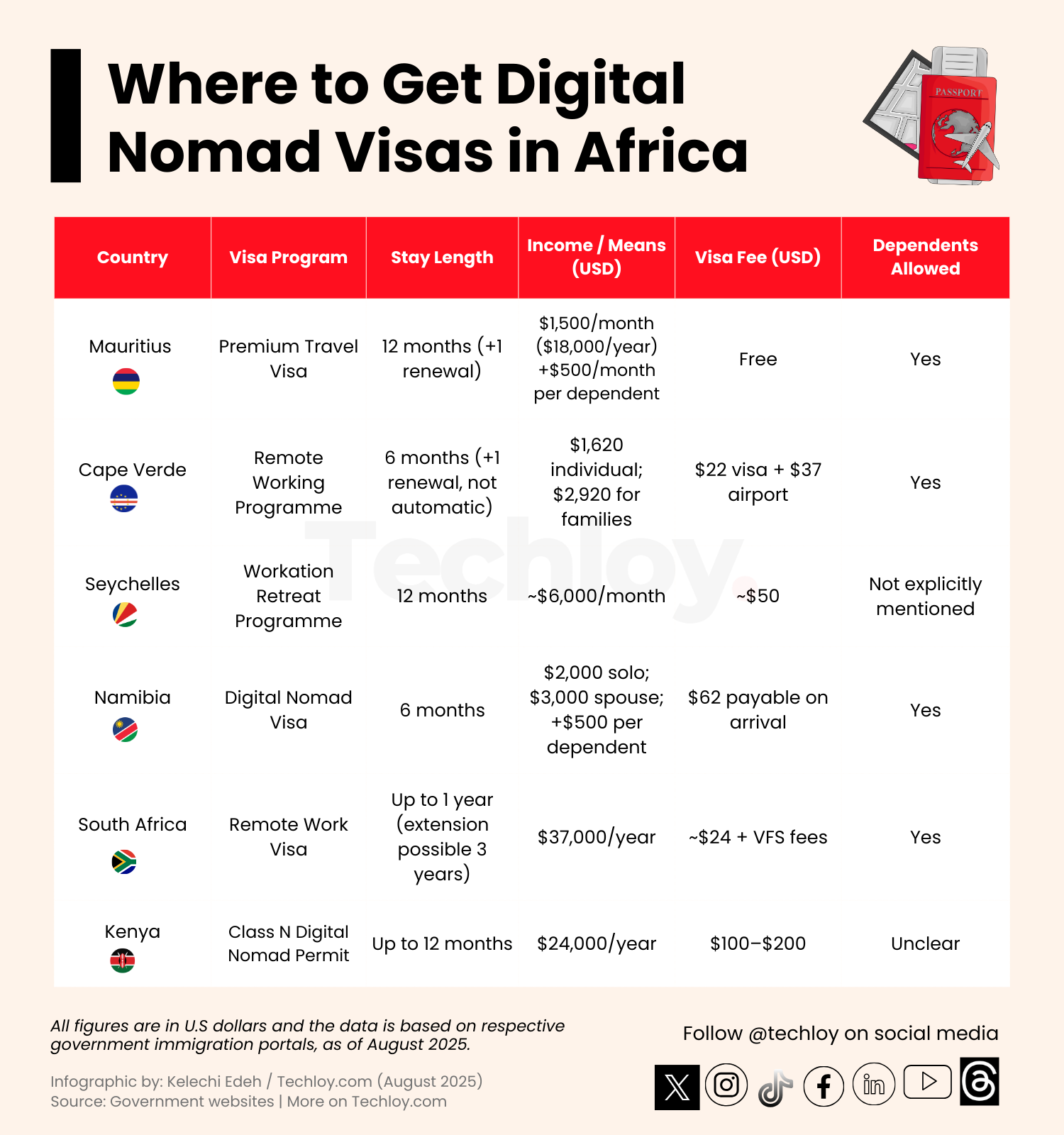
Mauritius introduced its Premium Travel Visa in 2020, letting remote workers, freelancers, retirees, and students stay for 12 months, with the option to extend for another year.
To qualify, you need to show a minimum monthly income of $1,500, or $18,000 per year, plus an additional $500 per month for each dependent you bring along. The application is free, and if you stay under 183 days, you’re exempt from local income tax. Staying longer or depositing money locally may trigger tax obligations, though.
Living here isn’t as expensive as Europe, but it isn’t dirt cheap either. Rent in Port Louis typically runs $500–$700 for a one-bedroom, utilities and internet around $100, and coworking spaces are about $100–$150 monthly. If you’re considering bringing family, factor in that extra $500 per month per dependent. For those used to European or North American costs, Mauritius offers a mix of lifestyle and affordability that’s rare in island nations.
/2. Cape Verde
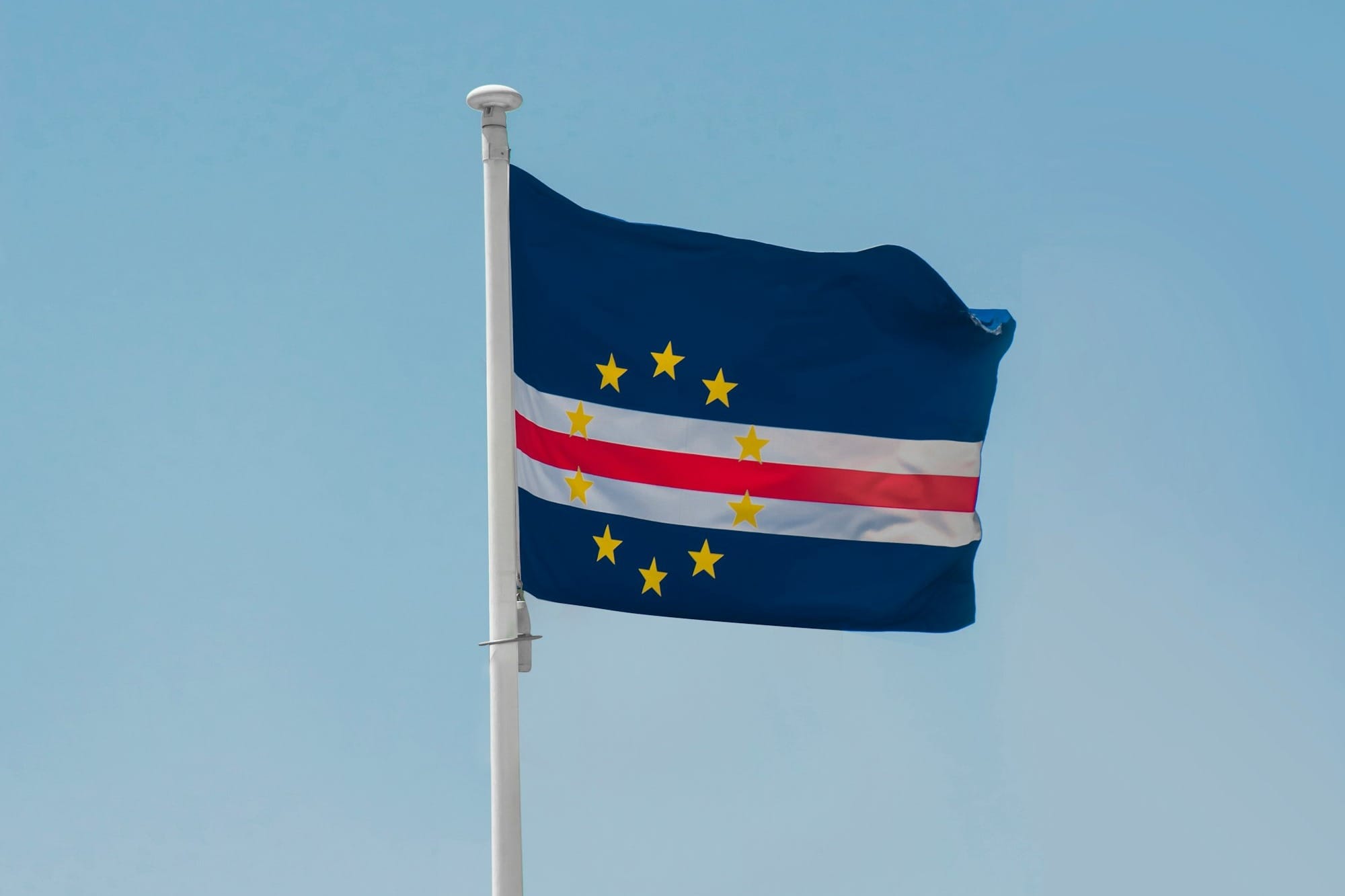
Cape Verde rolled out its Remote Working Programme in December 2020. You can stay six months, with one possible renewal (not automatic). The program targets Europeans, North Americans, Portuguese-speaking countries, and ECOWAS members. Financially, you need $1,620 over the past six months for individuals, or $2,920 for families. The visa costs $22, plus a $37 airport security fee.
Rent is cheaper than in Mauritius, roughly $300–$400 for a one-bedroom, and monthly food and living costs hover around $150–$200. Internet in Praia is reliable, though remote areas may lag.
Cape Verde is a strong choice if affordability and scenery matter more than coworking density. Tax-wise, nomads are exempt, and you aren’t considered a resident, which keeps finances simpler compared to Europe or Asia.
/3. Seychelles

Seychelles launched the Workation Retreat Programme in 2021. You can stay for up to 12 months, and while it isn’t directly renewable, reapplication is possible. The visa is open to remote workers and business owners operating outside the country.
While there’s no strict income minimum, earning about $6,000 per month makes living comfortably feasible. Processing fees hover around $50, and taxes on foreign income are not required.
Life here comes at a premium. Rent, groceries, and amenities are costlier than in Mauritius or Cape Verde. The internet in Victoria is reliable, and the environment is perfect if you’re looking for lifestyle and scenery as part of your remote work experience. Compared to Europe or Asia, Seychelles is an expensive option, but one that combines comfort, stability, and a beautiful backdrop for your workday.
/4. Namibia

Namibia’s Digital Nomad Visa launched in 2022. It allows a six-month stay with no multi-entry, and reapplication is possible after a year. Minimum income is $2,000 for individuals, $3,000 for spouses, and $500 per dependent. The visa fee is $62, payable on arrival, and tax registration is required if you stay over 180 days.
Namibia’s strength is its quiet, spacious environment, ideal for focused work. Rent averages $400–$600, and the internet in Windhoek is stable. If your priority is productivity rather than nightlife or beaches, Namibia provides a unique alternative to busier hubs in Europe or Asia, with lower living costs and abundant natural surroundings.
/5. South Africa

South Africa entered the game in 2024 with its Remote Work Visa. You can stay up to a year, with possible extensions up to three more years. Applicants must earn R650k–796k annually (~$37,000) and work for foreign clients or employers. The visa fee is ZAR 425 ($24) plus VFS service fees, and dependents are allowed. Those staying over 183 days must register with SARS and may pay local taxes depending on treaties.
Cities like Cape Town and Johannesburg offer reliable internet, coworking spaces, and vibrant cultural life. Monthly living costs range $1,500–$2,500, depending on lifestyle. Compared to Europe, South Africa provides robust urban infrastructure and cultural amenities at lower costs, though safety and crime considerations are real factors to weigh.
/6. Kenya
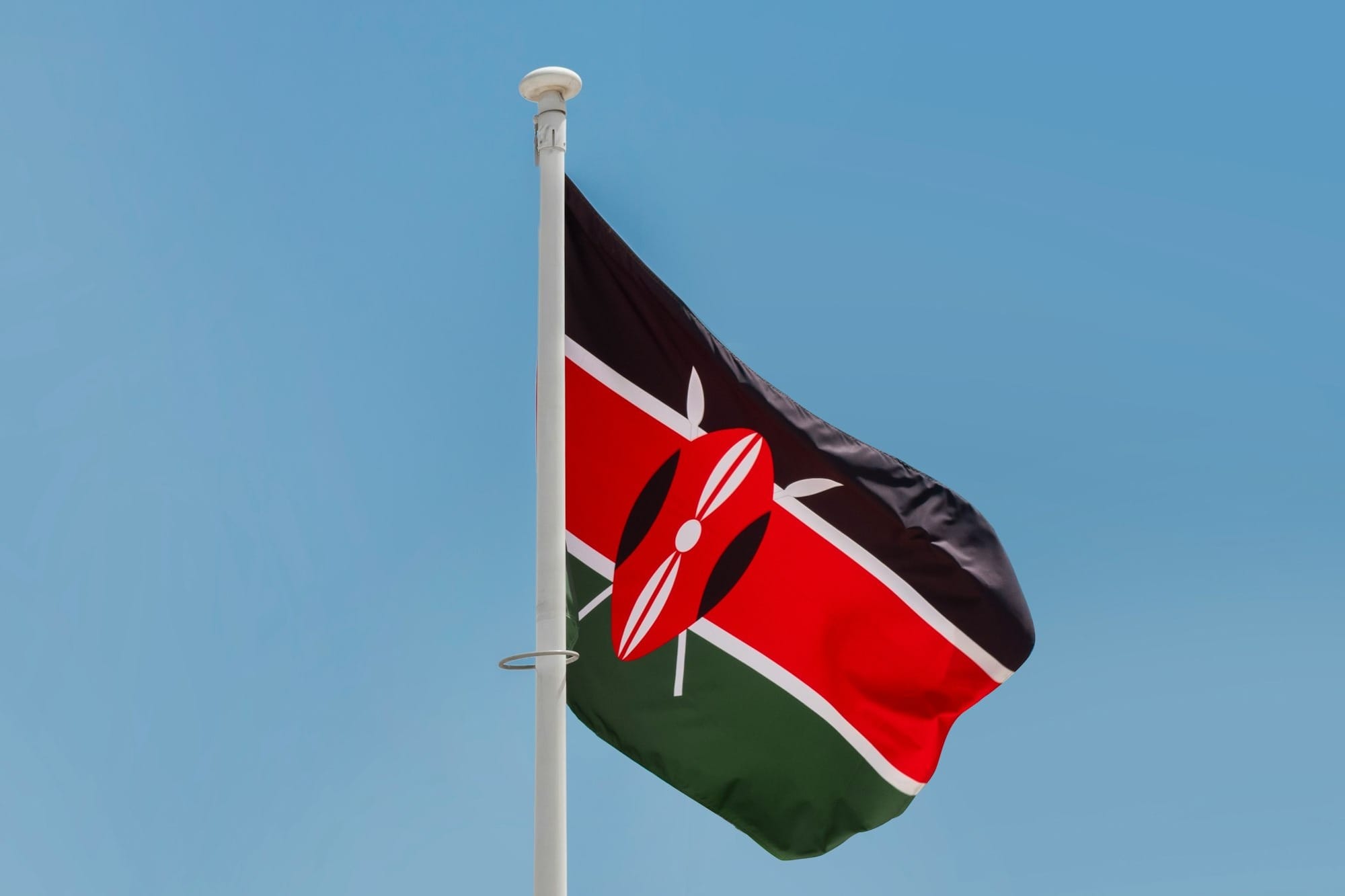
Kenya’s Class N Digital Nomad Permit, introduced in October 2024, allows stays of up to 12 months, with the option to renew. Applicants must show a minimum annual income of $24,000. Fees range $100–$200, depending on specifics. Dependent allowances aren’t clearly defined yet, and tax obligations are still unclear. Applications go through the eCitizen portal.
Kenya is promising because it brings East Africa into the conversation. Nairobi has growing tech hubs, reliable internet in central areas, and a cost of living generally lower than South Africa’s urban centers. While the program is new, it signals the country’s intent to attract skilled remote professionals to its cities and co-working spaces.
 Emmanuel Umahi
What this means for you
If you’ve been hesitant about Africa, these programs show that there are increasingly structured options for remote work. Each country has its trade-offs: Mauritius and Seychelles for tropical comfort, Cape Verde for affordability and scenery, Namibia for focus and space, South Africa for urban infrastructure, and Kenya for East African access.
When choosing where to go, consider internet reliability, visa rules, dependent costs, monthly budgets, and lifestyle priorities. Compared to traditional hubs in Europe, Asia, or North America, Africa is still emerging, but it offers value, uniqueness, and untapped potential that few other continents can match.


