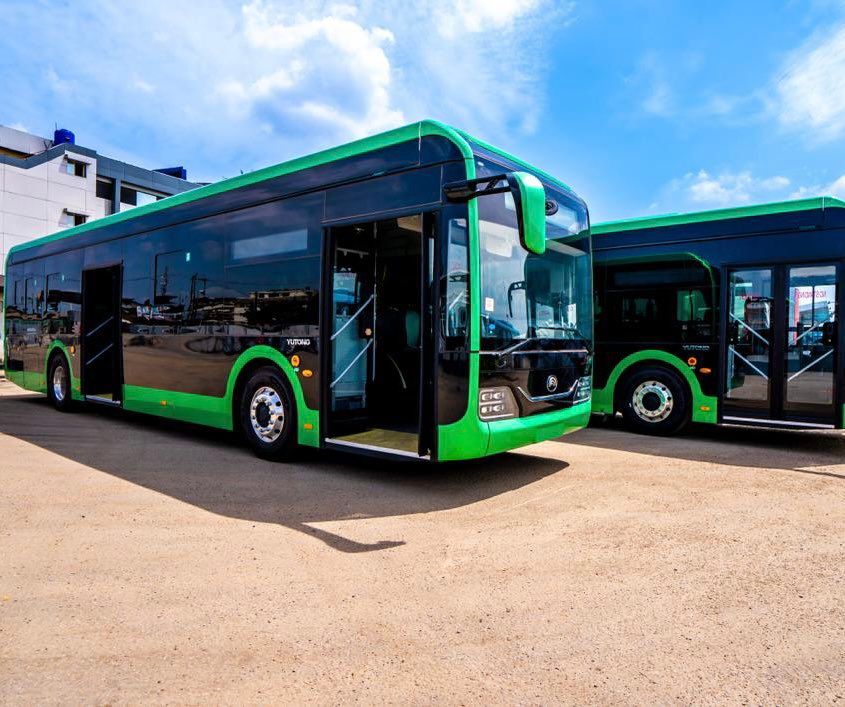
At first glance, without the graffiti that has come to be the hallmark of Nairobi’s irreverent matatus, the privately owned buses that are the primary means of public transport in parts of Kenya, one could mistake the KL-9s for just random buses for private use. Their seats are pristine and new. The air conditioning works, and they are rarely seen at the petrol station where many matatus form long queues waiting for passengers. Also, they are electric.
In 2022, CEO Jit Bhattacharya, who moved to Nairobi from the US, and CFO Jonathan Green, who moved from the UK, took BasiGo, an ambitious mobility product with the mission to “create a future of clean, electric public transport across Africa,” to the Kenyan public. Their core offering was the KL-9, a 54-seater electric bus designed by King Long, the Chinese bus manufacturer.
Since then, BasiGo has expanded into Rwanda, rolled out a ride-hailing service, Jani, a smaller 18-seater capacity bus, Ma3e, and a Pay-As-You-Drive (PAYD) financing model, allowing riders to more or less subscribe to the bus for only the hours they need.
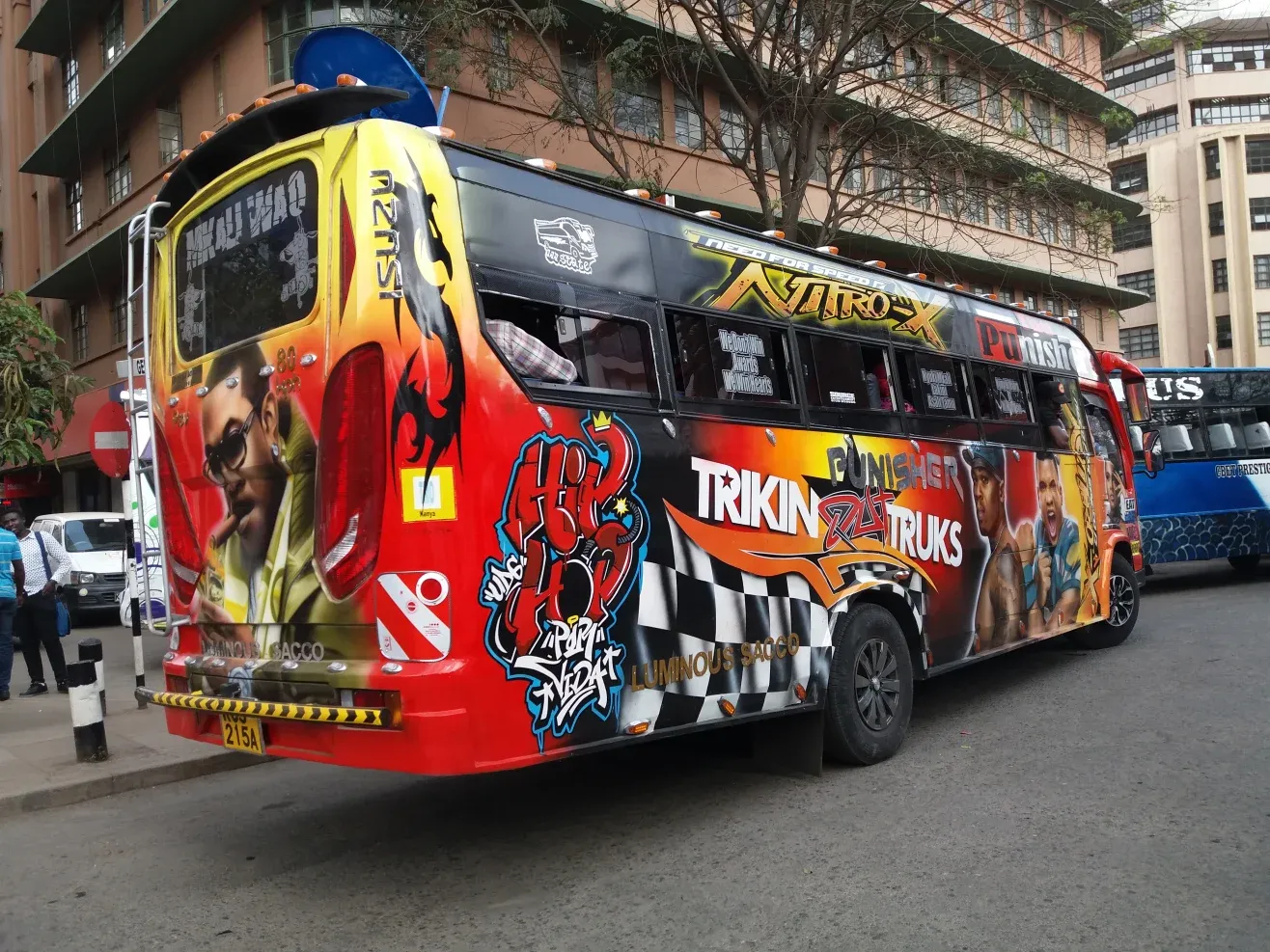
With 70% of commuters being serviced by matatus, BasiGo’s arrival in the market would have been disruptive. But the company also expanded the Pay-As-You-Drive option to matatus riders, giving them the option to become KL-9 drivers, a plan that solves the needs of many public transport drivers who see their work mostly as a temporary means to earn a living and not a long-term career that they need to invest in, like, say, buying a $55,000–$60,000 bus, the cost of the KL-9.
“We started out supporting city transport, but that has also expanded to support inter-city transport,” Doreen Orishaba, the company’s chief of product, told Techloy.
“In Rwanda, we cover all the major corridors outside of Kigali city, the capital of Rwanda, so we have vehicles going to the north, east, west, and south.”
Recently, the company announced plans to expand its operations in both Kenya and Rwanda, which Orishaba says are based on data gathered during early trials.
“Our data and market research have expanded across what we’re calling four major routes within Kenya — the northern corridor, eastern, western, and what we kind of call central,” she said.
Focusing on buses as the starting point for electric mobility in Africa reflects how transport systems across the continent actually work. According to the Institute for Transportation and Development Policy, public transport accounts for between 50% and 98% of urban passenger trips in many cities across Africa, Asia, and Latin America.
Buses carry the bulk of daily commuters in many cities and burn significant amounts of petrol doing so. Any shift toward electric fleets could therefore influence both transport costs and urban emissions.
That discussion has become even more relevant as fuel prices move in the wrong direction. A brief conflict between the United States, Israel, and Iran recently disrupted global oil markets, leading to the temporary closure of the Strait of Hormuz, one of the world’s most important oil shipping routes. During the crisis, oil prices briefly surged to around $120 per barrel.
CNN reported that fuel prices across parts of Africa climbed between 15% and 40%, squeezing transport operators and making alternatives like electric buses increasingly attractive.
Still, shifting to electric transport requires careful planning. Data collection has become a major part of the process.
“So the kind of data you’re going to collect ranges from what type of product or buses consumers are using before we even decide on the product,” Orishaba explained. “So we go in and collect this kind of data. This ensures that we provide a comprehensive value proposition and that consumers can see the benefits of going electric.”
Even with that preparation, the biggest barrier remains infrastructure. Across many African countries, the systems needed to support large electric fleets are still limited.
“We currently invest 100% into the charging infrastructure. It’s not just the chargers, which are usually the first thing that comes to people’s minds when charging is mentioned, but also the power, like the extension of the power line from the high-voltage line,” Orishaba said.
“Because we are dealing with high-capacity batteries, they need high-capacity power to charge,” she said.
To deal with the challenge of long-distance routes, the company has also explored partnerships with fuel retailers.
“For the inter-city part of the approach, we’ve taken to partnering with oil marketing companies. In Kenya, we partnered with Shell, then with other companies,” she said.
Financing presents another hurdle. Electric buses require significantly higher upfront investment compared with diesel vehicles.
“At the moment, pay-as-you-drive is our most competitive financial model,” Orishaba explained. “We require operators to make an initial investment or a small deposit, which we call a security deposit. Operators then pay us every day based on either the mileage or the kilometres they have driven that day, or the fare revenue they have collected.”
The company also offers other options.
“We do have other financing models, one where a client can outrightly purchase the vehicle. We still support charging, service, and maintenance under a separate contract,” she said.
Such models carry financial risks, especially in markets where a vast majority of the public has limited access to credit.
“We do have contractual covenants where operators are expected to pay the security deposit before they can pick up the vehicle,” Orishaba said. “If you fail to meet payment requirements within a specific time, there are controls in place. In some situations, a penalty is applied. In others, we can withhold the vehicle until payment is made. The extreme case becomes termination of the contract.”
Beyond financing and infrastructure, the company has also encountered design challenges. “You hardly see vehicles that are designed and tailored for Africa’s specific requirements and demands.”
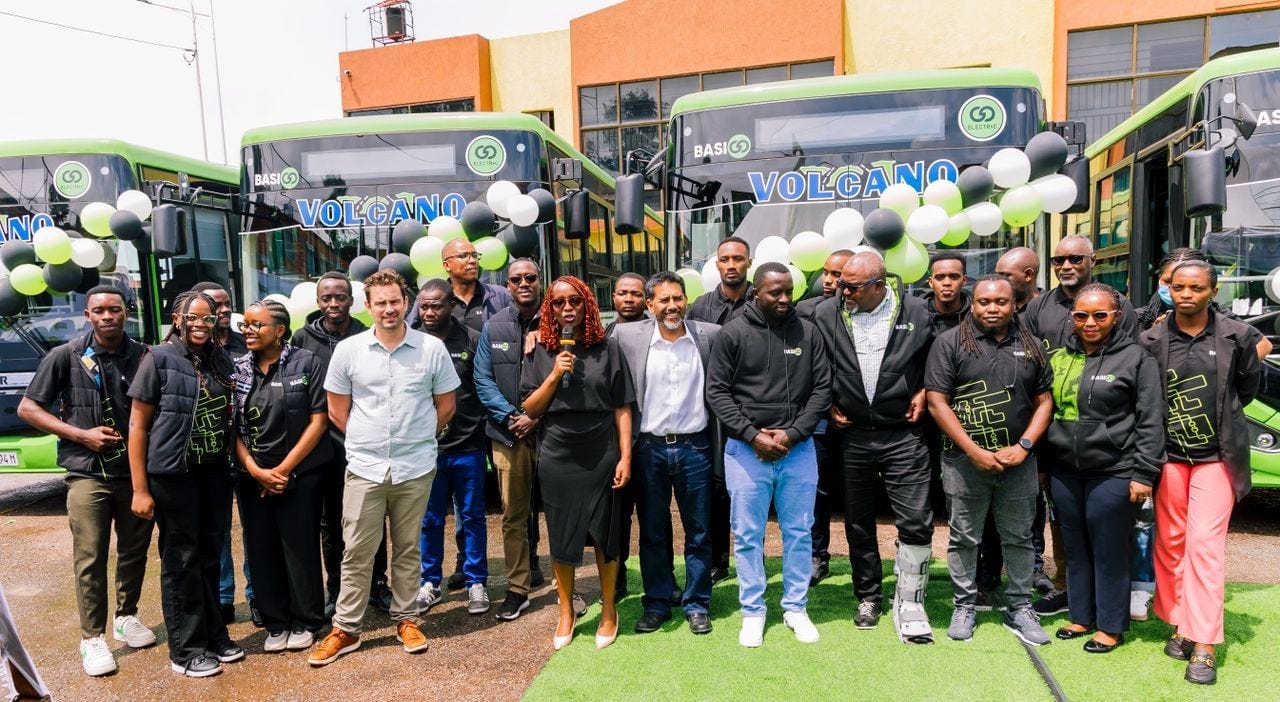
Maintenance is another concern raised by operators. “Operators ask questions like: who do I go to when my battery fails?” she explained. “For petrol vehicles, this isn’t really a problem because you have garages everywhere, but there is still a small amount of service and maintenance support for electric vehicles.”
To address that, the company has begun setting up “fully equipped” service centres and training technicians.
“We realised it would be a big barrier for people,” Orishaba said.
Despite the challenges, electric buses offer clear environmental benefits. “For every electric bus we put on the road, we’re helping mitigate about 50 tonnes of CO₂ per bus per year,” Orishaba said.
However, for now, electric mobility in Africa remains a gradual experiment, one shaped by infrastructure gaps, financing models, and the realities of transport systems that millions of people depend on every day.
 Acquah Nana Yeboah