



Canva, the popular graphic design platform, has apologised after users discovered its new AI-powered Magic Layers feature was automatically replacing the word "Palestine" with "Ukraine" in user designs without permission or warning.
The issue went viral on Saturday, April 26, when X user @ros_ie9, who first publicly discovered it, posted a side-by-side screenshot showing the tool changed the text in the graphic reading "A cat for Palestine" to "A cat for Ukraine"
Some X users who saw the tweet quickly replicated the error before Canva deployed a fix on Sunday, April 27. The word "Palestine" was consistently swapped for "Ukraine," while related terms like "Gaza" remained unchanged.
Following the AI bias and propaganda concerns, Journalist Caitlin Johnstone shared on X, April 28, describing three recent examples of AI systems producing outputs favourable to geopolitical narratives, including Canva's word replacement, Israeli deepfake videos, and altered translations from Grok AI.
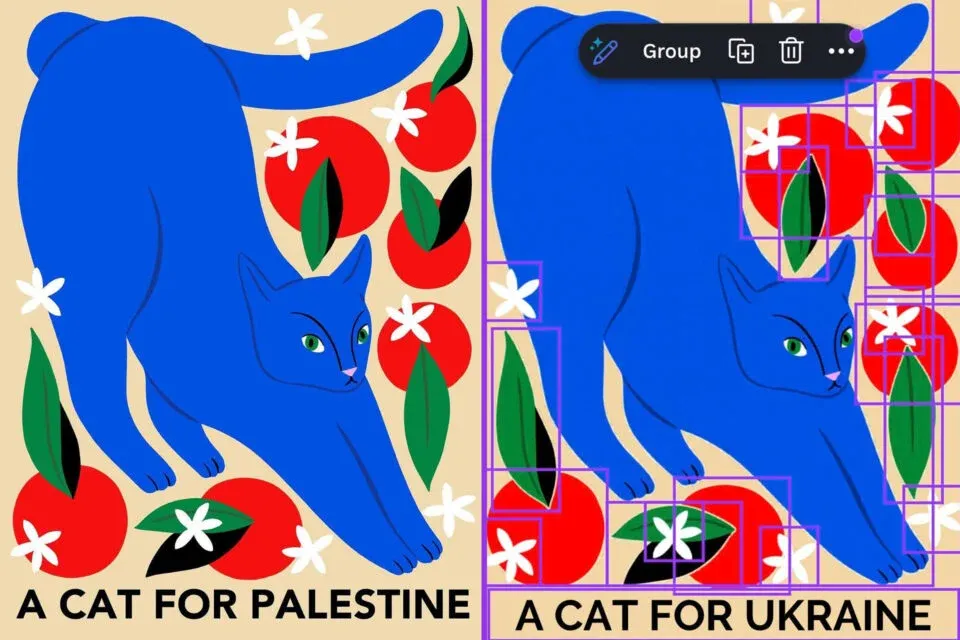
Magic Layers Changed Political Text Without User Input
Magic Layers is Canva's new AI feature that breaks down flat images into separate pieces you can edit individually. It launched on March 11, 2026, and is reportedly supposed to help users modify designs without starting over.
Subscribe for free to continue reading this article
Subscribe SubscribeAlready have an account? Log in


