



Since launching in Africa, Temu has been known for its massive discounts and price cuts. But as expected, there had to be a catch, and this was the extremely long wait times before goods finally arrived, taking anywhere between 4 and 22 business days. Nearly a whole month!
But as the company realised just how much the African market has clung to it, with reports suggesting 1 in 3 South Africans have shopped on Temu and nearly 40% of those becoming active monthly users, it seems the next logical move was to expand further into the continent. That expansion has now taken the form of a new local warehouse in South Africa.
 Louis Eriakha
With this update, eligible products now carry a “local warehouse” tag, meaning they’re stocked and shipped directly from within the country. According to Temu, this brings delivery times down to under two days, with some customers already seeing same-day fulfilment.
This change puts serious pressure on local platforms like Takealot and even global heavyweights like Amazon, which officially entered the South African market in 2024.
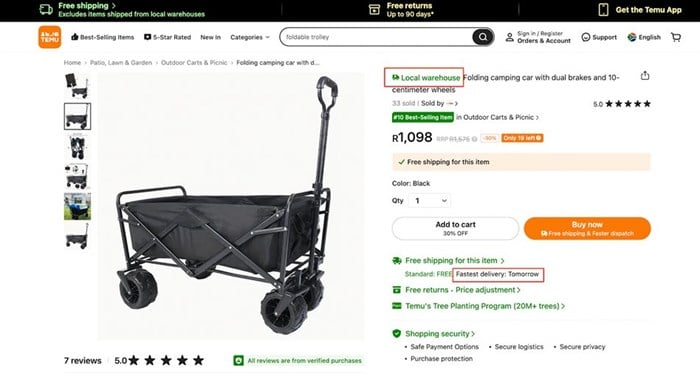
To make things clear, Temu doesn’t actually own the warehouse; it works with trusted third-party logistics partners instead. Sellers on the platform store their goods locally and handle logistics and after-sales service from within South Africa. This setup helps the company cut delivery times while allowing for a broader range of products, including bulkier items like home goods and furniture that were previously too expensive or slow to ship from overseas.
But the timing of this warehouse launch is also worth paying attention to. It comes not long after the South African government overhauled a tax concession that Temu and other foreign retailers like Shein were benefiting from. The 2007 rule allowed low-value imports under R500 to be taxed at a flat 20% duty with no VAT, a system meant to ease customs bottlenecks. However, local businesses argued it created an unfair playing field, especially in the clothing and electronics markets.
 Louis Eriakha
In response, the South African Revenue Service (SARS) implemented changes earlier this year, reintroducing VAT and aligning the duty structure with global standards. This not only raised Temu’s costs but may have forced the company to consider domestic warehousing to remain competitive.
It’s unclear whether Temu is sourcing some of these goods locally now or simply storing Chinese imports in-country, but either way, this marks a major shift. While there’s no word yet on similar warehouse rollouts in other African countries, it'll be interesting to see more of this spring up.


