The greatest strength of generative AI is its speed in materializing an abstract concept. With a few sentences, a blank screen transforms into a fully realized composition with color, depth, and detail.
Yet that sudden leap from nothing to something often obscures a harder reality of visual design. Generating an image is straightforward; steering that image toward an exact creative outcome is where practitioners encounter friction. A concept artist might receive a generation that nails the posture, scale, and emotional weight of a central figure, but finds the interior background overly busy. A designer preparing a publication layout might discover a striking composition that leaves zero negative space for typography.
These are standard problems in any creative studio. Under traditional digital pipelines, a retoucher would adjust the lighting layer, mask out the unwanted objects, or paint in the missing margins. In purely prompt-driven generation, however, requesting a correction often forces a complete reset. The model interprets the new prompt holistically, generating an entirely different image and discarding the balance that made the previous draft promising.
Achieving real creative control requires shifting away from the slot-machine model of generation toward workflows that treat a strong initial frame as raw working material.
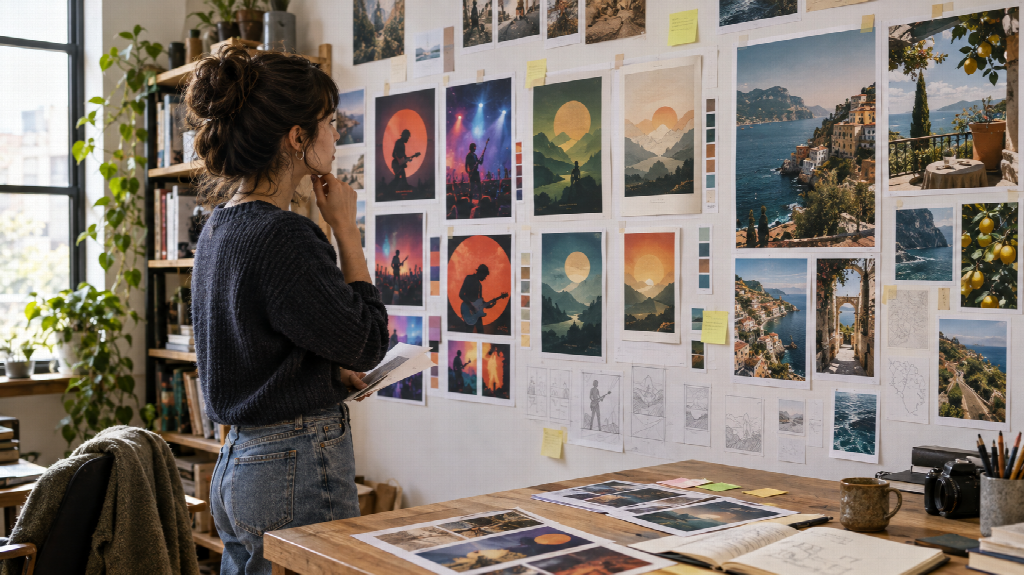
Visual direction can be developed through controlled variations rather than repeated restarts.
Why Promising Drafts Deserve Protection
The impulse to start over is understandable when an image misses the mark completely. When a visual concept is fundamentally flawed, entering a new prompt remains the quickest route to discovery.
Most editorial and design dilemmas, however, do not involve wholesale failure. They involve images that are eighty percent resolved. In those moments, discarding the draft squanders hours of exploratory effort. A good composition balances focal points, leading lines, and negative space in ways that are delicate and hard to replicate through language alone.
Using a reference image gives that balance a permanent footing. The source image holds the geometry, the camera angle, the silhouette of the subject, and the relationship between foreground and background. The subsequent prompt no longer needs to explain the entire world from scratch. Its role shrinks to a focused revision: clear the background wall, switch the lighting from warm interior bulbs to cool natural daylight, or soften the surface contrast across the perimeter.
This targeted approach mirrors the logic of professional visual arts. Whether painting on canvas or assembling digital layers, artists build on stable foundations rather than wiping the slate clean at every step. Protecting what works allows genuine nuance to accumulate.
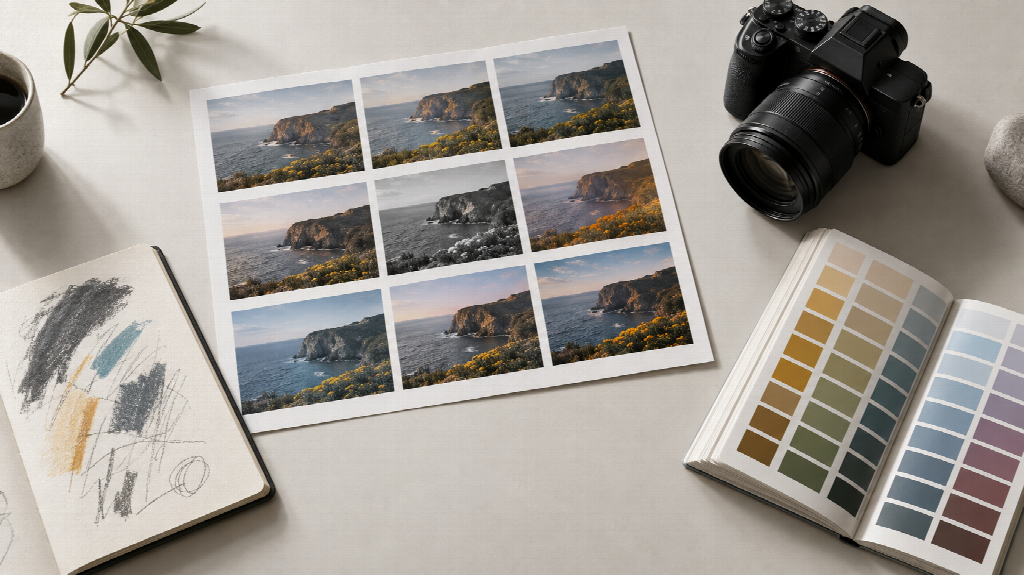
A reference image gives an editing request a concrete visual starting point.
The Mechanics of Visual Coherence
A major hurdle in using generative imagery for larger projects is the challenge of visual coherence. A collection of standalone images can look individually impressive yet completely fall apart when arranged side by side.
When an audience moves through a series of images, their eyes look for structural consistency. If the lighting temperature shifts erratically between frames, or if the horizon line jumps wildly, or if the central character's facial proportions mutate from panel to panel, the illusion breaks. The viewer stops engaging with the story and begins noticing the seam lines of the technology.
True coherence does not mean producing copies of the same picture. It means preserving a set of underlying rules across a visual sequence. A brand campaign might require a consistent contrast ratio, an identical color palette, and a specific camera perspective while changing the environment or action.
This is where an AI image editing workspace fits into production pipelines. By establishing a central workspace where source images and their evolutionary offshoots remain connected, creators can explore alternate variations without losing sight of the core aesthetic that binds the project together.
Redefining the Role of Text Prompts
Working with a visual reference fundamentally alters how text prompts operate. In standard text-to-image workflows, the prompt acts as architect, builder, and decorator all at once. It must define space, subject matter, style, and emotional tone within a single text string.
When an image provides the foundation, the prompt becomes a specialized editorial tool. The prompt says: keep the seated figure and perspective intact, but swap the concrete floor for weathered wood. Or: preserve the overall color palette, but remove the second figure standing near the doorway. The reference image shoulders the spatial logic, while the text dictates the delta of change.
This division of labor applies across modern image models generally. Whether starting from a text prompt when an idea has no visual anchor or passing in an existing image for a targeted revision, treating prompts and reference inputs as complementary tools gives creators a clear path between early exploration and deliberate refinement.
Working this way still demands critical scrutiny. When a model reinterprets a reference image, it can introduce subtle anomalies. Edge transitions between modified regions and untouched areas may show slight artifacts, fine textures can soften, and complex spatial geometry can warp. Achieving a publishable result requires inspecting the output critically at full resolution rather than relying on thumbnail previews.
The Cumulative Impact of Incremental Adjustments
In creative production, major quality leaps rarely come from a single dramatic gesture. They emerge from the accumulation of small, disciplined adjustments.
When an artist can trust that the composition of a frame will remain steady, they gain the freedom to obsess over details that would otherwise be ignored. They can test whether a muted background elevates the subject, whether a warmer rim light provides necessary separation, or whether cropping a distracting peripheral object sharpens the visual message.
None of these individual tweaks seems monumental on its own. Yet together, they transform a rough, generic AI output into a deliberate piece of visual communication. Reference-based editing provides the operational framework that makes this craftsmanship possible, giving human judgment the final word over the machine.