It was once meant to be an Apple car. Project Titan dragged on, stalled, and eventually disappeared, leaving the idea of a Jony Ive–designed vehicle as a footnote in tech history. Now, that idea has resurfaced elsewhere. On Monday, Ferrari revealed the interior of its first electric vehicle, the Luce, designed by Jony Ive.
Ferrari chose to introduce the Luce with interior images of the car. At a closed event in San Francisco, the company unveiled the interior and interface first, describing it as a space where “every element [is] deeply considered to enable functional, intuitive interactions and a thrilling driver experience.” It’s a deliberate move, and one that hints at where the real challenge lies for Ferrari as it moves into electric vehicles. Now the company would have to redefine what driving excitement feels like without relying on the sound, vibration, and theatre of a combustion engine.
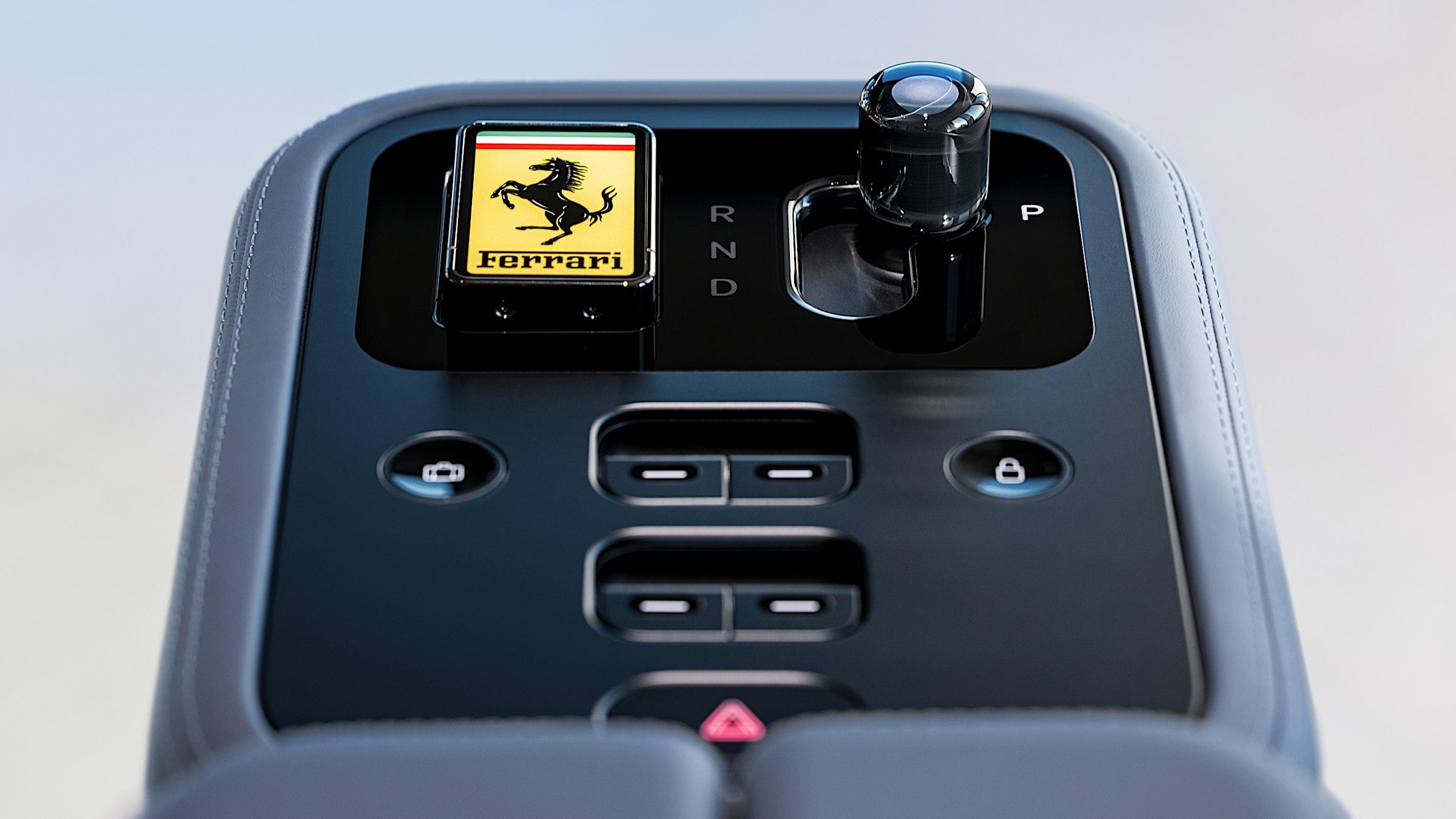
The Luce is Ferrari’s first fully electric model after more than a decade of hybrids. Without an engine, one of the brand’s defining sources of feedback disappears. That shifts more responsibility onto the interior, which now has to communicate intent, control, and character on its own. This is where LoveFrom enters the picture.
LoveFrom, the San Francisco-based creative collective founded by Ive and Marc Newson, has been collaborating with Ferrari “on every dimension of the Ferrari Luce’s design.” The result is an interior that blends precision-engineered mechanical buttons, dials, toggles, and switches with layered digital displays, rather than pushing everything into a single screen.
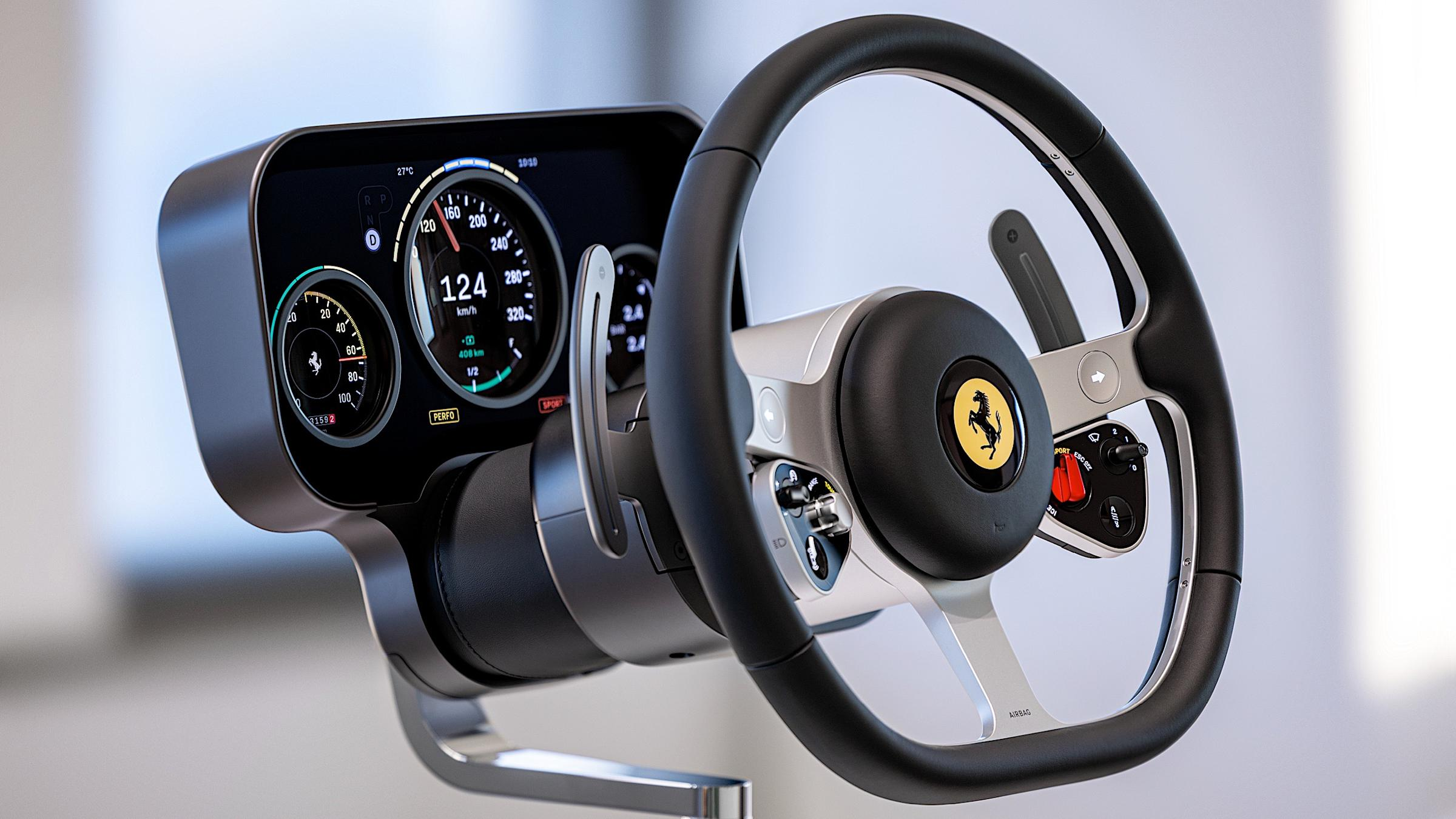
Ferrari says the interface combines “mechanical and digital elements” to create interactions that feel intuitive rather than screen-led. That approach is visible throughout the cabin. Physical controls remain central. Displays are present but restrained. The emphasis is on touch, resistance, and clarity, standing in contrast to the broader industry move toward all-glass, touch-heavy interiors.
The name Luce, meaning “light” or “illumination” in Italian, reflects what Ferrari describes as a forward-looking moment for the brand. It also aligns with the interior’s design logic. Instead of flooding the driver with constant information, the cabin reveals what matters, when it matters.
The timing and structure of the launch add further context. Ferrari revealed the Luce’s underlying technology in October 2025 at its e-building in Maranello, focusing on the electric platform and chassis. The San Francisco event marks the second phase, centred on driver interaction and interface. The final phase, including the exterior reveal, is scheduled for May 2026 in Italy.
Compared with many electric vehicles that position software as the main attraction, the Luce takes a more measured route. Screens are part of the experience, but they are not treated as the solution to everything. That places Ferrari slightly out of step with prevailing EV interior trends, and seemingly by choice.
 Damilare Odedina