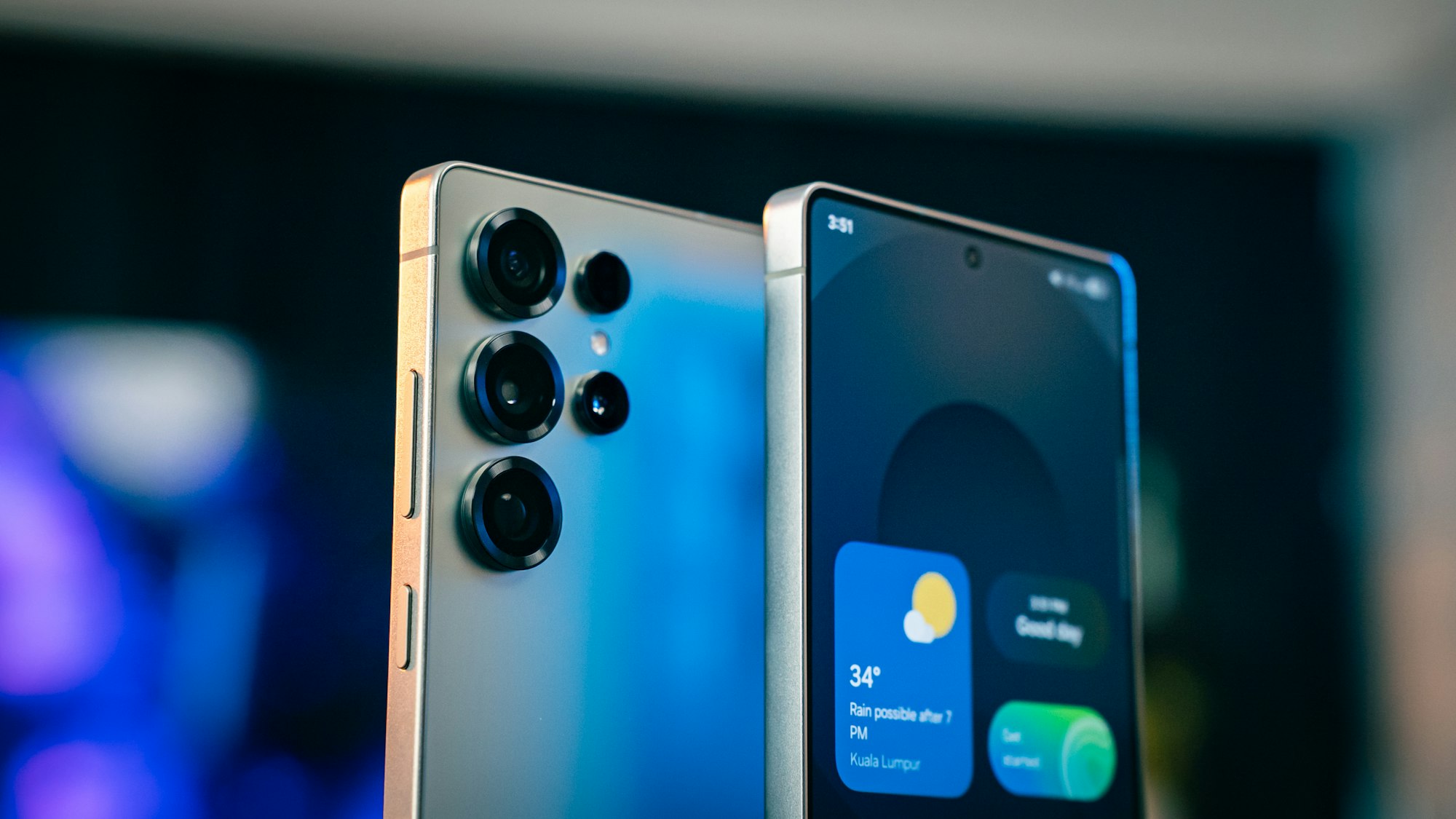
We’ve long been waiting for the day AI becomes a true assistant, the kind you can casually ask to “handle it” while you get on with your life. We’re not quite at Iron Man's “Hey Jarvis” level yet, but Google just took a noticeable step in that direction. The company has announced a new update to its Gemini AI on Android that brings real task automation into the mix.
This new task automation feature would let you "offload multi-step tasks directly to Gemini." In practical terms, it means you can ask Gemini to do things like order you an Uber or put together a food delivery order.
Google says it's easy to activate: "Simply long-press the power button and ask Gemini to help book you a ride home or reorder your last meal on DoorDash. Gemini will work seamlessly in the background, leaving you free to keep using your phone."
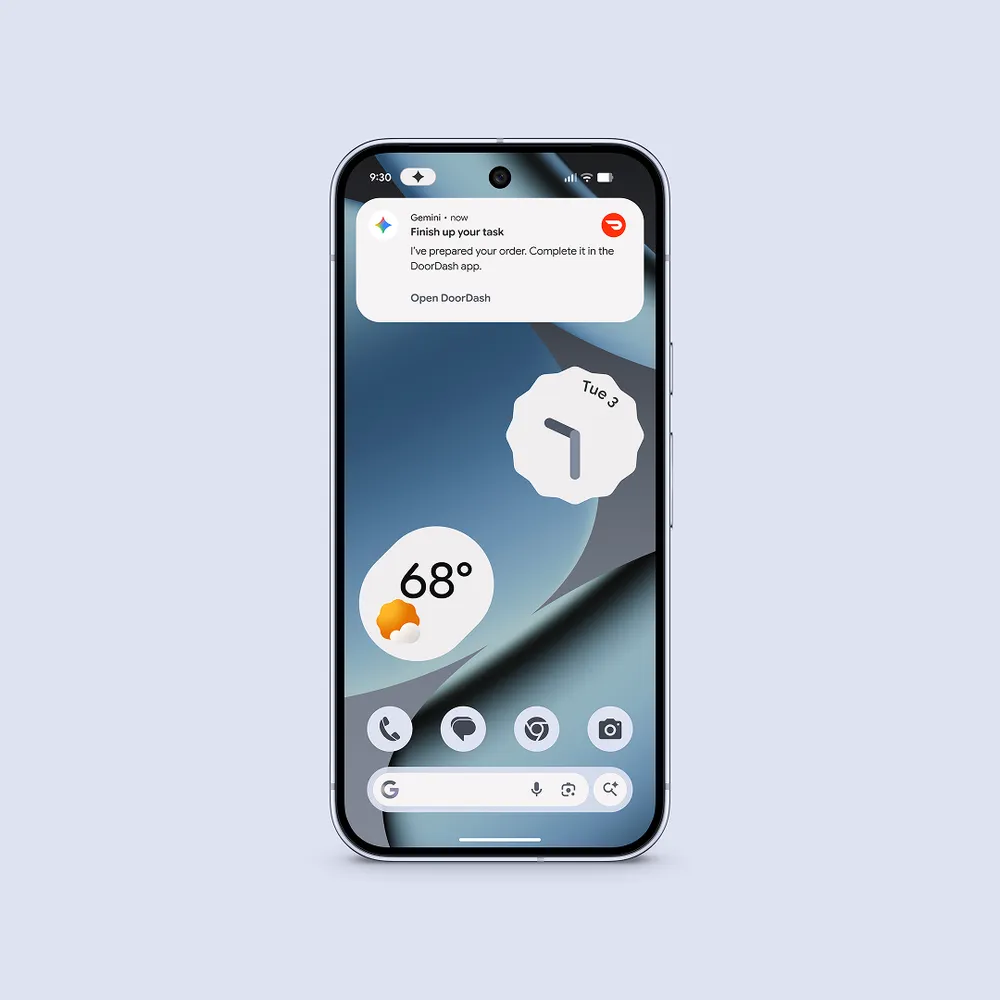
Gemini would work through the steps on its own, tapping buttons, selecting options, and even considering alternatives if something is out of stock. You can watch it happen in real time, stop it if something looks wrong, or let it run quietly in the background until it needs your input to confirm the final order.
That said, there are limits. The feature is currently in beta and only supports a small group of apps in food delivery, grocery, and rideshare categories, including Uber and Grubhub. It’s also restricted to select devices, namely the Pixel 10 lineup and the Samsung Galaxy S26 series, and is rolling out first in the U.S. and Korea. So while it’s promising, it’s far from universal just yet.
Google says the automations run in a protected virtual environment that can only access specific apps, not your entire device. They also require an explicit command before starting, which helps prevent accidental or rogue actions. Over time, developers will be able to integrate more deeply using Android’s app functions framework, but where that doesn’t exist, Gemini is designed to reason its way through the interface on its own.
In context, this move aligns with a broader industry push. ChatGPT now offers scheduled tasks and an agent that can complete computer-based actions, while companies like Anthropic are exploring similar automation tools. But Google’s advantage lies in Android’s scale and system-level integration. The company has been steadily layering Gemini into Android through regular updates and Pixel Drops, while competitors like Apple are still working toward a more fully realised AI assistant experience.
It’s early days, but this update hints at a future where Android becomes less of an operating system and more of an "intelligence system".
 Louis Eriakha